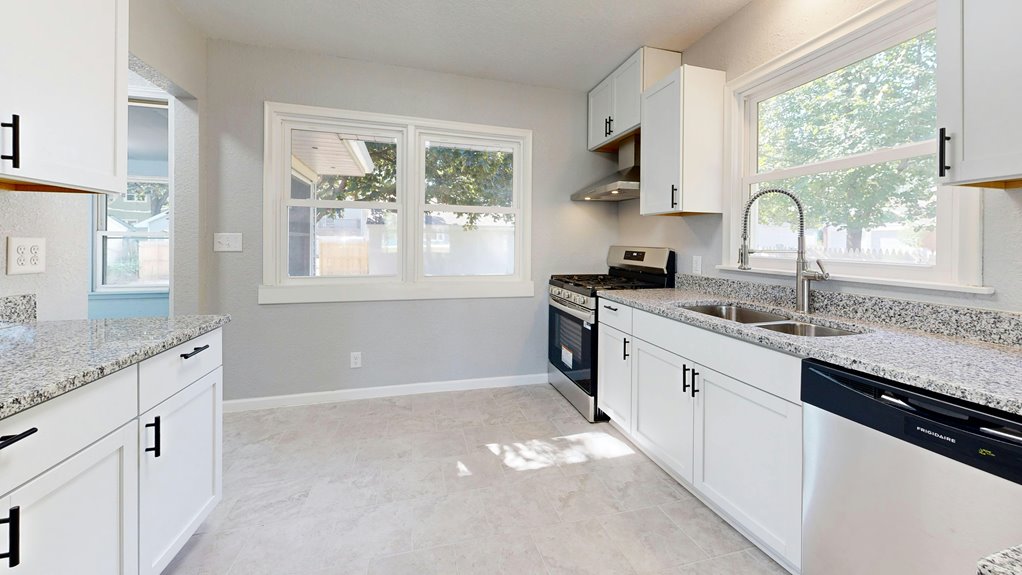
You’ll need a permit if you’re moving plumbing lines, installing new electrical outlets, relocating gas lines, removing walls, or widening doorways. Cosmetic updates like painting, cabinet replacement in the same spot, and countertop installation usually don’t require permits. Contact your local building department to confirm specific requirements for your project—they’ll clarify what applies to your situation. Understanding these distinctions upfront prevents costly fines and stop-work orders down the line.
8 Kitchen Projects That Require a Permit (and Why)
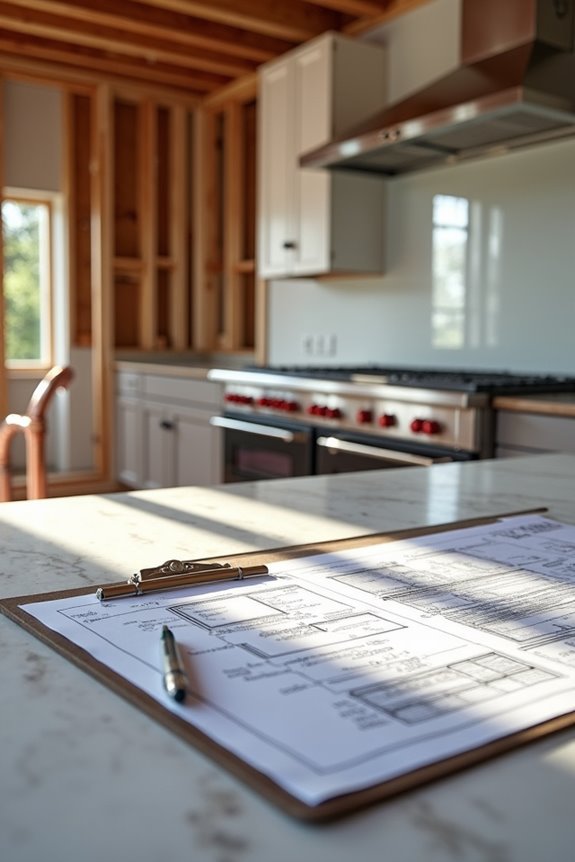
Why do some kitchen projects need permits while others don’t? Kitchen remodeling involving utilities or structural changes requires permits from your local building department. Understanding which projects trigger the permit process helps you stay compliant and safe.
Kitchen remodeling involving utilities or structural changes requires permits from your local building department to stay compliant and safe.
You’ll need permits for these kitchen projects:
Plumbing changes: Moving sinks or installing new fixtures requires inspection. Electrical work: Adding outlets, upgrading panels, or rewiring demands permits. Structural modifications: Removing walls or widening doorways affects load-bearing elements. Layout changes: Reconfiguring spaces that involve utilities needs approval. Gas line work: Any gas appliance installation requires permits. New appliances: Dishwashers or ranges needing added wiring need permits. Utility moves: Relocating plumbing or electrical lines requires permits. Ventilation updates: Installing range hoods or exhaust systems often needs permits.
Contact your local building department to confirm specific requirements for your kitchen remodeling project.
Plumbing Work: Sinks, Islands, and Water Lines
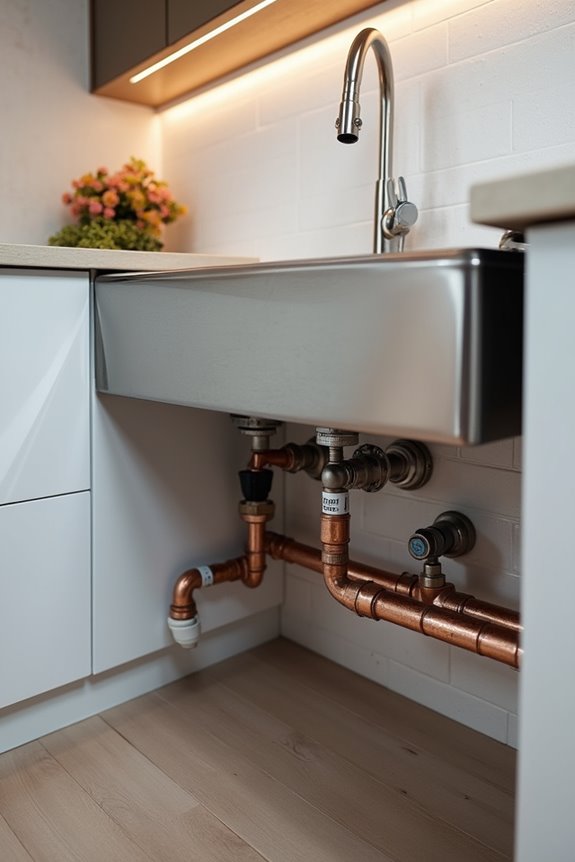
Plumbing work represents one of the most common permit requirements in kitchen remodels. You’ll need a plumbing permit when modifying water lines, drainage systems, or relocating fixtures.
Kitchen sinks and fixture relocation: Moving your sink to a new location triggers permit requirements. New water connections and drainage alterations both demand official review and inspections before work begins.
Island plumbing considerations: Adding an island with plumbing necessitates permits. You’re installing new water supply lines and drainage systems that inspectors must approve.
What doesn’t require permits: Replacing a faucet alone typically doesn’t need a permit. Only cosmetic changes without plumbing modifications qualify.
Your next step: Contact your local building department immediately. Confirm specific permit requirements for your project, since regulations vary by city.
Electrical Upgrades: Wiring, Outlets, and Panels
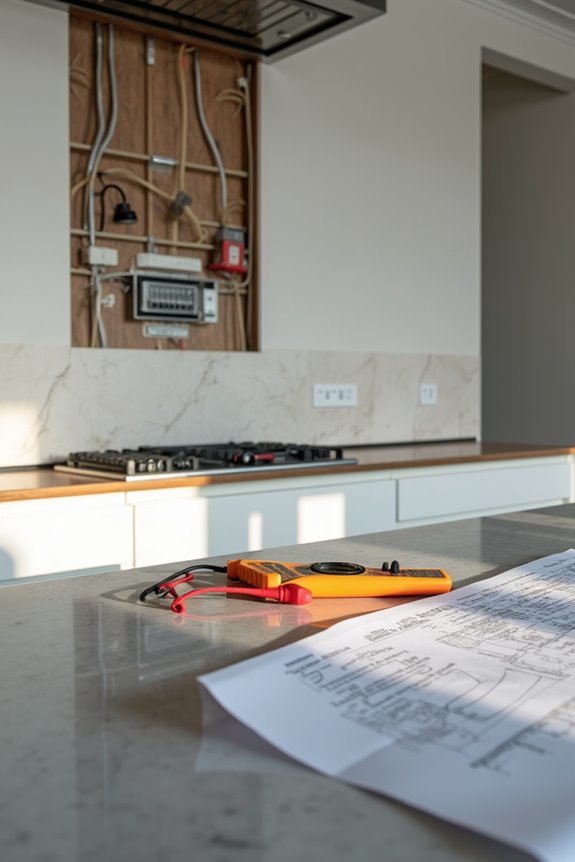
Electrical upgrades in your kitchen almost always require a permit. You’re making changes that affect your home’s safety and electrical system integrity, so inspections matter.
You’ll need electrical permits and a licensed electrician for:
- Installing new outlets or relocating existing ones to different wall locations
- Adding dedicated circuits for new appliances like dishwashers or electric ranges
- Upgrading your electrical panel to handle increased capacity and load demands
- Rewiring sections of your kitchen to meet current code compliance standards
Licensed electricians pull permits and verify work meets safety codes. Inspectors confirm everything’s installed correctly before you use your new kitchen. Skipping permits puts your home at risk and creates problems when selling. Most jurisdictions require permits for any electrical changes affecting safety or system integrity.
Gas Lines: Installing or Relocating
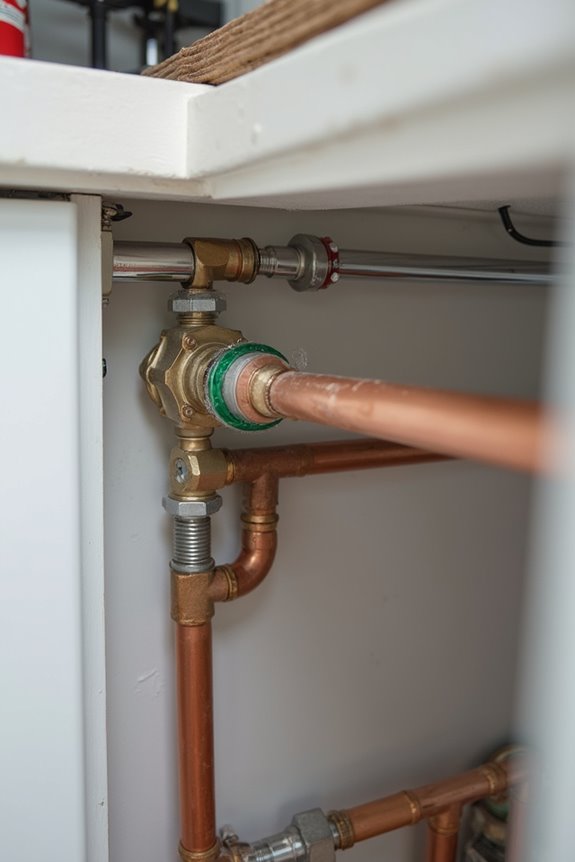
If you’re moving or installing a gas line in your kitchen, you’ll almost certainly need a permit. Gas work requires permits because safety codes and proper leak testing are critical—your local jurisdiction won’t allow unlicensed work on these systems. Many areas require a licensed gas fitter or plumber to pull the permit, perform the installation, and pass required inspections on rough-ins and final connections.
When Gas Lines Require Permits
Why do gas line changes need permits? You’re protecting your home and family. Gas line modifications demand strict compliance with plumbing/gas codes and permit requirements.
Your kitchen remodel needs a gas permit when you:
- Install new gas lines for a range, cooktop, or grill
- Relocate existing gas connections to different locations
- Modify appliance connections requiring new piping work
- Add outdoor gas features like grills or fire pits
A licensed contractor must handle this work. Local inspections verify leak testing and proper venting throughout the permit process. Your gas utility may coordinate pressure testing too.
Skipping the gas permit creates serious problems: stop-work orders, fines, and insurance complications if leaks occur. Following permit requirements keeps everyone safe while meeting building standards.
Safety and Code Compliance
How does your kitchen stay safe during a gas line project? You’ll need a gas permit to verify everything meets code compliance standards. Licensed professionals handle the installation work correctly.
Your local building department requires specific steps: plan submissions detailing the gas line layout, pressure tests verifying safe connections, and load calculations for your appliances. These inspections protect your home from dangerous leaks and improper venting.
Both plumbing and electrical inspectors review gas line work because it intersects multiple systems. Licensed gas fitters perform the actual installation, making proper connections to your stove or range.
Skipping the permit process creates serious problems: stop-work orders halt your project, fines accumulate, and insurance claims face denial. Future home buyers discover unapproved gas work during inspections.
Code compliance isn’t bureaucratic hassle—it’s your family’s safety foundation.
Licensed Contractor and Inspection Requirements
When you’re relocating or installing a gas line in your kitchen, you’ll need more than just a general building permit—you’ll need a licensed gasfitting contractor and a dedicated gas permit. This requirement protects your home and family.
Your licensed contractor handles critical tasks:
- Properly sizing the gas line to match appliance demands
- Pressure testing connections to detect leaks before approval
- Installing tracer tape and maintaining proper venting
- Coordinating inspections at rough-in and final stages
Multiple permits trigger the process: gas permits, plumbing permits, and building permits work together. Code compliance inspections verify shutoff accessibility and appliance connections meet fuel gas code requirements.
Local authorities schedule inspections after rough-in work and final installation. Your contractor manages permit requirements and utility coordination, preventing stop-work orders or penalties.
Structural Changes: Walls, Beams, and Doorways
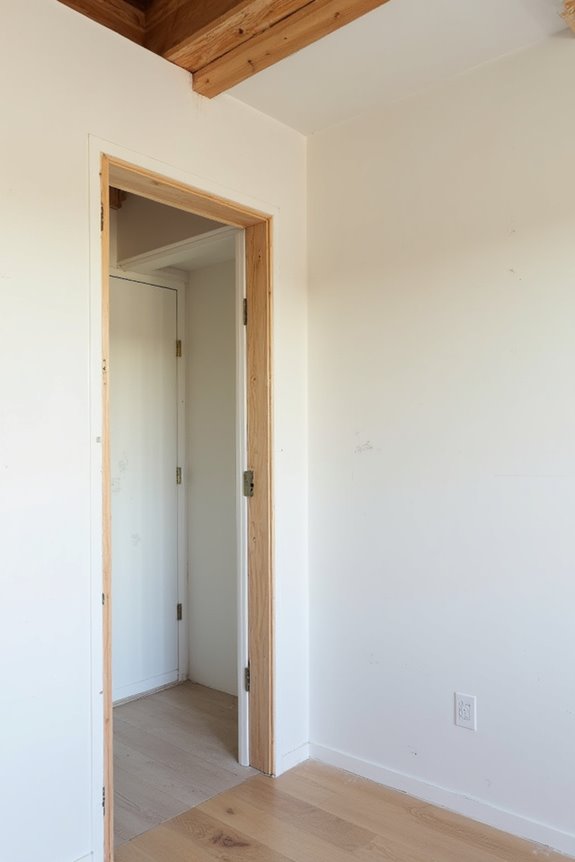
If you’re removing walls, widening doorways, or modifying beams in your kitchen, you’ll almost certainly need a permit. These structural changes affect how your home supports weight and stays safe, so local building departments require plan review and sometimes engineering calculations before work begins. Even changes that look minor—like relocating a wall without moving its load path—typically still require permits in most jurisdictions.
Removing or Adding Walls
Most kitchen remodels involving wall removal or addition require a building permit because they’re structural changes. You’ll need to determine whether the wall is load-bearing or non-load-bearing before proceeding.
Key considerations for your wall project:
- Load-bearing walls need structural engineer calculations and professional sign-off
- Plan review by your local building department is mandatory for most wall changes
- Non-load-bearing partitions still require permits if they affect electrical/plumbing alterations or fire-rated assemblies
- Headers reinforcement becomes necessary when doorways widen or structural elements shift
Your building department will require submitted structural drawings, cross-sections, and foundation details. Even removing a small wall segment triggers permit requirements in most jurisdictions. Contact your local building department first to understand specific regulations for your kitchen remodel project.
Widening Doorways and Openings
Beyond wall additions and removals, you’ll also encounter permit requirements when widening existing doorways or openings. These structural changes typically demand a building permit because they affect load paths and framing integrity.
Your local building department requires permits for doorway widening to verify compliance with safety codes. If your opening impacts a load-bearing wall, you’ll need a structural engineer’s design and approval.
The permit process involves several steps: submitting plans, undergoing plan review, obtaining structural calculations if necessary, and scheduling inspections. Even non-load-bearing openings require permits in many jurisdictions to verify proper fire safety and egress compliance.
Contact your building department before widening any doorways or openings. They’ll clarify exactly which permits you need and what documentation you must provide for approval.
Modifying Beams and Load-Bearing Elements
When you’re planning to modify, replace, or upgrade beams and load-bearing supports in your kitchen, you’re dealing with structural work that almost always requires a permit. These components carry your home’s weight, so changes demand serious attention.
Here’s what you’ll typically need:
- Structural calculations from a licensed engineer
- Detailed plan review by your local building department
- Professional inspection during and after renovations
- Written approval before beginning any work
Skipping permits puts your home’s safety at risk. Your engineer will assess whether existing beams can handle new loads. Your jurisdiction’s plan review confirms everything meets building codes. This step is important—load-bearing modifications are significant structural decisions requiring proper documentation and expert oversight throughout the process.
New Appliances That Need Extra Hookups
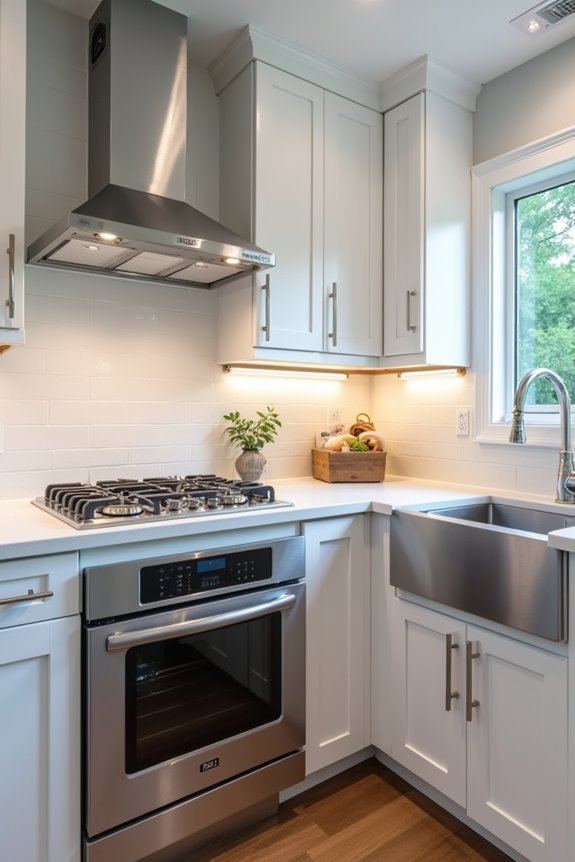
Why do new appliances sometimes require permits?
When you install new appliances, you’re often adding utility connections that building codes regulate. These hookups trigger various permits depending on what you’re installing.
Electrical Requirements
Adding a dishwasher or range typically requires an electrical permit because these appliances need dedicated circuits. Upgrading to higher-capacity electrical service demands both electrical and building permits with inspection.
Plumbing Connections
Installing a refrigerator ice maker or dishwasher water line necessitates a plumbing permit. These new water connections must meet local codes.
Ventilation Needs
Range hoods and vented microwaves require a mechanical permit due to ductwork upgrades. Proper venting installation protects your home’s safety.
Moving Appliances
Relocating a sink or gas range almost always requires permits for associated utility work. Professional inspection confirms everything meets code requirements.
Layout Shifts That Affect Your Utilities
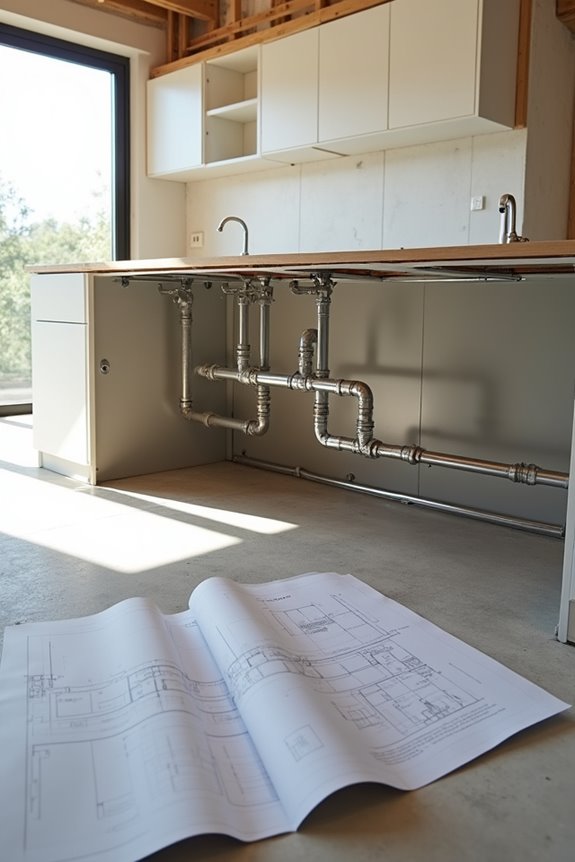
When you shift your kitchen layout, you’ll likely need to relocate plumbing lines and reroute electrical circuits to match your new design. Moving water supply pipes, drain lines, or electrical wiring requires permits because these changes affect your home’s safety systems and building codes. You can’t simply extend circuits or reroute pipes without inspections—doing so risks code violations and potential hazards.
Relocating Plumbing Lines
Moving your kitchen sink, dishwasher, or other plumbing fixtures almost always requires a permit. Most homeowners encounter this requirement during kitchen remodels.
Relocating plumbing lines triggers several permit needs:
- Water supply adjustments – New connections demand plumbing permit approval
- Drainage modifications – Altered waste lines require inspections and plan review
- Venting changes – Main stack or new vent systems need building permits
- Code compliance – Local building departments verify all connections meet standards
Even if your cabinets and countertops stay put, changing fixture locations usually necessitates permits. Your local building department requires plan review before work begins.
Skipping this step creates problems: failed inspections, insurance issues, and costly corrections later. Contact your building department first to confirm specific permit requirements for your project.
Rerouting Electrical Circuits
Rerouting electrical circuits almost always requires a permit. You’ll need to involve licensed electricians who understand local codes and can pull the necessary paperwork. Here’s why permits matter:
What Triggers Permits
Moving circuits for new appliances, island layouts, or outlet relocations demands permits and updated electrical plans. Even minor wiring route changes can require approval in some jurisdictions. If you’re shifting circuits near load-bearing walls or adjusting your main panel, permits become mandatory.
The Inspection Process
Licensed electricians handle load calculations to verify your system handles new demands safely. Inspectors verify correct wiring, grounding, and AFCI/GFCI protection installation. This protects your home’s electrical integrity and your family’s safety. This step is required for code compliance.
Load-Bearing Work and Structural Engineering
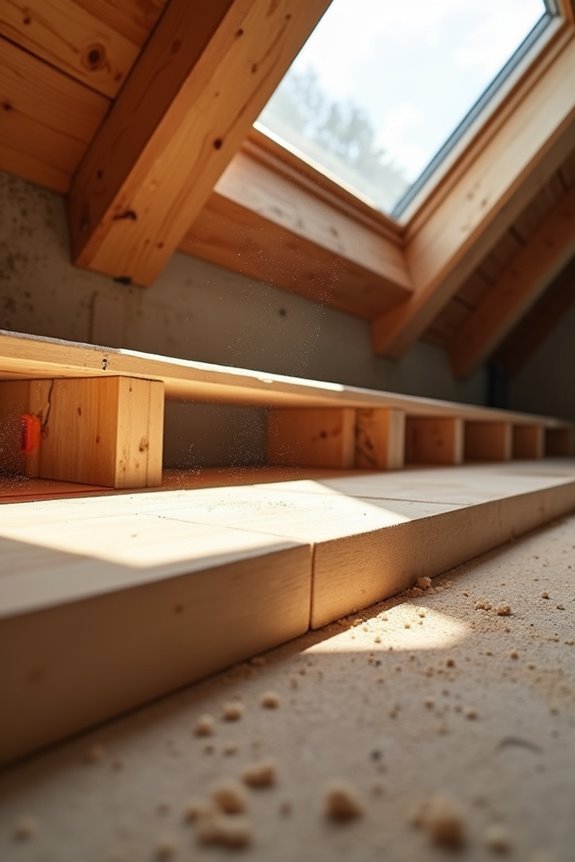
Why does removing a kitchen wall differ from painting cabinets? Because load-bearing walls support your home’s weight and require serious attention.
When you alter structural elements, you’ll need:
- Building permit approval before starting work
- Structural engineering calculations and drawings
- Floor or foundation plan submissions
- Inspection milestones throughout the project
Load-bearing changes—removing walls, widening doorways, or accommodating heavier appliances—trigger permit review. Your local building department verifies framing, supports, and load paths meet code requirements.
Consult a licensed structural engineer or general contractor early. They’ll determine whether your kitchen remodel needs engineer sign-off and formal plan submissions. This step prevents costly mistakes and secures inspector approval at critical stages.
Structural modifications aren’t optional paperwork. They’re essential safeguards protecting your home’s integrity.
Flood Zone Remodeling: Florida-Specific Rules
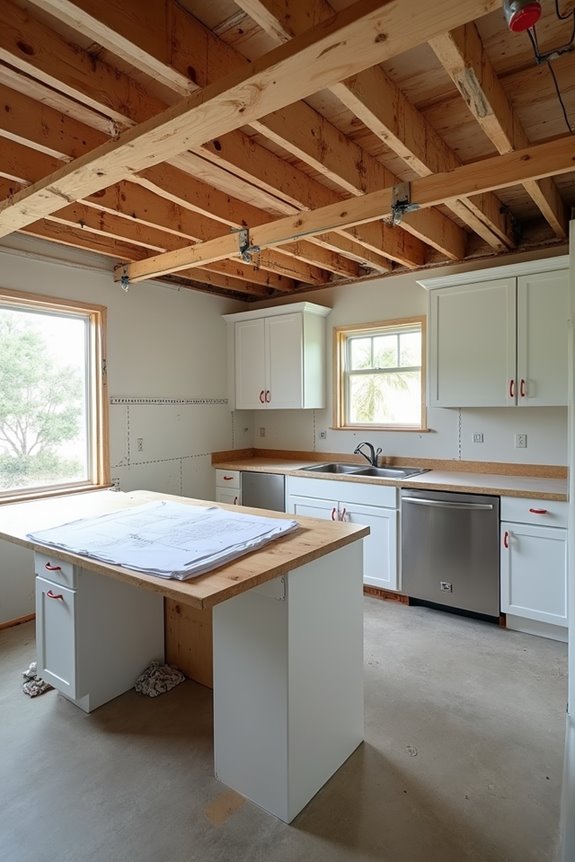
If you’re remodeling a kitchen in Florida, structural concerns extend beyond load-bearing walls. Your location in a flood zone dramatically changes permit requirements. Flood zones demand special documentation: elevation certificates, hurricane-rated materials, and comprehensive floodplain review.
| Requirement | Your Action |
|---|---|
| Elevation Certificate | Contact floodplain administrator before permits |
| Structural Changes | Submit engineering plans for review |
| Material Upgrades | Use FEMA-compliant, hurricane-resistant options |
| Documentation | Gather sworn statements and ASCE 7 compliance |
Building departments in flood-prone counties enforce stricter standards. You’ll need permits when your remodeling affects utilities, the building envelope, or flood resilience. Contact your county’s floodplain administrator immediately—rules vary significantly by jurisdiction and flood zone designation. They’ll clarify which improvements trigger permits and what documentation you’ll provide before starting work.
Kitchen Updates You Can Usually Skip Permits For
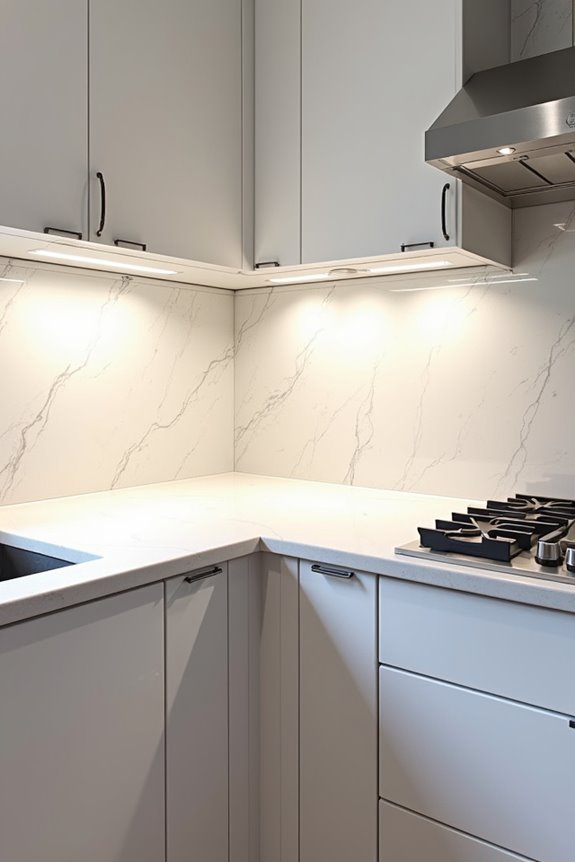
Not every kitchen improvement requires official approval from your building department. Many permit-exempt work projects fall under permitting exemptions based on local building codes. You can tackle several cosmetic updates without paperwork:
Many permit-exempt kitchen projects fall under local building codes, allowing cosmetic updates without official approval from your building department.
- Painting walls, cabinets, or refinishing surfaces
- Replacing cabinets or countertops in the same location
- Installing new countertops without altering wiring or plumbing
- Swapping appliances using existing hookups
Cabinet replacement and countertop installation typically don’t need permits when you’re not changing your kitchen layout or making electrical or plumbing changes. Flooring updates also commonly qualify as permit-exempt work in many areas.
However, verify your specific local building codes before starting any project. Rules vary greatly by jurisdiction. When in doubt, contact your building department to confirm which improvements actually need permits. This prevents costly mistakes and keeps your kitchen remodel on track.
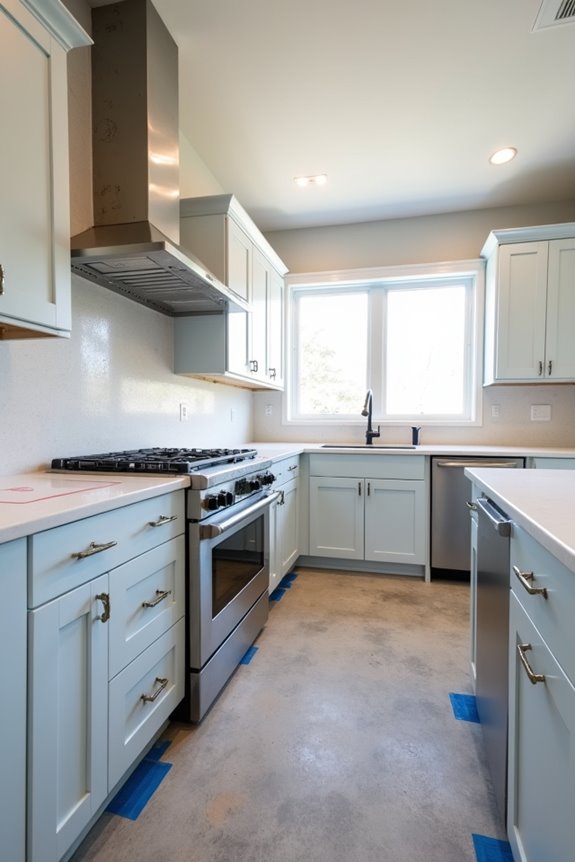
Check Your Local Building Department (Here’s How)
Check Your Local Building Department (Here’s How)
The best way to understand your permit requirements is contacting your local building department directly. Most jurisdictions maintain websites with specific guidelines for kitchen remodels.
Steps to Research Your Permit Trigger:
Visit your building department’s online portal. Search for kitchen remodel permit requirements specific to your city or county. Review which projects require permits: layout changes, wall removals, new fixtures, or structural changes typically trigger requirements.
Key Questions to Ask:
- Do cosmetic updates like paint or cabinets need permits?
- Does underlying utility work require plan submissions?
- What structural changes demand engineer sign-off?
- Do you qualify for owner-permit eligibility?
Call your permit office directly with your project scope. A licensed contractor can also clarify requirements. Obtaining this information upfront prevents costly delays and keeps your kitchen remodel compliant with all local building codes.
What Happens If You Remodel Without a Permit?
Skipping the permit process might seem like a time-saver, but it’ll likely cost you more in the long run. Unpermitted work creates serious problems you’ll want to avoid.
- The building department can issue stop-work orders, halting your project entirely
- You’ll face fines and penalties for code violations discovered later
- Insurance claims may be denied if injuries or damages occur
- Resale becomes complicated when buyers and lenders require documented permits and inspections
If inspectors discover unpermitted work, you might need to dismantle or modify everything to meet current codes. These mandatory corrections drain your budget and delay completion noticeably. Additionally, unpermitted alterations complicate home sales substantially. Lenders won’t approve financing without proper documentation, and buyers hesitate to purchase homes with compliance issues. Getting permits upfront protects your investment and guarantees smooth ownership transitions.
Timeline and Costs: What to Expect During the Permit Process
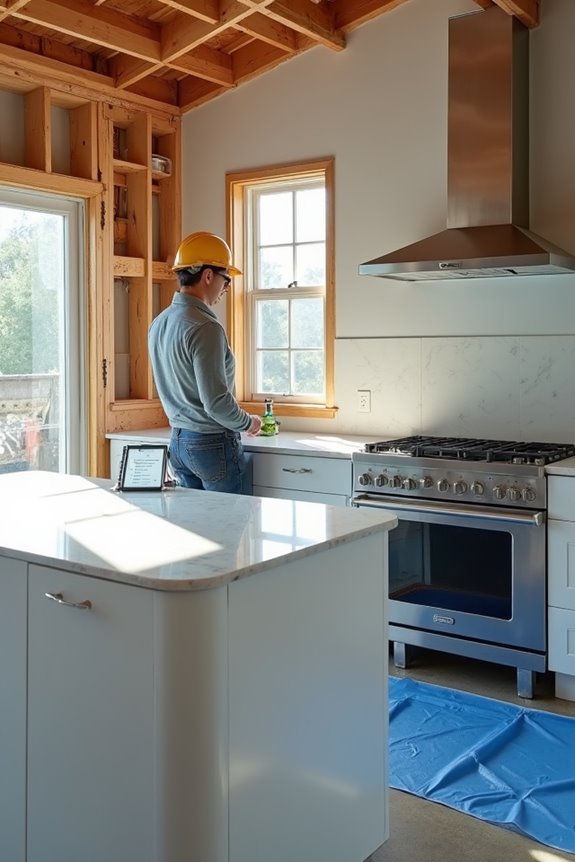
How long does getting a permit take, and what’ll it cost you? Your permit timeline depends on your scope of work and local building department requirements. Simple projects take a few days; complex ones requiring electrical or plumbing changes need several weeks.
| Permit Type | Cost Range |
|---|---|
| Building | $200–$600 |
| Electrical | $60–$150 |
| Plumbing | $80–$175 |
You’ll schedule inspections at rough-in, mid-construction, and final stages. Each inspection must pass to keep your permit valid. Online applications are increasingly available, though some jurisdictions require in-person submissions. Budget these costs and timelines upfront. Skipping permits risks stop-work orders and fines that’ll exceed permit costs significantly.