
You’ll want your island overhang between 12 and 15 inches for comfortable seating and leg room. A 12-inch minimum works well for casual dining, while 15 inches offers extra space for taller users.
Your cabinet depth determines the maximum safe overhang—standard 24-inch cabinets support roughly 12 inches without reinforcement. Material matters too: quartz handles 12 inches safely, but marble needs earlier support. Hidden steel brackets or decorative corbels work best for deeper overhangs. The right choice depends on your specific cabinet depth, stone type, and seating needs—details worth considering based on your requirements.
What Is an Island Overhang and Why It Matters?
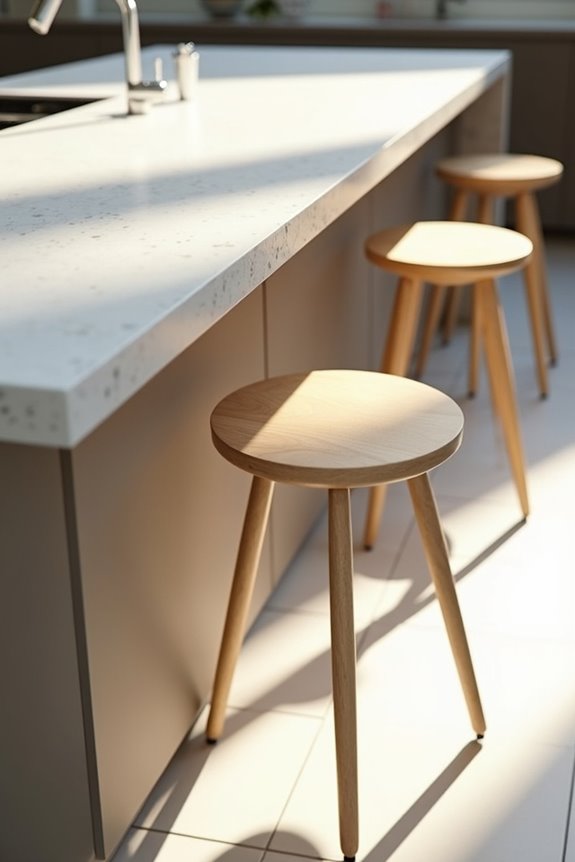
What Is an Island Overhang and Why It Matters?
Ever wonder why some kitchen islands feel comfortable to sit at while others don’t? The answer lies in island overhangs. An overhang is the countertop portion extending beyond your base cabinets. You’ll find two main types: functional overhangs and seating overhangs.
Island overhangs determine seating comfort. Functional overhangs prevent spills, while seating overhangs provide comfortable leg room for dining.
Functional overhangs without seating typically measure 1 to 1.5 inches. They contain spills and finish edges. Seating overhangs require deeper extensions: 12 to 15 inches provides comfortable leg room, while 15 inches offers optimal aesthetics.
Larger overhangs demand structural support. Beyond 12 inches, you’ll need hidden brackets or reinforcement to prevent sagging. Material and cabinet design influence support needs significantly. Understanding these measurements keeps your island functioning properly while meeting your lifestyle needs and design preferences.
Standard Overhang Depths: 12 to 15 Inches for Comfortable Seating
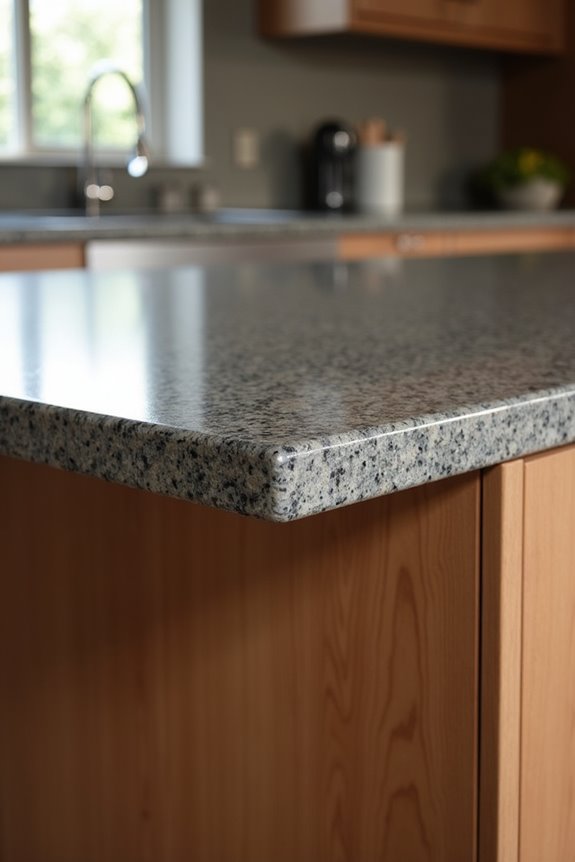
You’ll find that 12 to 15 inches works best because it gives you enough leg room while protecting your cabinets below. Your seating height matters too—standard chairs need less overhang than bar-height stools, which typically require 15 to 18 inches for comfort. The right depth depends on balancing three factors: how much space your legs need, whether your countertop material can support the span, and what type of seating you’re installing.
Comfort And Leg Space
What makes seating at a kitchen island actually comfortable? You’ll want to focus on three key factors: overhang depth, knee room, and proper seating clearance.
A 12-inch overhang depth provides the minimum comfortable seating space you need. This measurement gives adequate knee room for most users during everyday dining. If you extend your overhang to 15 inches, you’ll gain extra comfort for longer seating sessions.
Here’s what happens with inadequate space: overhangs smaller than 12 inches feel cramped, especially for taller people. Your legs lack proper clearance, making extended meals uncomfortable.
For countertop support and stability, avoid overhangs exceeding 15 inches without additional reinforcement. The sweet spot? Aim for that 12 to 15-inch range for functional, comfortable seating that works for your household.
Material Support Requirements
While comfort demands a 12- to 15-inch overhang, the materials you choose determine how much structural support that overhang actually needs. Your kitchen island overhang material directly impacts cabinetry reinforcement decisions.
Engineered stones like quartz offer excellent structural performance. You can typically achieve a seating overhang with quartz spanning approximately 12 inches without additional brackets. This engineered stone span capability makes quartz a practical choice for standard kitchen islands.
Marble requires different consideration. This natural stone is more prone to sagging without early reinforcement. You’ll need brackets sooner and more frequently than with quartz applications.
For overhangs exceeding 15 inches, material support requirements become critical. Proper reinforcement—whether hidden or visible—depends on your cabinet depth and island design. Consulting your material manufacturer verifies your kitchen island overhang meets both aesthetic and safety standards.
Seating Height Considerations
Seating Height Considerations
The right overhang depth connects directly to how comfortable your seating actually feels. Your seating height considerations determine the overhang size you’ll need for proper knee clearance and leg room.
Standard Dining Heights: A 12-inch overhang serves as the minimum comfortable depth for everyday dining. This measurement provides adequate knee clearance for standard-height chairs.
Bar-Height Islands: Bar-height seating demands 15 to 18 inches of overhang. Taller stools require deeper seating space beneath the countertop.
Support Requirements: Overhangs beyond 12 inches typically need concealed support. Hidden steel brackets or corbels maintain stability and safety.
Space Considerations: Smaller kitchens work well with 12-inch seating overhang. Larger islands can accommodate 15 inches for added comfort.
Match your overhang size to your stool height and kitchen dimensions for optimal results.
Why Leg Room and Comfort Drive Overhang Depth Choices

When you’re planning your island overhang, you’ll want to consider how your legs and knees fit underneath—12 inches works for casual dining, but you might feel cramped if you’re tall or using bar-height seating. Your counter height directly affects how much space you need: standard 36-inch counters require less overhang than 42-inch bar-height surfaces, which typically need 15 to 18 inches for comfortable leg room. Matching your overhang depth to your body size and how you’ll actually use the island—whether for cooking, dining, or working—keeps you comfortable for hours without knee strain or awkward positioning.
Seating Comfort Requirements
How much legroom do you actually need? Your island’s overhang directly determines whether you’ll have a comfortable dining experience or feel cramped.
| Overhang Size | Best Use |
|---|---|
| 10-12 inches | Quick seating, children |
| 12-15 inches | Casual dining, work |
| 15-18 inches | Bar-height stools |
Standard island seating requires 12 inches minimum for casual dining and work. This measurement provides adequate knee clearance for regular use. Bar-height islands demand 15 to 18 inches of overhang to accommodate taller stools properly.
Smaller overhangs around 10 to 12 inches work for occasional use only. However, larger overhangs need additional under-structure support. This prevents sagging and maintains stability. Your seating comfort requirements should drive your overhang decision.
Ergonomic Leg Space Needs
Ergonomic Leg Space Needs
Why does leg room matter so much for island seating? Your knees need clearance when you sit down. Without adequate space, you’ll feel cramped and uncomfortable during meals.
The Overhang-to-Comfort Connection
Island seating requires strategic overhang depth to balance leg room with usability. Standard dining setups demand 12 to 15 inches of overhang. This range accommodates most body types while maintaining functional counter access.
Adjusting for Your Needs
Taller individuals benefit from 15-inch overhangs, reducing knee strain. Bar-height configurations require deeper overhangs—15 to 18 inches—because stools sit higher. Your seating distance and countertop height determine optimal knee clearance.
Align overhang depth with stool height and your body proportions. This intentional design choice eliminates cramped positions and supports comfortable, extended use of your island throughout daily activities.
Counter Height Considerations
Your island’s counter height directly shapes how much overhang you’ll need. At standard counter height (36 inches), you’ll want a countertop overhang of at least 12 inches for comfortable leg room during everyday dining and work. This measurement prevents cramped legs and supports proper knee clearance—typically 27 inches from floor to underside of counter.
Many homeowners prefer 15 inches of seating overhang for more spacious, relaxed positioning. This extra depth accommodates various body sizes and sitting preferences. Your material support matters too: quartz installations often achieve 12–15 inches without additional brackets through proper design. Natural stone like marble may need reinforcement sooner.
Aligning your overhang depth with cabinet depth maintains balanced proportions and functional leg space for daily use.
Cabinet Depth Determines Your Maximum Safe Overhang
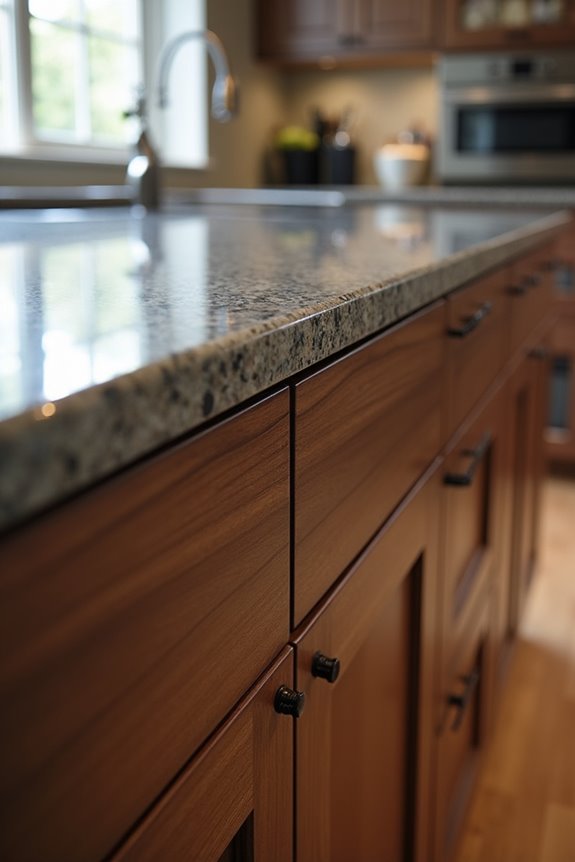
When you’re planning your kitchen island’s overhang, cabinet depth is the real limiting factor. Your cabinet depth directly controls overhang safe limits and affects seating clearance. A standard 24-inch cabinet allows approximately 12 inches of seating overhang safely.
Overhangs exceeding one-third of your cabinet depth require hidden support. For example: a 24-inch deep cabinet with 12-inch overhang plus 1.5-inch back overhang totals 37.5 inches. Shallow cabinets need reinforcement brackets underneath.
Island design professionals recommend matching your overhang to cabinet proportions. ADA guidelines suggest 15–18 inches overhang with 27 inches knee clearance. Standard ranges typically fall between 12–15 inches.
Measure your cabinet depth first. Then determine safe overhang limits. Add support brackets if overhangs exceed one-third depth. This approach maintains stable, functional seating.
Material Strength and Overhang Limits
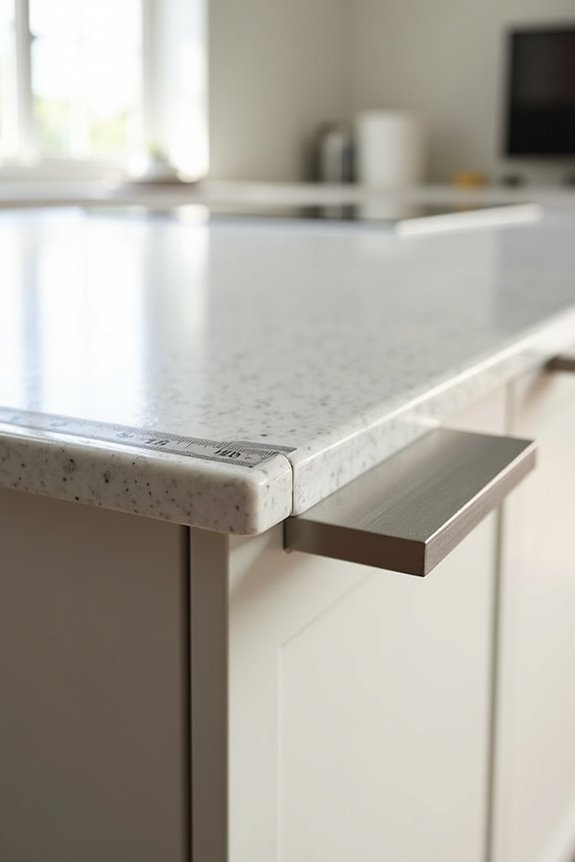
Once you’ve determined cabinet depth limits, material strength becomes your next critical constraint. Different countertop materials handle overhangs differently.
Quartz and engineered stone typically support 12 inches without extra brackets. You’ll need reinforcement for larger overhangs between 12–15 inches. Marble requires earlier support due to its lower stone strength compared to quartz or granite.
For seating overhang areas, hidden supports like steel plates or brackets prevent sagging beyond 12 inches. These supports stay invisible underneath your counter, maintaining clean aesthetics while providing stability.
Waterfall edge designs offer built-in support, reducing visible bracket needs. Your exact overhang limits depend on material choice, cabinet depth, island size, and support system selected. Consult your material’s specifications before finalizing your design.
Support Methods for Deep Island Overhangs
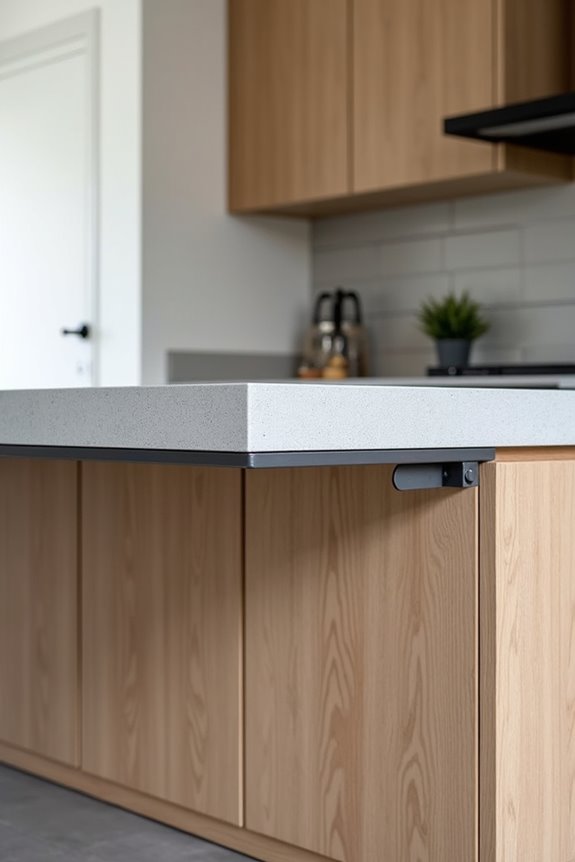
How do you keep a deep overhang from sagging? You’ll need strategic overhang support when your island seating overhang exceeds 12 inches. Several proven methods prevent structural failure.
| Support Method | Best For |
|---|---|
| Hidden steel brackets | Engineered stone counters |
| Decorative corbels | Visible support aesthetics |
| Steel support bars | Maximum stability needs |
| Waterfall edges | Built-in reinforcement |
Hidden steel brackets work best for engineered stone installations, offering invisible support behind your counter. Decorative corbels provide both function and visual appeal when you want support visible. Steel support bars guarantee maximum stability for larger overhangs. Waterfall edges combine style with built-in support, reducing visible reinforcement needs. Designer recommendations emphasize matching support methods to your material choice and aesthetic preferences. Your contractor can assess which option suits your specific overhang depth and stone type.