Your kitchen sink gurgles when water drains because trapped air can’t escape freely through your pipes. This happens when partial clogs slow water flow, forcing air to bubble up audibly.
Blocked vent pipes create vacuum pressure that pulls water from your P-trap, allowing sewer gases to escape as gurgling sounds. Common culprits include grease, hair, and soap buildup.
A quick plunger or drain auger often fixes minor blockages, but persistent gurgling signals deeper issues requiring professional investigation.
What Causes a Gurgling Kitchen Sink
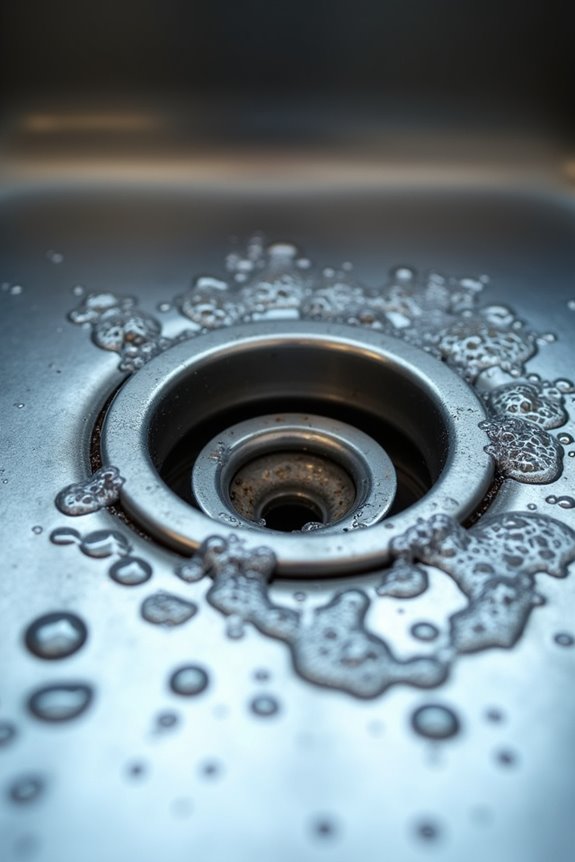
Why does your kitchen sink make that strange gurgling noise? You’re experiencing a common plumbing issue that affects many homeowners like you.
Trapped Air and Clogs
Gurgling occurs when air gets trapped in your drainage system. Partial clogs from grease, food debris, or soap scum slow water flow significantly. As water drains, air pushes through the trap, creating those distinctive sounds.
Vent Pipe Problems
Your vent pipes allow air to escape during drainage. A blocked vent pipe causes pressure buildup inside your pipes. This imbalance produces gurgling when you drain water.
Serious Drainage Issues
Problems with your main sewer line create backpressure in your home’s plumbing. Improper sink installation or misrouted plumbing generates air pressure imbalances. These issues manifest as gurgling during drainage cycles.
Understanding these causes helps you identify your specific problem and determine appropriate solutions.
Trapped Air in the P-Trap and Drain Lines
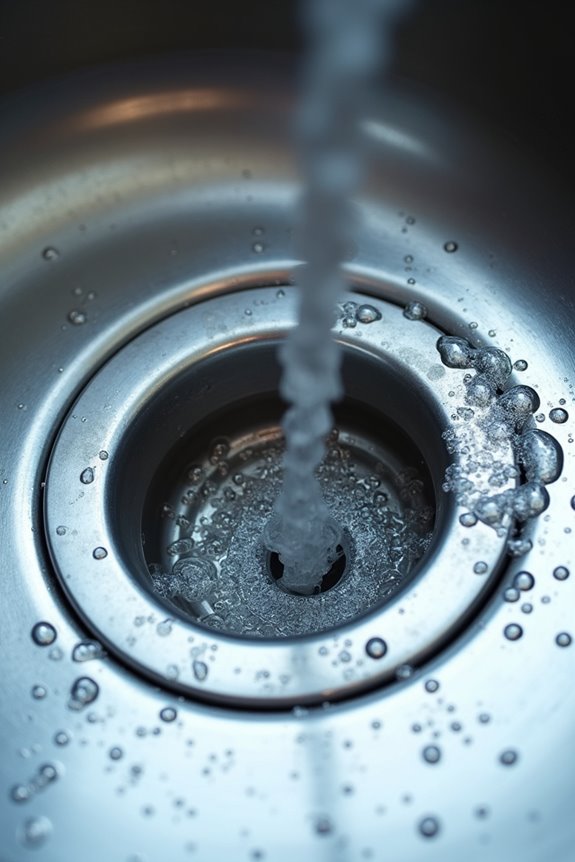
Have you noticed gurgling sounds that seem to come from deep within your sink’s plumbing? Trapped air in your drain lines creates this problem.
Here’s what happens:
- Air gets trapped near your P-trap during drainage
- Water movement pulls air through the trap, creating vacuum effects
- Multiple fixtures sharing one drain line amplify the gurgling
- The air releases as bubbles, producing audible sounds
Your P-trap’s water seal normally prevents sewer gases from entering your kitchen. However, when drainage movement draws air inward, you’ll hear gurgling noises. A partial blockage worsens this issue by slowing water while air bubbles through.
Maintaining proper water seal levels and removing blockages reduces these gurgling sounds significantly. You’re experiencing a common plumbing issue with straightforward solutions.
Clogged Drains: The Most Common Culprit
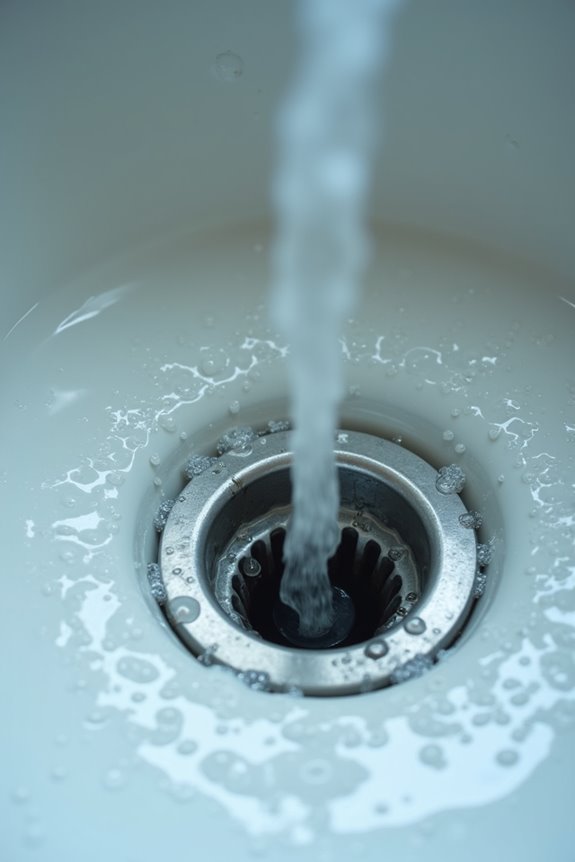
Your kitchen sink’s gurgling typically stems from clogged drains where grease, soap scum, hair, and food particles accumulate over time. As water encounters this partial blockage, air gets trapped and forced through your drain lines, creating those distinctive bubbling or gurgling sounds. Heavy dishwashing accelerates this buildup, making clogs the primary reason your sink gurgles during drainage.
How Debris Accumulates
When you wash dishes or drain water down your kitchen sink, debris doesn’t simply vanish—it accumulates. Over time, everyday materials build up inside your pipes, creating serious problems.
Your kitchen sink faces unique challenges compared to other drains. Here’s what happens:
- Soap scum coats pipe walls, trapping other materials
- Hair and food particles create sticky layers
- Grease solidifies as water cools, blocking passage
- Accumulated debris narrows the pipe opening significantly
This debris buildup causes a water flow obstruction that worsens gradually. A partial blockage forms when trapped materials prevent water from draining smoothly. As water forces through the narrowed space, air trapped behind it escapes, producing those characteristic gurgling sounds you hear.
Regular sink use accelerates this process. The more you drain, the faster debris accumulates, intensifying the gurgling problem over time.
Air Trapping Effects
Clogged drain systems create the perfect environment for air trapping. When debris like grease and food particles accumulate, they slow your water’s flow considerably. This reduced movement causes a vacuum to form inside your P-trap.
The vacuum pulls air through the trap, creating those gurgling sounds you hear. Even with partial blockages, air gets compressed as water pushes through narrow gaps. Bubbles escape upward, producing distinctive noises during drainage.
You’ll notice the gurgling alongside slow draining or occasional backups. These signs indicate a partial blockage rather than complete obstruction. The impeded flow forces air to escape, generating the characteristic sounds.
Understanding this mechanism helps you recognize early warning signs. Addressing partial blockages quickly prevents complete clogs from developing in your system.
Blocked Vent Pipes Disrupting Air Flow
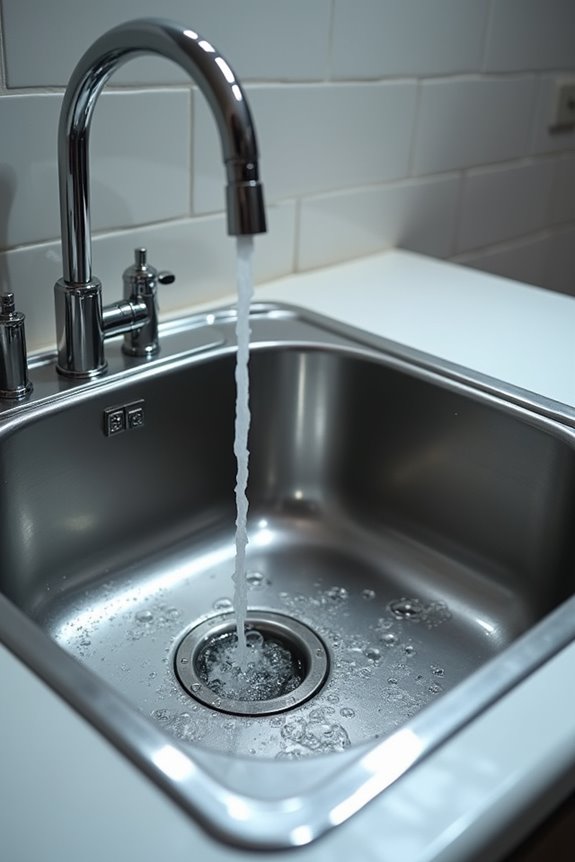
Your kitchen sink’s gurgle often points to a blocked vent pipe rather than drain clogs alone. Debris, leaves, or bird nests obstruct roof or wall vents, preventing air from equalizing pressure during drainage. You’ll need professional diagnosis to safely identify and clear the blockage, restoring proper airflow and eliminating those annoying sounds.
Vent Pipe Obstruction Sources
How do blocked vent pipes actually cause your sink to gurgle? When obstructions block your vent pathway, air can’t escape properly during drainage. This creates a vacuum that pulls water from your trap, producing those distinctive gurgling sounds.
Common sources of vent obstruction include:
- Debris and leaves accumulating in roof-mounted vent openings
- Bird nests blocking the vent pipe entrance
- Ice buildup during winter months restricting airflow
- Sediment deposits inside hidden wall or floor vent sections
Your vent pipes may run behind cabinetry or inside walls, making blockages difficult to spot. When obstructions develop, air pressure imbalances force air through your sink drain instead of the vent system. Clearing these blocked vent pathways restores proper air circulation and eliminates the gurgling.
Air Pressure and Gurgling
When water drains from your sink, it shouldn’t create a vacuum—but blocked vent pipes do exactly that. Your drain needs air to flow freely. Without it, negative air pressure forms inside your pipes.
Here’s what happens: as water moves down, it pulls air from somewhere. When your vent is blocked, that air gets forced up through your sink trap instead. The result? Gurgling sounds during drainage.
This air pressure imbalance disrupts normal draining. Water moves slower. Your sink gurgles loudly. The vacuum effect strengthens as more water flows downward.
Blocked vents cause this problem consistently. Leaves, dirt, or debris accumulate in roof vents. Bird nests sometimes form there too. Each blockage worsens the air pressure issue, making your gurgling worse over time.
Professional Vent Restoration Solutions
Identifying a blocked vent pipe is just the first step—getting it fixed requires professional expertise. Professional plumbers diagnose and resolve vent issues that cause your gurgling drain problems.
What vent restoration typically involves:
- Clearing obstructions like leaves, dirt, and bird nests from vent lines
- Repairing or replacing faulty Studor mechanical vents that fail to open properly
- Rerouting vent paths to maintain correct connections to your roof or stack
- Inspecting hidden vents behind cabinetry and inside walls for blockages
A blocked vent creates negative pressure during drainage. Water gets pulled from your trap, producing those annoying gurgling sounds. Professional plumbers restore proper air flow through your drainage system. This balanced venting eliminates the gurgling and improves overall drainage performance. Your sink will operate more quietly and efficiently after vent restoration is complete.
Quick DIY Fixes to Try Today
Before you call a plumber, you’ve got several effective solutions to try yourself. Start with your plunger: create a good seal over the drain and plunge vigorously to dislodge minor clogs causing your gurgling sink. This simple approach stops air from rushing through the trap.
If plunging fails, try a drain auger (plumber’s snake) to reach deeper blockages safely without harming pipes.
For regular drain cleaning, use this proven method: pour baking soda down the drain, follow with hot water, then add vinegar. This combination reduces buildup that causes gurgling.
Finally, check that your P-trap maintains proper water seal by running water and listening for air sounds. A dry trap allows air intrusion, triggering gurgling noises. Check for leaks beneath the sink that might dry out this important seal.
What You Should Never Put Down Your Sink
Why does your sink keep gurgling? Often, the culprit lies in what you’re disposing of daily. You’re likely introducing materials that create blockages and trap air in your pipes.
Avoid putting these items down your drain:
- Grease and fats – They solidify inside pipes and trap debris, forming stubborn blockages that worsen gurgling.
- Starch-heavy foods – Pasta and rice cling to pipe walls, reducing water flow significantly.
- Fibrous materials – Potato peels and celery accumulate and trap air, directly causing gurgling sounds.
- Harsh drain cleaners – Chemical products corrode pipes and intensify existing gurgling problems rather than solving them.
Instead, scrape dishes thoroughly before washing. Dispose of food waste in your trash or compost bin. These simple habits prevent future drainage issues.
When It’s Time to Call a Plumber
How do you know when a gurgling sink needs professional help? Several warning signs indicate you should call a plumber immediately.
Signs Requiring Professional Inspection
Persistent, growing gurgling suggests a more extensive problem than simple blockage. If multiple sinks are slow or backing up alongside gurgling, your main sewer line likely needs attention. When DIY fixes fail to silence the noise or drainage remains poor after cleaning, specialized tools can diagnose root causes.
Taking Action
Delayed or escalating gurgling noises warrant timely intervention. Professional drain cleaning restores peak performance and prevents future backups that DIY methods can’t fully resolve. Issues with drain vents or main sewer line damage require expert diagnosis. Don’t wait—progressive damage leads to costly remediation.
How to Keep Your Drains Quiet and Clear
Once you’ve identified the cause of your gurgling sink, prevention becomes your best strategy.
Maintaining quiet, clear drains requires consistent effort and attention to key areas:
- Flush drains monthly with baking soda and hot water to prevent partial blockages
- Check your P-trap regularly to maintain a proper water seal
- Keep exterior drain vents clear of leaves, nests, and debris
- Use a plunger or drain auger promptly when you notice slow drainage
These steps work together to stop air bubbles and gurgling sinks before they start. A functioning P-trap prevents air from entering your pipes. Clear drain vents maintain balanced airflow throughout your system.
Avoid chemical cleaners—they damage pipes and worsen gurgling over time. Instead, use mechanical methods for minor clogs. Professional service handles stubborn blockages effectively.
Signs Your Sink Problem Needs Professional Help
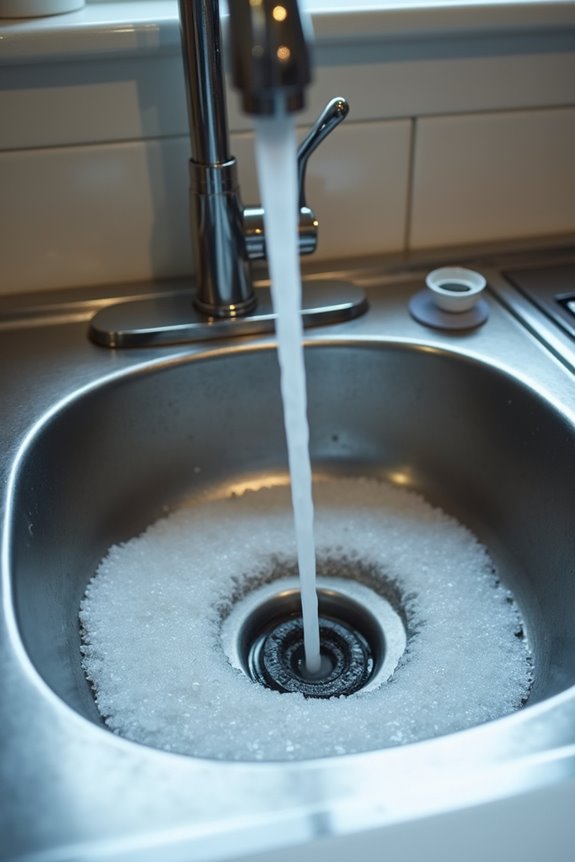
When does a gurgling sink stop being a minor annoyance and become a serious plumbing issue? You’ll need professional help when you notice these warning signs:
Multiple fixtures affected: If several sinks gurgle together, you’re likely facing a main vent blockage or sewer line problem requiring specialized diagnosis.
Persistent or worsening gurgling noises: Growing sounds indicate a developing blockage that DIY fixes won’t resolve.
Additional symptoms present: Watch for slow drainage, foul odors, water pooling, or backups in other drains. These point to significant blockages needing professional equipment.
Failed DIY attempts: Regular clogs returning despite at-home cleaners suggest partial blockages requiring hydro jetting or augers.
Sudden changes: Any abrupt increase in frequency or visible water pooling demands immediate professional intervention to prevent serious damage.