Your kitchen cloth doesn’t need extreme heat to ignite—oil-soaked fabrics spontaneously combust through chemical oxidation, often without any flame source at all. When moisture and oil combine in bunched towels, exothermic heat buildup accelerates rapidly, causing smoke within 15 minutes.
Risk factors include improper storage, stacking, and proximity to heat sources.
Prevent disaster by spreading damp rags flat immediately, storing soiled cloths in metal containers away from flammables, and transferring used fabrics to approved containment right away.
Understanding your daily safety routine prevents dangerous incidents.
When Do Kitchen Cloths Catch Fire? Temperature and Risk Factors
How quickly can a kitchen cloth actually catch fire? You might be surprised. Oil-soaked rags pose a serious risk through spontaneous combustion. Heat buildup occurs when moisture and oxidation combine in bunched fabrics. Within 15 minutes, towels left on surfaces can smoke dangerously.
Oil-soaked rags can smoke dangerously within 15 minutes through spontaneous combustion when moisture and oxidation combine in bunched fabrics.
Risk Factors That Matter
Several conditions increase danger: prior soaking in finishes or solvents, improper storage, and stacking rags in piles. Keeping cloths near heat sources accelerates the process significantly.
Disposal Safety Steps
You can prevent incidents by spreading used rags flat to dissipate heat. Monitor them until they cool completely. Store soiled cloths in water-tight metal containers away from flammables. Never pile or bunch oil-soaked materials together. Immediate safe disposal remains your best defense against spontaneous combustion risks.
Why Damp, Oil-Coated Towels Self-Ignite (Even Hours Later)
When you leave an oil-soaked cloth sitting on your workbench, something dangerous is happening inside those fibers. Exothermic oxidation—a chemical reaction releasing heat—accelerates when oils absorb into towels. Trapped heat builds rapidly, especially when cloths bunch or pile together. You don’t need an open flame for ignition to occur.
| Risk Factor | Timeline | Heat Level | Prevention |
|---|---|---|---|
| Wadded microfiber | 15 minutes | Rapid buildup | Flatten immediately |
| Piled rags | Hours | Accelerating | Space apart |
| Bunched towels | 4+ hours | Critical | Spread thin |
| Sealed containers | Extended | Dangerous | Never store |
| Proper disposal | N/A | Eliminated | Remove daily |
Safe disposal and storage guidelines matter. Flatten used cloths to cool them. Never leave oil-soaked towels in piles. Immediate removal prevents spontaneous combustion risk entirely.
Safe Drying and Storage: Prevent Heat Buildup Before It Starts
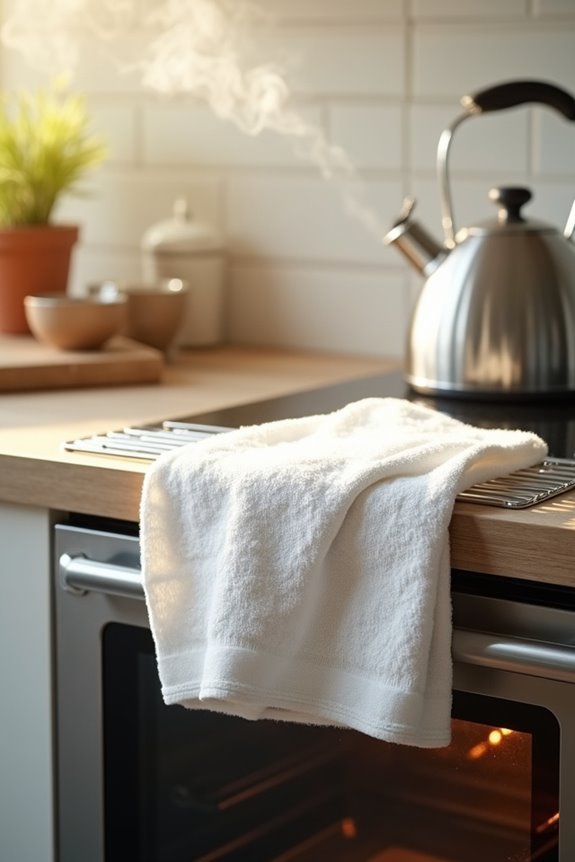
Safe Drying and Storage: Prevent Heat Buildup Before It Starts
Why the Risk?
A wet oil-soaked cloth sitting in a pile creates serious hazards. Bunched fabrics trap heat and moisture, generating conditions for spontaneous combustion and grease fire risks.
Immediate Drying Protocol
Lay greasy rags flat immediately after use. Never stack or bunch them on surfaces. Remove them from heat sources right away to prevent accelerated oxidation.
Proper Equipment and Guidelines
Use commercial-grade washer-extractors and follow all drying guidelines carefully. Don’t leave loaded dryers unattended—residual heat buildup requires constant monitoring.
Storage Solutions
Store dirty fabrics in listed containment containers with self-closing lids. Separate them from clean cloths to prevent heat accumulation and cross-contamination.
Professional Alternative
Consider outside laundering services for greasy rags. They provide proper cooling during drying and maintain safety standards throughout the process.
Your Daily Cloth Safety Checklist
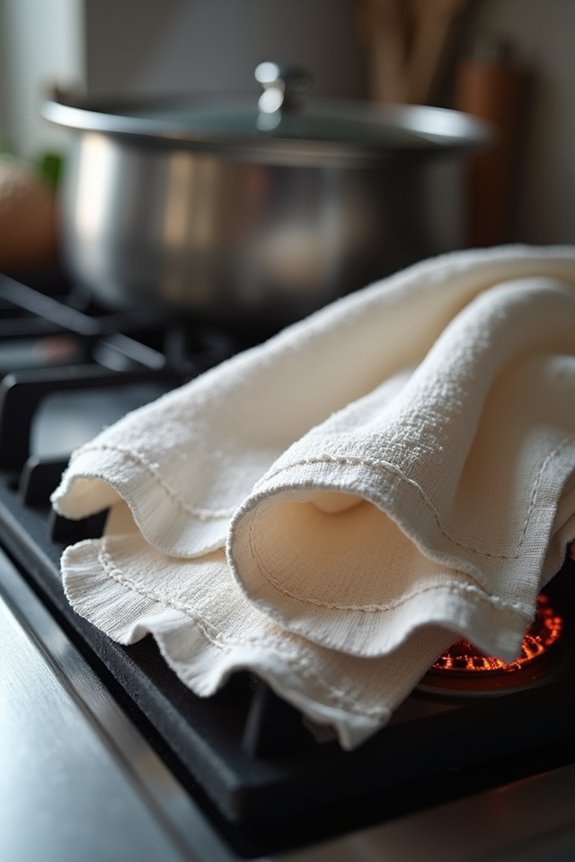
A simple routine prevents cloth-related fires in your kitchen. You should establish daily habits that keep oily rags safe and contained.
Morning and Evening Tasks:
- Inspect all cloths used for finishing products or cooking oils
- Never leave oily rags bunched together on counters or floors
- Transfer used cloths immediately to approved containment containers
- Spread damp rags flat to cool before storage
Heat Buildup Prevention:
Flatten cloths promptly after use. Store them in metal, vented containers designed for safe disposal. Monitor your workspace regularly, even after work ends, since spontaneous ignition can occur hours later.
Weekly Check:
Review your cloth storage areas. Replace worn containers. Consider alternative cleaning methods that reduce oily rag generation.
This straightforward approach protects your home and family.
Replace Your Towels When You See These Warning Signs
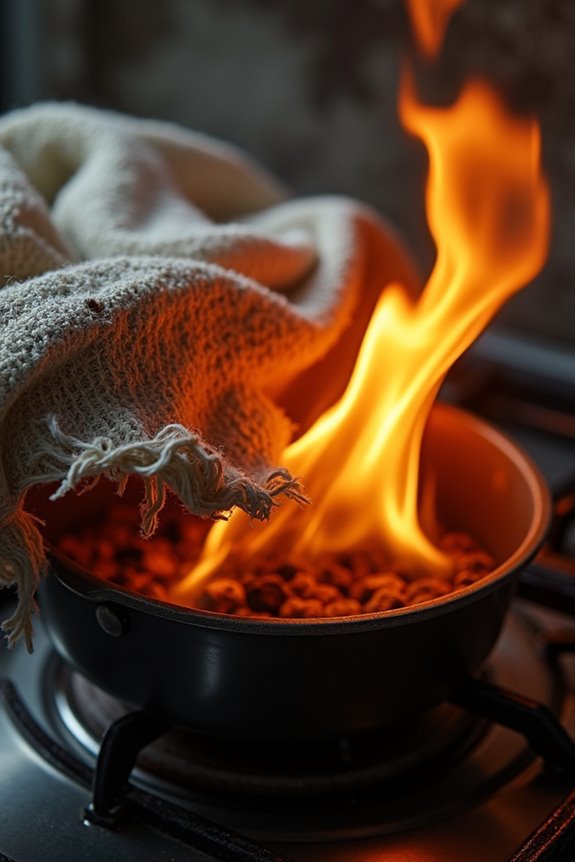
How do you know when a kitchen cloth has become a fire hazard? You need to recognize critical warning signs immediately. Watch for these indicators that mean replacement time:
- Heat buildup developing in the cloth during or after use
- Visible smoke rising from the towel’s surface
- Charring or discoloration appearing on the fabric
- Unpleasant odors emanating from the material
- Damp or oily residue that won’t dry properly
Don’t ignore these signals. Heat buildup combined with oil creates spontaneous combustion risk. Remove smoking towels from your workspace right away. Replace them with fresh ones immediately. Never leave heated towels balled up or draped on surfaces unattended. Proper disposal prevents fires in your kitchen. Regular inspection after finishing tasks keeps your workspace safe and protects your home from preventable accidents.