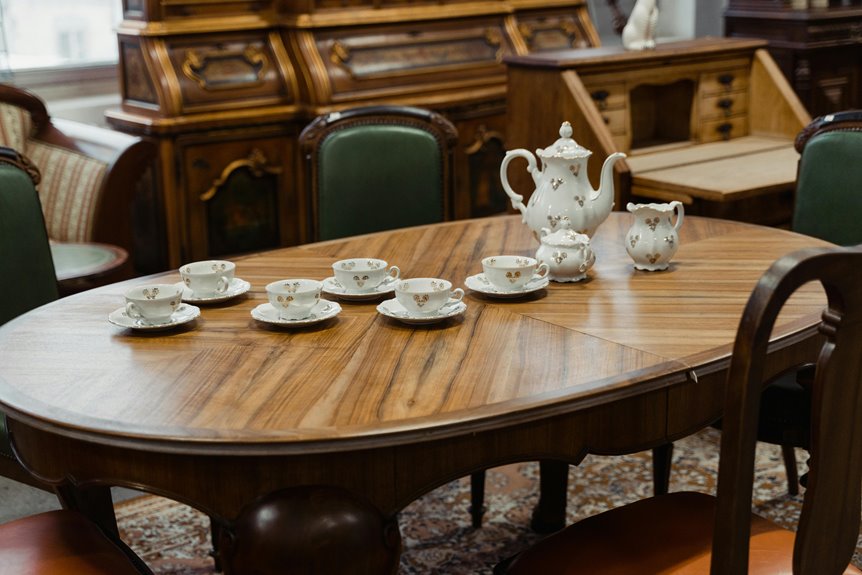
Your antique dining room set’s worth hinges on five factors: age, materials, craftsmanship, condition, and regional demand—not age alone. Solid wood (mahogany, walnut, oak) commands higher prices than veneer. Hand-cut joinery and maker’s marks boost value significantly. Check condition carefully: structural damage, missing pieces, and poor refinishing reduce worth. Document provenance with photos and receipts. Mid-century sets fetch $300–$1,000; documented Jacobean or Regency pieces reach $2,000–$7,000. Research comparable sales in your region, then list across multiple platforms. The sections ahead reveal exactly how to assess and price your specific set.
Age and Historical Periods: Why Older Doesn’t Guarantee Higher Value
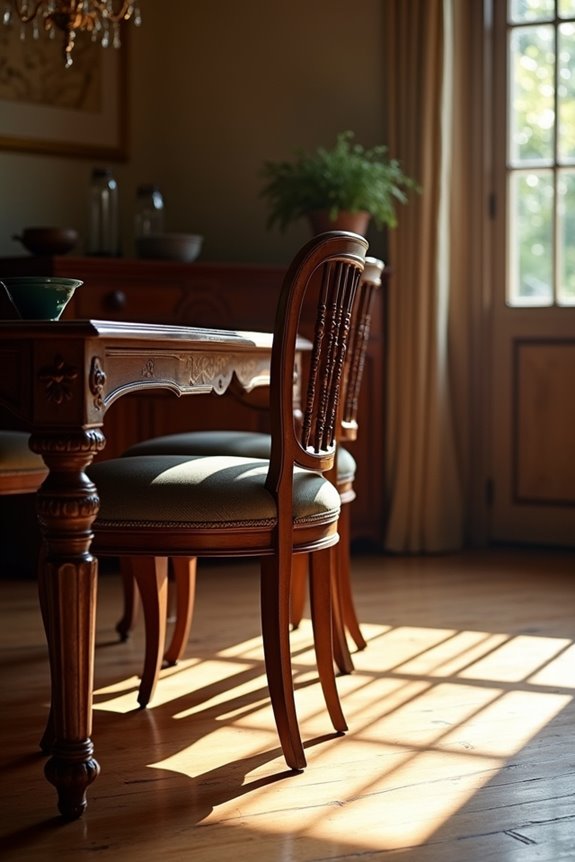
How old is your dining room set, really? Age alone doesn’t determine antique dining table set valuation. Instead, condition, provenance, and maker reputation influence value equally or more.
Age alone doesn’t determine antique dining table value—condition, provenance, and maker reputation matter equally or more.
What Actually Matters
You might own a Victorian piece from 1890, but chipped veneer or missing original hardware reduces its worth significantly. Conversely, a well-maintained 1920s Edwardian set commands premium prices among collectors today.
Key Value Factors
Hand-cut joinery and natural patina signal authenticity and craftsmanship. These details prove true age better than dates alone.
Watch for Red Flags
A set described as “over 100 years old” with non-original green paint raises questions about authenticity. Refinished surfaces often diminish perceived value, even for genuinely aged pieces.
Consider current market trends too. Regency and Jacobean styles fluctuate in desirability yearly, affecting your set’s actual worth regardless of age.
Solid Wood vs. Veneer: The Materials That Drive Price
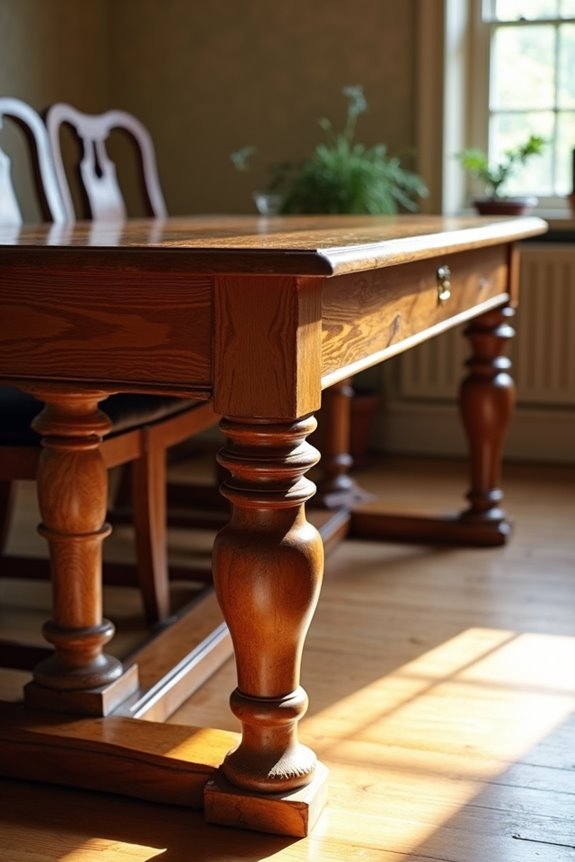
When you’re evaluating an antique dining room set, the material beneath the surface directly affects value. Solid Wood construction typically commands higher prices than veneered alternatives. You’ll find that mahogany, walnut, and oak sets retain greater value than softwood pieces.
Construction details reveal authenticity. Dovetail joints and pegged legs signal superior craftsmanship. You should inspect for major splits, worm damage, or replaced components—these compromise value significantly.
| Material Type | Quality Signal | Value Impact |
|---|---|---|
| Solid Wood (Mahogany) | Hand-cut joinery | Higher value |
| Veneered Construction | Machine-made joints | Lower value |
| Softwood | Minimal craftsmanship | Reduced worth |
Aesthetic authenticity matters too. Age-appropriate patina and original finishes support stronger valuations. You’re investing in pieces where material integrity directly influences market price.
Construction Quality: Hand-Cut Joinery and Craftsmanship Signals
Construction Quality: Hand-Cut Joinery and Craftsmanship Signals
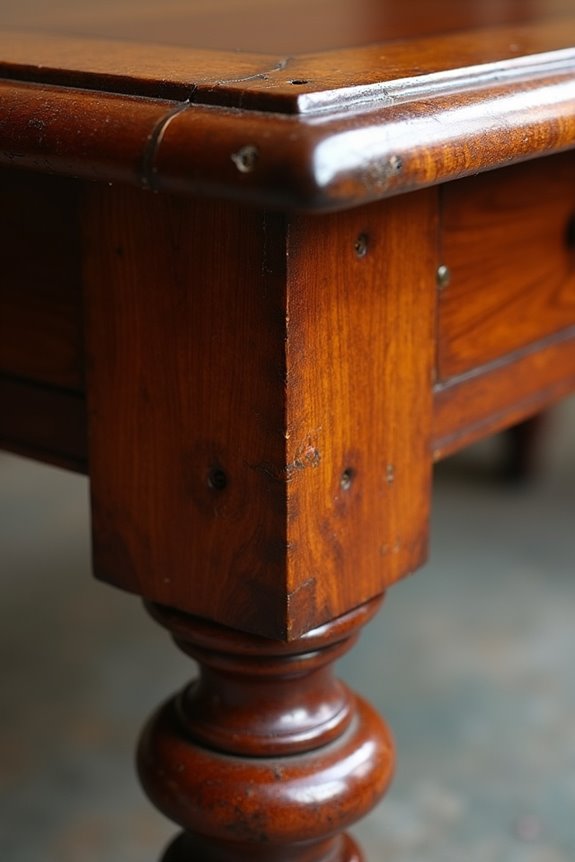
What separates a genuine antique from a skillful reproduction? Look closely at how your dining set’s pieces connect. Hand-cut joinery reveals authentic craftsmanship that drives value considerably higher.
Identifying Quality Joinery
Examine the legs and frame joints carefully. Mortise-and-tenon joints show traditional cabinetmaking expertise. Pegged legs indicate skilled hand assembly, not modern factory production. Dovetail joints on drawers signal superior construction methods.
What Matters Most
Visible craftsmanship details authenticate your piece’s age and quality. Original joinery patterns remain consistent with historical standards. Modern replacements or heavy restoration work obscure these valuable indicators, reducing your set’s worth substantially.
Your antique’s construction methods ultimately determine its authenticity and market value. Genuine hand-crafted elements justify premium pricing among serious collectors.
Find the Maker: Verifying Provenance and Maker’s Marks
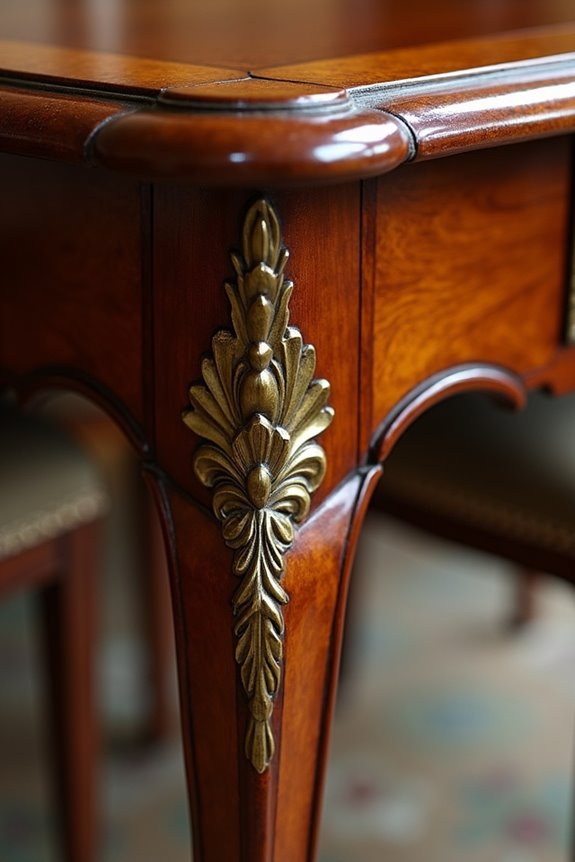
Discovering who built your dining set can increase its value considerably. Start by examining the underside of your table and chairs for makers marks, labels, or stamps. These identifying features establish authenticity and designer attribution. Check inside drawers and along leg joints carefully.
If you find no marks, don’t worry. Construction methods reveal valuable clues about origin and period. Hand-cut joinery and specific wood choices suggest particular regions or makers.
Documentation strengthens your case significantly. Old receipts, family records, or photographs support provenance claims. Pieces attributed to renowned designers like Chippendale command premium prices.
Consider hiring an expert for assessment. They analyze stylistic details and craftsmanship to identify makers when marks are absent. This professional evaluation substantiates your dining set’s true value and history.
What’s Its Condition? Damage, Wear, and Restoration Impact
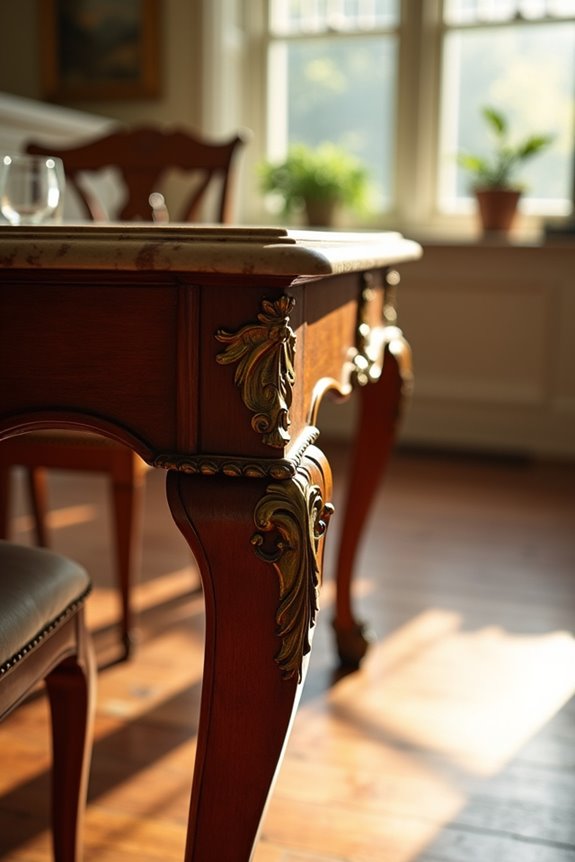
You’ll need to distinguish between normal aging and serious structural problems that hurt your set’s value. Look for specific issues: surface scratches and fading are expected, but deep cracks in wood, active woodworm, or missing legs demand honest documentation. Your restoration choices matter greatly—professional repairs using original materials preserve value, while mismatched replacements or poor refinishing work significantly reduce what buyers will pay.
Normal Wear Versus Structural Damage
How can you tell if your antique dining set’s condition helps or hurts its value?
Surface Wear Preserves Value
Age marks like natural patina and hand-cut joinery actually demonstrate authenticity. Light scratches, fading, and minor dents are expected. These signs tell your set’s story without compromising structural integrity.
Structural Damage Reduces Worth
Cracked chair backs, large splits, woodworm, or replaced parts create serious problems. You must document these issues clearly during valuation. A single structural defect can significantly lower your set’s market price.
Key Distinction
The difference matters: patina shows character; structural damage shows deterioration. Professional restoration respecting original construction may help. Poor restorations hurt value considerably. Have experts assess whether damage is cosmetic or structural before determining your antique’s worth.
Restoration Methods And Value Impact
Once you’ve identified whether your dining set has cosmetic wear or structural damage, the next step involves understanding how repairs affect value.
Professional restoration preserves or enhances worth when done sympathetically. Generic refinishing or invasive repairs typically reduce value substantially. Look for provenance and maker marks—labels inside drawers or underside stamps—which greatly increase value when present.
| Restoration Type | Value Impact | Best For |
|---|---|---|
| Professional sympathetic work | Preserves/enhances | Original construction respect |
| Generic refinishing | Reduces substantially | Budget pieces only |
| Structural repairs | Varies widely | Functional integrity |
| Cosmetic touch-ups | Minimal impact | Surface-level wear |
| Invasive modifications | Damages value | Avoided entirely |
Quality craftsmanship matters greatly. Hand-cut joinery, solid wood construction, and natural patina demonstrate authentic age. Document all restoration work completed. Professional documentation supports future appraisals and demonstrates careful stewardship to potential buyers seeking genuine antiques.
Assessing Material Integrity Issues
What’s really hiding beneath that surface finish? Your dining set’s condition directly impacts its value. Look for these key issues: cracks in wood, worn joints, worm damage, and missing components. Each problem reduces fair market price differently.
Wear vs. Damage
Expected wear—like a natural patina—actually supports authenticity. Excessive damage tells another story. Hand-cut joinery and original construction confirm age; replacements or poor repairs lower value significantly.
Documentation Matters
Check underneath chairs and inside drawers for maker marks or labels. These discoveries substantially boost valuation and buyer confidence.
Professional Assessment
Honest, sympathetic restoration respects original methods. Poor work typically decreases worth. Document every condition note carefully. Specific details about chair backs or missing pieces directly affect pricing and buyer trust in your antique’s true market value.
Style and Rarity: What Collectors Actually Want Right Now
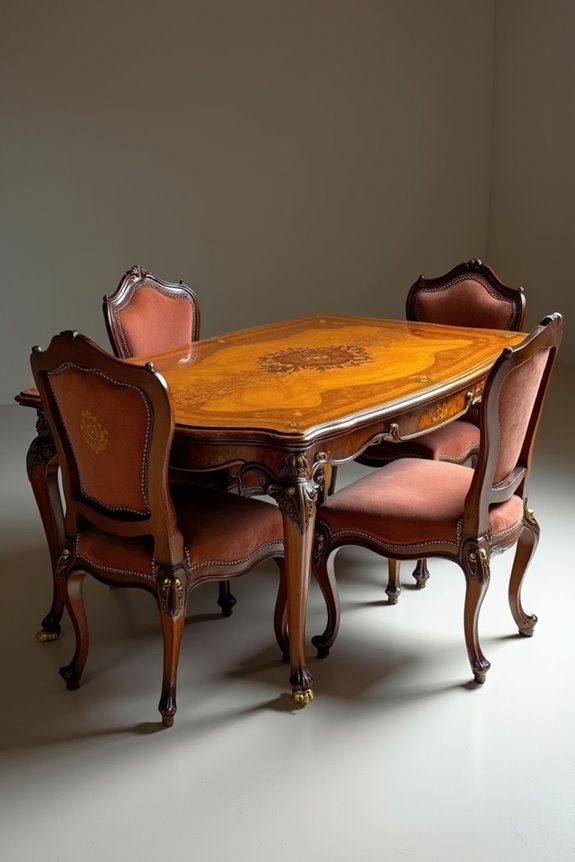
If you own a Jacobean-style dining set, you’re sitting on something collectors actively seek out right now. These historic designs—characterized by carved details and ornate woodwork—command higher prices than contemporary pieces because they’re harder to find and deeply desired by serious buyers. Your set’s rarity and specific style directly determine what someone will actually pay in today’s market.
Market Demand For Jacobean Styles
Why do collectors today gravitate toward Jacobean dining sets? You’re likely drawn to authentic details that signal genuine craftsmanship. Hand-carved motifs and distressed finishes boost perceived value significantly. Collectors prize solid wood construction—oak and mahogany pieces command premium prices. You’ll notice pegged or hand-cut joints indicate superior quality.
What Makes Pieces Valuable
Rarity matters tremendously: custom designs outpace mass-produced equivalents. Documented provenance or maker marks increase investment potential. Condition heavily influences pricing—original finishes and intact carvings retain desirability. Heavily restored pieces typically underperform in resale markets.
Regional Price Variations
Your location affects demand considerably. Historic European-inspired interior markets show stronger interest. Buyers in Restoration-style regions prioritize Jacobean aesthetics, driving prices upward. Regional preference directly correlates with selling price potential.
Rarity And Desirability Factors
You’ll find that today’s collector market rewards specific combinations: distinctive style paired with limited production. Your antique dining table commands higher prices when it combines sought-after design with scarcity.
What collectors actively pursue:
- Regency and Jacobean revival pieces that showcase hand-crafted details and period authenticity
- Custom commissions with documented maker provenance that distinguish them from mass-produced sets
- Original finishes in authentic colors that prove careful preservation and historical integrity
Desirable styles like Regency consistently outperform common mid-century veneered sets at auction. Regional trends shift demand cycles, so local market activity influences your set’s current value significantly.
Your antique dining table’s rarity intensifies when it combines three factors: distinctive style, limited production runs, and preserved original finishes. These elements together create the premium pricing collectors actively seek today.
What Recent Comparables Sold For (And How to Find Them)
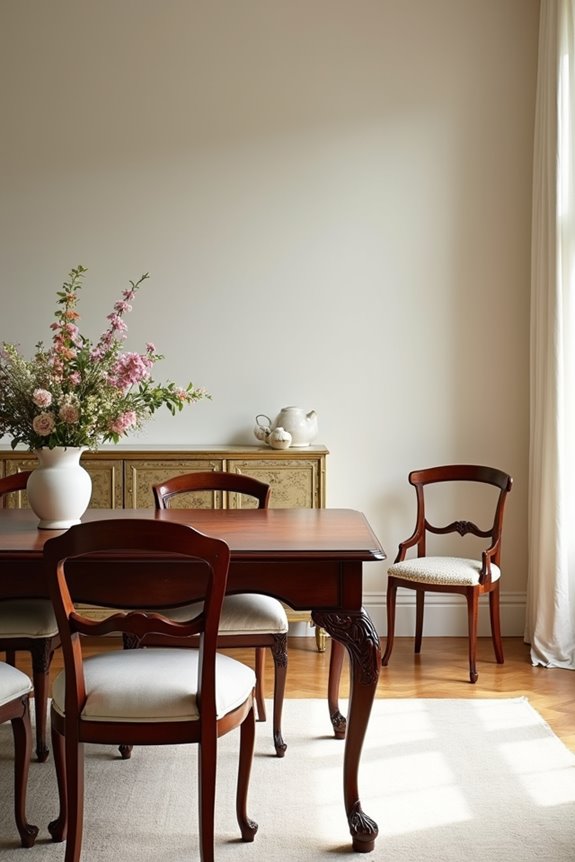
Determining your dining room set’s value starts with researching what similar pieces have actually sold for—not what sellers are asking. You’ll find antique dining room set value comparables across several platforms: Facebook Marketplace, GoAntiques, Chairish, and eBay show real transaction prices.
Focus on these price ranges: mid-century mixed sets typically sell for $300–$1,000, while complete American-style suites fetch $1,000–$1,500. Documented antique pieces—Jacobean, Regency, mahogany—command $2,000–$7,000 depending on condition and maker.
Worn sets or those with missing pieces usually drop below $1,000 unless they possess rare historic appeal. Adding auxiliary pieces matters substantially: each hutch, china cabinet, or buffet in fair condition boosts value by $500–$700.
Clear photos of marks, joins, and patina expose your set to targeted buyers, directly affecting final price. Document everything you find during research.
Should You Get a Professional Appraisal?
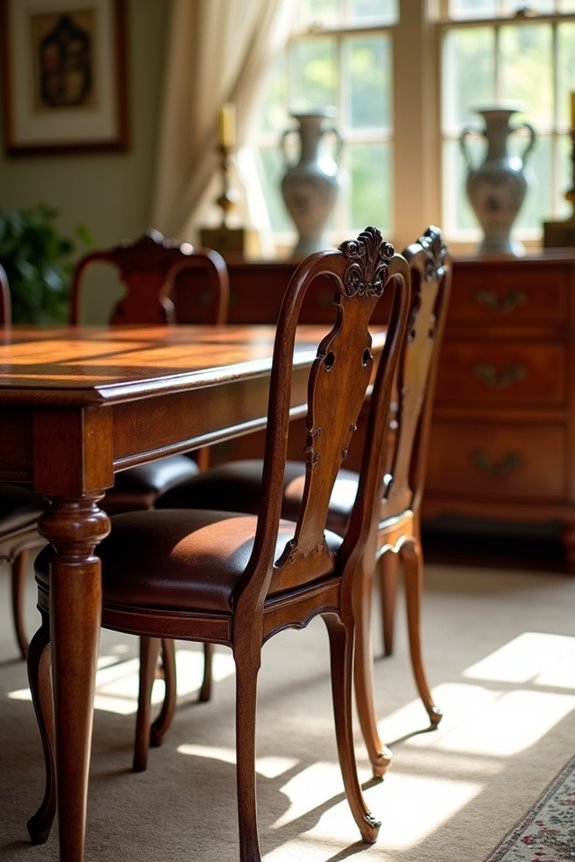
You’ll want a professional appraisal when maker marks, style details, or provenance are unclear—these factors directly affect your set’s value. A qualified appraiser examines construction methods like dovetails and joinery, plus materials such as solid mahogany versus veneer, to confirm authenticity and age. You should gather photos, condition documentation, and any restoration records before meeting with an appraiser to receive an accurate written valuation with a stated market price.
When Appraisal Makes Sense
When should you invest in a professional appraisal for your antique dining room set?
You’ll benefit most from an appraisal when you face these situations:
- Your set has uncertain provenance or unclear maker marks that affect value
- Mixed period components confuse the overall dating and authenticity
- You’re settling ownership disputes among multiple heirs fairly
An appraiser evaluates hand-cut joinery, patina, and originality. They assess whether restoration was sympathetic or damaging to value. You’ll receive a defensible fair market value (FMV) for insurance, sales strategy, or estate planning purposes.
Sets with documented antique dining room set provenance from renowned periods—Georgian, Victorian, Jacobean—command higher values. Professional appraisals remove guesswork. They provide concrete evidence for major financial decisions involving inheritance or sale.
Finding Qualified Appraisers
Where do you find an appraiser you can trust with your antique dining room set? Start by contacting professional organizations. The American Society of Appraisers (ASA) maintains directories of certified experts specializing in furniture appraisal.
You’ll want appraisers with specific experience in antique dining furniture. Ask about their credentials, training, and years handling similar pieces. Request references from previous clients.
When you contact potential appraisers, provide clear photos of each piece. Share details about construction, maker marks, and any known history. Discuss their appraisal fees upfront—many charge hourly rates or flat fees.
A qualified appraiser examines your set thoroughly. They’ll inspect underside surfaces, check for authenticity markers, and document condition honestly. Their detailed appraisal report establishes fair market value based on current demand and comparable sales.
Why Your Set’s Completeness Matters: Missing Chairs and Leaves
Because buyers expect all original components, a complete dining room set commands considerably higher prices than partial sets. You’ll find that missing chairs or leaves considerably reduce your set’s appeal and resale value.
Complete dining room sets command considerably higher prices than partial sets with missing chairs or leaves.
Impact of Missing Pieces:
- Missing chairs disproportionately lower offers since buyers calculate replacement costs
- Absent leaves reduce functionality and perceived completeness
- Incomplete sets signal additional investment needed from purchasers
Missing chairs particularly affects desirability. Buyers view them as high-demand components, so lacking even one or two pieces can considerably diminish your asking price.
Pricing Strategy: Disclose exactly which items are missing. Factor in current replacement costs when setting your price. A complete mahogany set from 1920 might fetch $3,500, but that same set without four chairs could drop to $2,200.
Transparency about missing pieces builds trust with serious collectors.
Original Finish or Paint: How Color Affects Buyer Interest
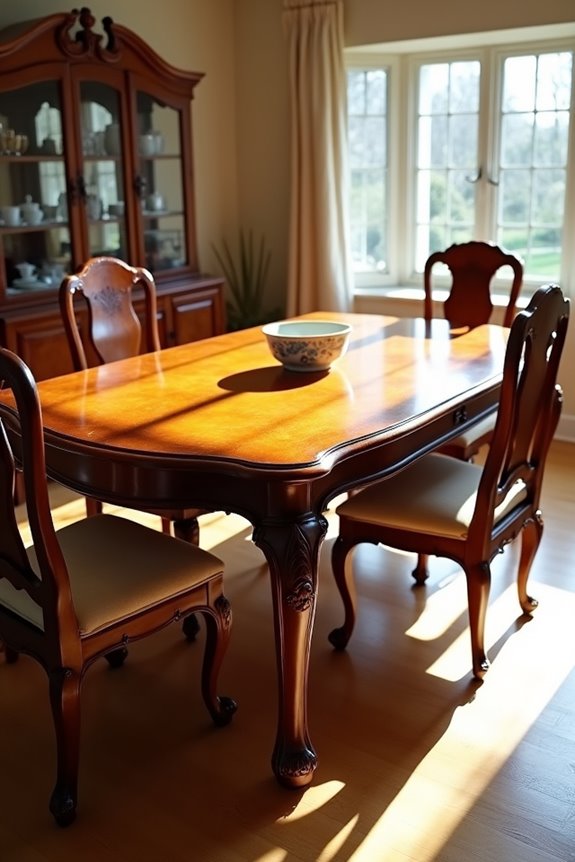
While a complete set with all its pieces matters greatly, the original finish you’ve maintained—or chosen to change—shapes buyer decisions just as substantially. Buyers often prefer authentic, original colors that tell your set’s true history. Green paint on a dining set attracts some collectors, yet others question whether it’s genuinely original.
Spotting Non-Original Finishes
Watch for red flags: inconsistent paint hues across chairs, new-looking surfaces on older wood, or patchy coverage. These signs suggest repainting and typically lower value.
Building Buyer Confidence
Documentation strengthens appeal significantly. Consistent patina across all pieces demonstrates authenticity and justifies premium pricing. If your set retains its original finish, highlight this advantage clearly. Photographs showing uniform wear patterns help buyers trust your pricing and feel confident in their investment decision.
Regional Demand Patterns and Their Price Impact
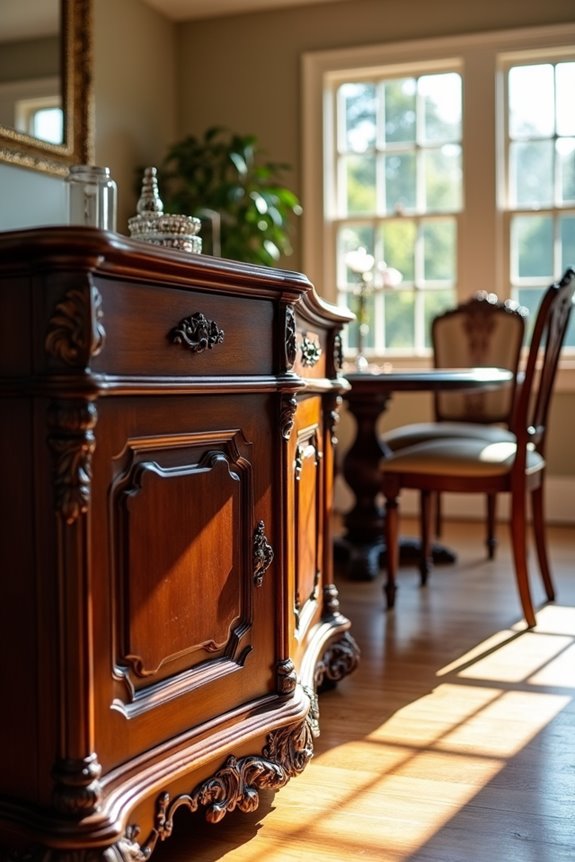
How you’re priced depends heavily on your location. Regional demand shapes what buyers will pay for your antique dining room set significantly.
Your set’s value shifts based on local preferences and market activity:
Your antique dining room set’s value shifts dramatically based on local preferences and market activity in your region.
- Strong dealer networks in your area boost prices through increased competition among serious collectors
- Weak buyer activity means slower sales and lower realized prices than markets with active communities
- Local stylistic trends determine premium potential—Regency sets fetch more in regions favoring Georgian aesthetics
Areas with robust vintage furniture communities see quicker sales and higher prices. Consider nearby auction houses and showrooms influencing buyer willingness to pay.
Check recent comparable sales in your specific region. Competition from local dealers directly affects your set’s market value. Research active antique communities within fifty miles of your location for accurate pricing guidance.
Where to List Your Dining Room Set for Maximum Reach
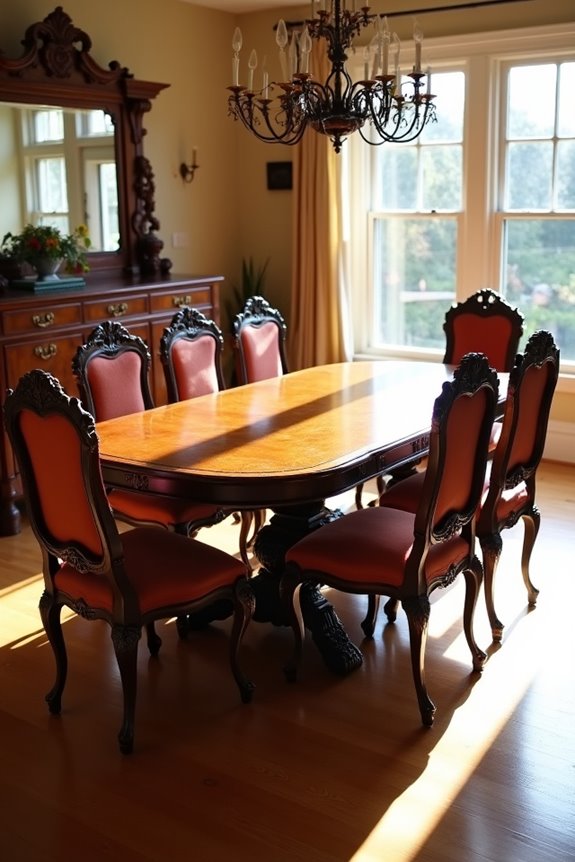
Once you’ve identified your set’s regional value, you’re ready to find buyers actively searching for pieces like yours. Listing your antique dining room set across multiple platforms expands visibility considerably. Each marketplace attracts different buyer types with specific interests and budgets.
| Platform | Best For | Audience Type |
|---|---|---|
| Facebook Marketplace | Local sales | General buyers |
| eBay | Serious collectors | Nationwide reach |
| Etsy | Vintage enthusiasts | Design-conscious shoppers |
| Chairish | Furniture specialists | High-end buyers |
| NextDoor | Community connections | Neighbors nearby |
Emphasize high-demand components like tables and chairs prominently. Note any display or buffet cabinets separately to highlight additional value. Include maker’s marks and period details that attract serious buyers. High-quality photos showcasing your entire set, individual chairs, and unique details improve engagement considerably. Clear condition notes establish accurate expectations and build buyer trust immediately.
Price Smart: Avoid These 7 Mistakes That Leave Money on the Table
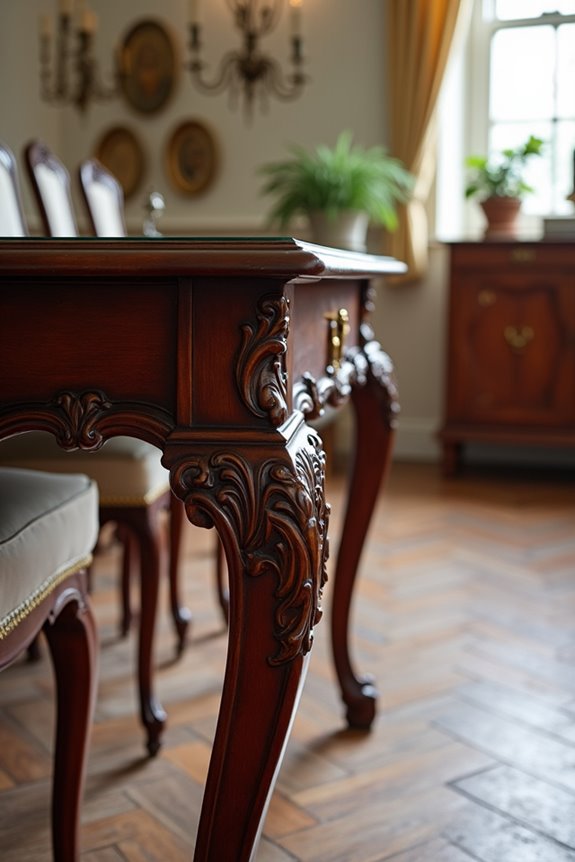
You’ve done the hard work of researching your antique dining room set’s value, but pricing mistakes can quickly erase those profits. Smart pricing requires strategy and flexibility, not guesswork.
Common pitfalls to avoid:
- Starting too high without willingness to adjust based on buyer interest
- Ignoring condition issues like cracks or replaced parts that honest buyers notice
- Relying solely on one selling platform instead of diversifying channels
Begin with competitive research across Facebook Marketplace, eBay, and Chairish. Price slightly above your target; you’ll drop it if needed. Always disclose flaws transparently—buyers trust honesty more than hidden problems discovered later.
Document maker marks and provenance thoroughly. These details justify premium pricing and build confidence. Adjust your dining set’s price within two weeks if you’re not getting offers. Flexibility wins sales.