Standard dining tables stand 28–30 inches tall, with 30 inches most common. You’ll want 10–12 inches of clearance between your chair seat and the table’s underside for comfortable legging room. Pair a 29-inch table with 17–19 inch chairs to avoid knee contact.
Counter height (34–36 inches) works for open kitchens, while bar height (40–42 inches) suits casual entertaining. Measure your table’s underside accurately and test your seating arrangement before purchasing.
Getting these heights right prevents crowding and posture problems during meals. There’s much more to learn about matching heights to your specific space.
What’s the Standard Dining Table Height?
Why does dining table height matter? Getting it right provides comfort for everyone at your table.
Proper dining table height ensures comfort and functionality for all your guests at mealtime.
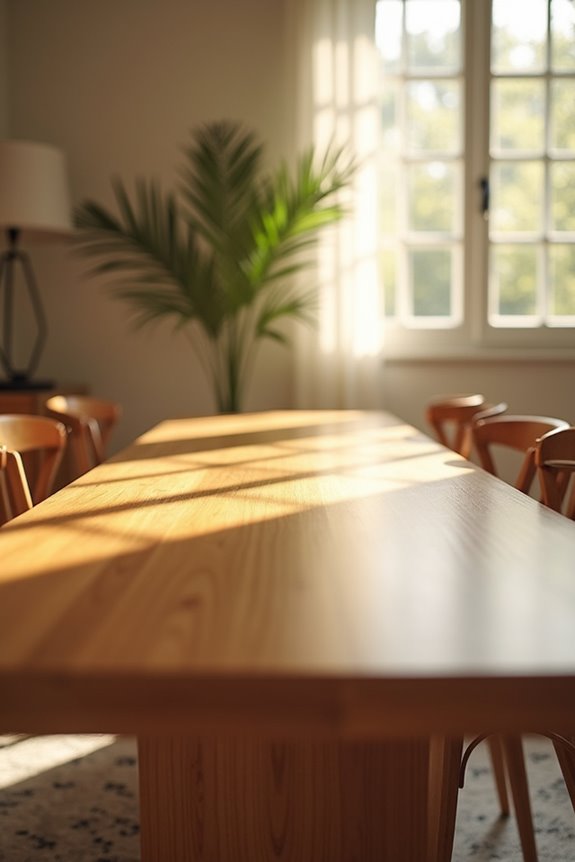
The standard dining table height ranges from 28 to 30 inches, with 30 inches being the most common choice for most homes. This measurement goes from floor to tabletop surface.
You’ll want chair seat height around 17 to 19 inches. This pairing creates the legroom clearance you need: about 10–12 inches between the chair seat and table underside.
Understanding underside table height helps too. Most tables measure 28 to 30 inches underneath because of tabletop thickness (typically 1.5–2 inches). This standard height works well for formal dining and accommodates various seating options without compromise.
Why the 10–12 Inch Clearance Rule Changes Everything
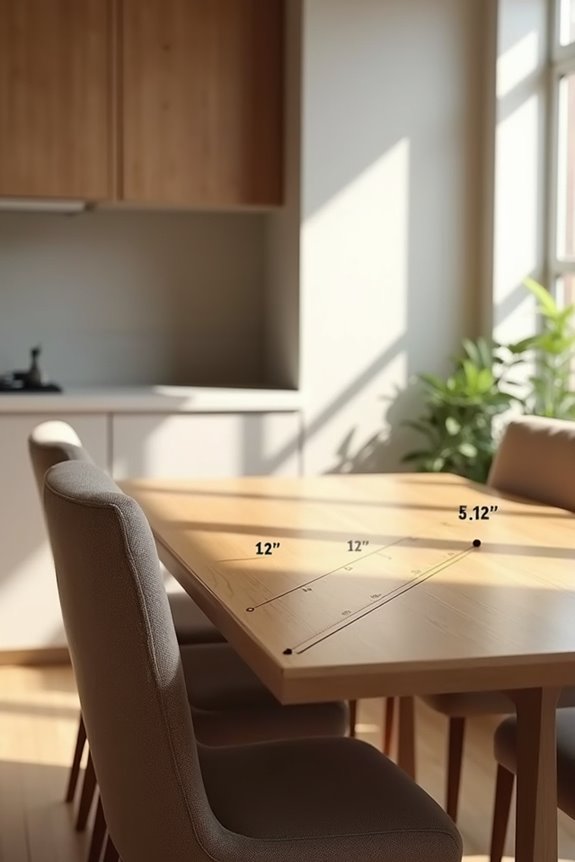
Have you ever felt cramped while eating dinner? That uncomfortable sensation happens when your table height and seating clearance don’t work together. The 10–12 inch clearance rule improves dining comfort by connecting table height to dining chair height. Here’s why: a 29-inch table pairs with 17–19 inch chair height, leaving exactly that necessary under-table clearance. This legroom lets you sit naturally without hitting your knees or thighs. Measuring to the tabletop’s underside ensures accurate calculations. When you ignore this standard, you create problems: legs bump the apron, posture suffers, and meals feel rushed. Professional designers prioritize this clearance because it’s non-negotiable for comfort. Understanding this relationship means you’ll choose dining furniture that actually works together, creating spaces where everyone relaxes and enjoys meals properly.
When to Choose Counter or Bar Height Instead
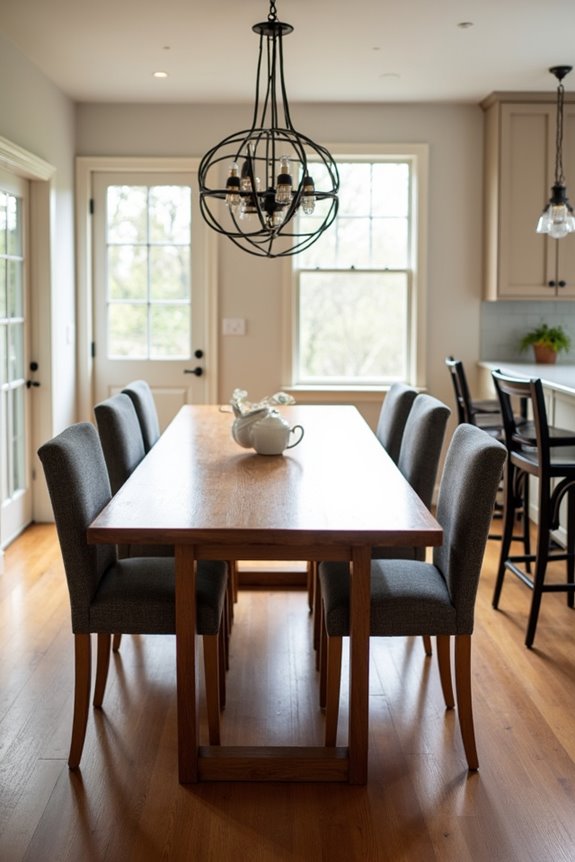
You’ll want counter height—34–36 inches—when you’re furnishing small kitchens or open-plan spaces that need visual breathing room. Bar height works best for casual entertaining because it encourages face-to-face conversation and creates an informal, modern atmosphere. Both heights improve visual flow by making rooms feel less cramped: pair counter height with 24–26 inch stools or bar height with 30–32 inch stools for proper comfort.
Counter Height For Small Spaces
When you’re furnishing a compact dining area, counter height tables offer a practical solution. These tables stand 34–36 inches tall, creating an open-concept feel that makes small spaces feel larger. You’ll pair them with seating height 24–26 inches for comfortable dining.
Counter-height tables work well for several reasons:
- They visually extend your kitchen counters and islands seamlessly
- They require less floor space than standard dining tables
- They encourage informal dining and quick meals
For small spaces, counter height dining table height affects how you use your room. The elevated design opens sightlines across your kitchen and living areas. This informal dining setup suits compact apartments and condos well. You’ll find that counter-height tables maximize functionality while maintaining a modern aesthetic.
Bar Height For Casual Entertaining
Bar-height tables stand 40–42 inches tall, creating an elevated dining experience. They pair perfectly with bar stools featuring 28–30 inch seat heights.
Why Choose Bar Height
Bar height works well for casual entertaining and open-concept spaces. You’re designing a social atmosphere that encourages mingling and standing conversations. This dining table height creates visual divisions between zones without closing off your space.
Consider Your Needs
Bar-height seating requires thoughtful space planning. Your bar stools must match the table precisely for seating comfort. However, this setup challenges shorter users or those with mobility limitations.
Bar height suits compact areas needing functional elegance and contemporary style.
Visual Flow And Open Concepts
How does your dining space connect to surrounding rooms? Your dining room table height directly impacts visual flow and space perception throughout open-plan layouts.
Counter height tables (34–36 inches) work well in open-plan kitchens because they maintain sightlines across rooms. This seating alignment creates an unobstructed view that makes spaces feel larger. Consider these design benefits:
- Kitchen islands with counter height appear less imposing visually
- Open-concept living areas maintain continuous sight lines without barriers
- Lower profiles reduce visual clutter in compact floor plans
Bar height tables (40–42 inches) serve different purposes in open concepts. They function as subtle social dividers between living and dining zones without blocking views completely. Your room layout determines which option suits you best. Taller heights work particularly well when you want to maximize space perception while maintaining connection between areas.
Matching Chair Height to Your Table
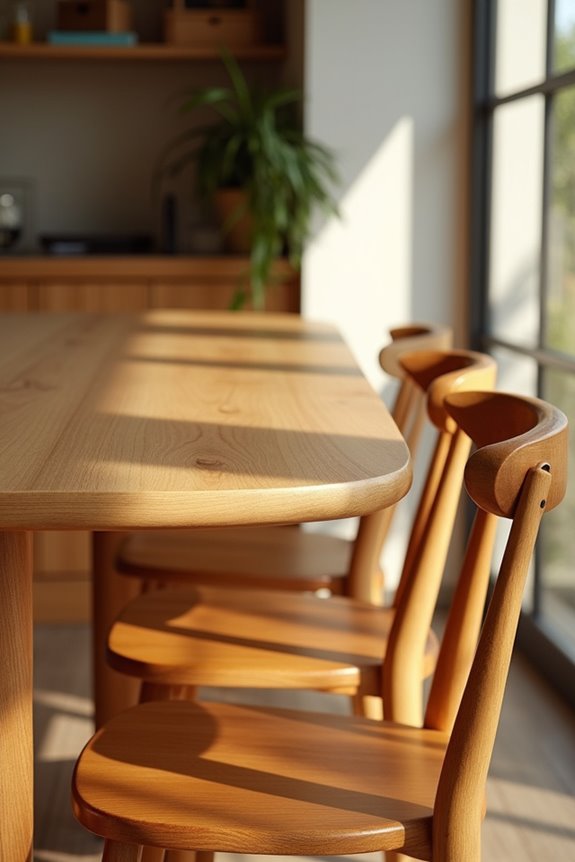
Once you’ve picked your dining table height, you’ll need chairs that fit it properly. The right table-chair pairing creates comfortable seating for your whole family.
Standard table height ranges from 28–30 inches. For this dining table height, select chairs with seat heights of 17–19 inches. This chair height range provides proper legroom clearance of about 10–12 inches between the seat and table underside.
Standard dining tables at 28–30 inches pair best with 17–19 inch chairs for optimal 10–12 inch legroom clearance.
Higher tables require taller chairs. If you’re using a 32-inch table, look for chairs closer to 19–21 inches high. This maintains ergonomic alignment and proper sightlines.
The key principle: keep consistent spacing. Measure your specific dining table height, then calculate backward to find matching chairs. This straightforward approach prevents discomfort and allows your guests to enjoy meals comfortably.
Measuring Your Table the Right Way
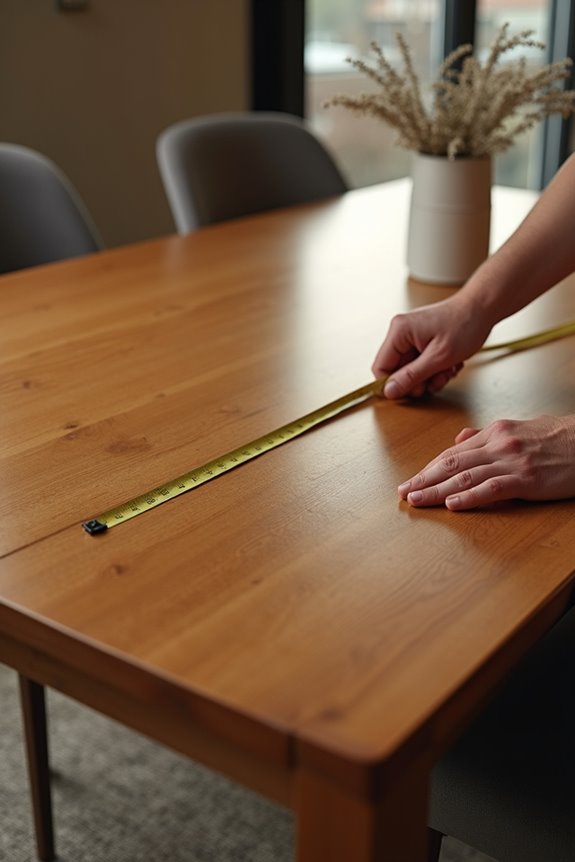
When you measure your dining table height, you’ll want to use the underside of the tabletop, not the top surface. The apron—that support structure beneath the table—can reduce legroom, so account for its thickness when measuring. This approach gives you an accurate evaluation of the clearance space where you and your guests will actually sit.
Measure From Floor Underside
To get an accurate measurement, you’ll measure from the floor straight up to the underside of your tabletop—not the top surface or the apron. This calibration method reveals true usable legroom and chair clearance for your dining room.
Why measure the underside? You’ll find:
- Actual legroom space between the table’s structural support and your guests’ knees
- True chair clearance needed for comfortable seating and movement
- Precise floor-to-underside distance that determines proper table height
Standard dining tables measure 28–30 inches using this floor-to-underside method. This measurement directly affects how well chairs fit underneath and how comfortably diners sit. When you’re calibrating your space, the underside measurement gives you the accurate foundation needed for proper dining room planning.
Account For Apron Impact
Why does the apron matter so much? The apron—that vertical panel beneath your tabletop—reduces usable legroom by three to five inches. You’ll measure from floor to the underside height, not the top surface, to capture this reality accurately.
Here’s what you need to know: subtract apron thickness from your table height standard planning. This maintains proper dining table comfort and adequate knee clearance between chair seat height and the table’s underside.
Practical Testing Method
Verify measurements in real conditions. Sit at your table with someone in a chair. Check that roughly ten to twelve inches exist between the chair seat height and underside height. This confirms your legroom accommodates actual seated bodies, preventing uncomfortable crowding during meals.
Height Solutions for Small Spaces
How can you fit a dining table into a cramped room without sacrificing comfort? Unconventional heights work well in compact dining spaces.
Consider these smart options:
- Counter height tables (34–36 inches) create an open, airy feel while requiring taller stools that tuck underneath
- Bar height dining (40–42 inches) maximizes vertical space and works well with bar seating in tight layouts
- Extendable tables at standard dining table height offer flexible seating without permanently overwhelming your area
Pair your chosen height with appropriate chair height. Maintain about 10–12 inches of seating clearance between the chair seat and table underside for comfortable legroom clearance. A 29-inch standard dining table height pairs well with 17–19 inch seats.
These strategic height solutions help you maximize your compact dining spaces effectively.
Height Mismatches That Kill Dining Comfort
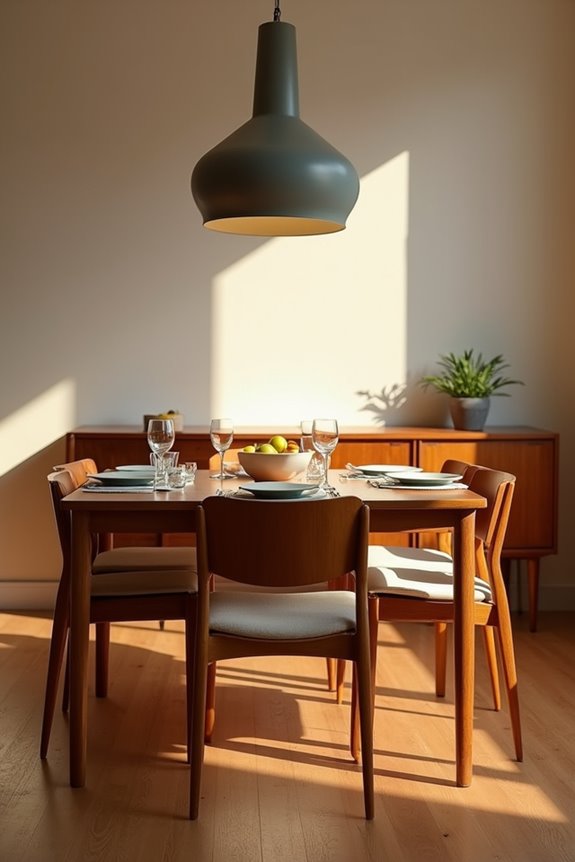
You’ve probably experienced it: your knees bump the table, or you can’t reach your plate comfortably. Height mismatch dining comfort stems from poor alignment between your dining table height and chair seat height.
The ideal table-to-seat gap measures 10–12 inches from chair seat to under-table clearance. Standard dining table height runs 28–30 inches, while proper chair seat height sits 17–19 inches. When these don’t align, you sacrifice knee clearance and posture.
The apron impact on legroom matters too. Table aprons reduce usable space by 3–5 inches, so measure to the underside, not the tabletop. Counter-height and bar-height options demand matching stools—24–26 inches for counters, 28–30 inches for bars. Testing seating beforehand prevents costly mismatches that compromise your dining experience.