
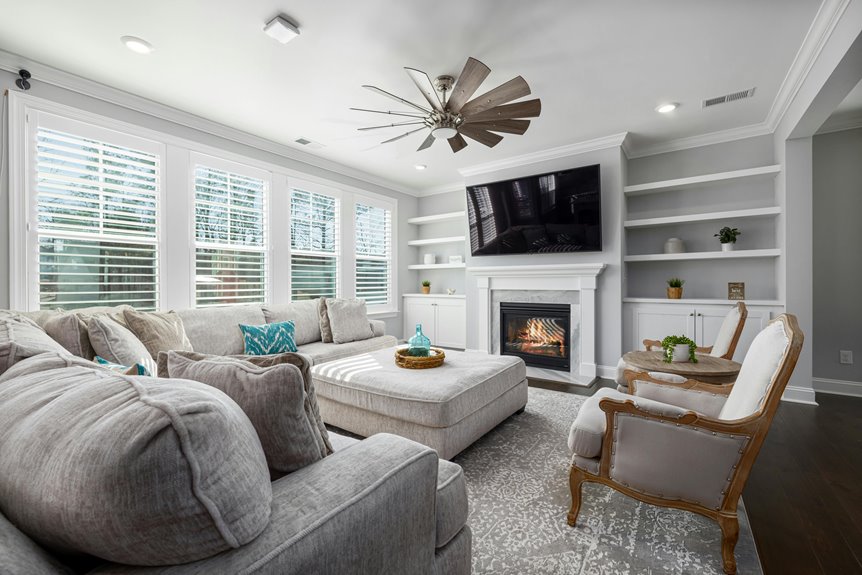
Measure your room’s square footage by multiplying length times width—this determines fan size. Rooms up to 144 sq ft need 36–42 inch fans; 225–400 sq ft require 50–54 inch models.
Check your ceiling height next: eight-foot ceilings work with flush mounts, while higher ceilings need downrods.
Position your fan centrally, maintaining 18 inches from walls for proper airflow.
Match blade count and motor power to your room’s dimensions for optimal performance. These fundamentals form the foundation for selecting your ideal fan.
Measure Your Room’s Square Footage First

How do you know which ceiling fan size will work best for your living room? Start by measuring your room’s length and width, then multiply these numbers together. A 15-foot by 16-foot room equals 240 square feet, for example.
Your square footage determines the right ceiling fan size. Here’s what you need to know: rooms up to 144 square feet need 36–42 inch fans, while 225–400 square feet spaces need 50–54 inch fans. Rooms exceeding 400 square feet require 56-inch fans or larger.
Consider your room’s layout carefully. If your space has an open plan or irregular shape, measure the total open square footage instead of just one rectangular area. This allows proper airflow distribution throughout your entire living space.
Ceiling Height Determines Your Mounting Style
Your ceiling height directly determines whether you’ll use a flush mount or downrod installation. For standard eight-foot ceilings, flush mounts work well, but ceilings over nine feet require downrods (typically two to six inches) to position blades at the optimal seven to eight-foot height. Sloped ceilings need special adapter kits for proper blade alignment and safe installation.
Standard vs. Flush-Mount
Standard vs. Flush-Mount
When choosing between mounting styles, ceiling height becomes the deciding factor. You’ll find two main options: flush-mount and standard downrod installation.
Flush-Mount Installation
For ceilings around eight feet, flush-mount fans sit close to the ceiling. They work well for low spaces where you need proper clearance. This mount type eliminates dangling hardware and creates a streamlined appearance.
Standard Downrod Installation
Ceilings at nine feet or higher benefit from standard mounting with a downrod. The downrod extends your fan down, positioning blades effectively across the room. This setup optimizes airflow and maintains visual proportion. You’ll achieve the recommended 8–9 foot hanging height for peak performance.
Consider your mount type carefully—it affects both function and aesthetics directly.
Downrod Selection Guide
Calculating Your Downrod Length
Match your downrod length to your ceiling height using this formula: downrod length equals ceiling height minus nine feet. For a 12-foot ceiling, you’d select a 3-foot downrod. This positioning keeps blade tips at the ideal 8–9 feet above your floor.
Selecting From Available Options
Most fans include multiple downrod options, typically ranging from 2–6 inches. This flexibility lets you fine-tune your mount style and maintain proper clearance from walls and furniture. Higher ceilings absolutely require downrods instead of flush mounts. The right downrod maintains optimal fan performance while protecting your space from obstruction.
Adjust for Room Layout and Obstacles
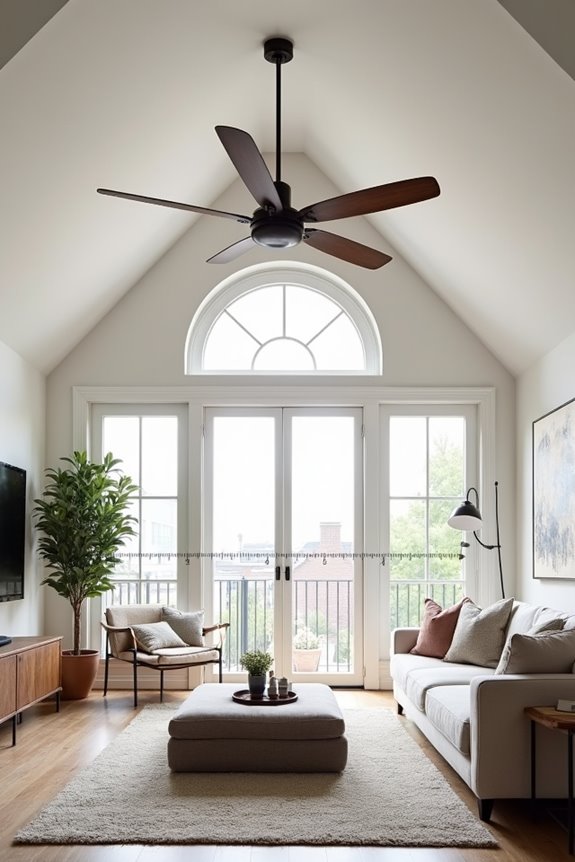
How does your room’s shape affect fan performance? Your room layout directly impacts airflow distribution and ceiling fan size selection. Square rooms benefit from one centered fan, while elongated rooms require larger fans or multiple units.
Positioning for optimal coverage: Center your fan in the room and maintain at least 18 inches from walls. This distance allows even airflow across seating areas and prevents obstacles from blocking circulation.
Accounting for room obstacles: Identify beams, vaulted ceilings, and furniture arrangements that affect airflow distribution. Elongated rooms over 18 feet need either larger blade spans or additional fans.
Proportional sizing: Match your ceiling fan size to ceiling height and room proportions. Open concept spaces may justify larger fans to cover extended volumes effectively.
Match the Fan to Your Décor and Space

Your ceiling fan’s style matters as much as its size. Finishes and housing should harmonize with your room’s aesthetic—choose white, black, brass, or brushed nickel to complement existing décor. Modern spaces benefit from sleek finishes, while rustic rooms suit warmer tones.
Matching Blade Span to Room Size
Your ceiling fan size must balance your room size. Select 36–42 inches for spaces up to 144 square feet, 50–54 inches for 225–400 square feet. Larger rooms need bigger blade spans for visual proportion.
Open Concept Considerations
Open concept living rooms require larger fans (50–54 inches or bigger) to balance seating areas and ceiling lines effectively.
Height Positioning
For ceilings above 9 feet, install a downrod to achieve proper blade height. This adjustment maintains décor harmony and functional air circulation.
Choose the Right Blade Count and Motor Power
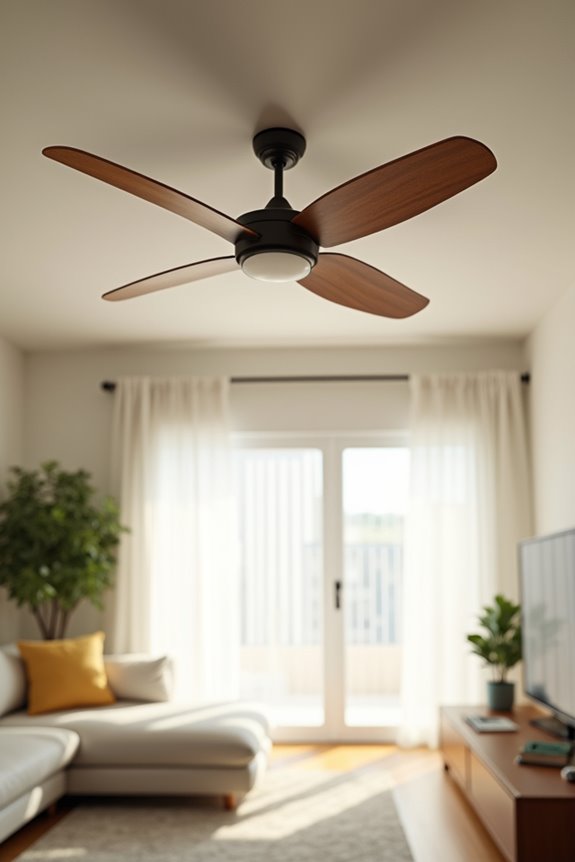
Blade Count Impact:
- Three to four blades optimize airflow distribution effectively
- Higher blade counts improve performance in larger living rooms
- Multi-arm light kits enhance ambient lighting simultaneously
- Four-blade designs balance efficiency with air movement
Motor Selection: DC motors outperform AC motors. You’ll experience quieter operation and superior energy efficiency with DC technology. For 52–60 inch fans in large living rooms, DC motors deliver strong airflow without excessive consumption.
Downrod Considerations: Your downrod length affects blade height and reach. Taller ceilings require longer downrods to maintain balanced performance. Open concept rooms may need multiple fans for even distribution across seating areas. Match your motor power to room size for optimal results.
Confirm Sizing With a Final Walkthrough

Confirm Sizing With a Final Walkthrough
Before you finalize your ceiling fan purchase, confirm your sizing choices through a detailed room walkthrough. This step prevents costly mistakes and supports optimal performance throughout your space.
Room Measurement and Fan Sizing Guidelines
| Room Size | Recommended Fan Blade Span | Downrod Length |
|---|---|---|
| Up to 144 sq ft | 36–42 inches | Flush mount or short |
| 225–400 sq ft | 50–54 inches | 1–2 feet |
| Over 400 sq ft | 54+ inches | 2–3 feet |
| Vaulted ceilings | Consider room coverage | Measure precisely |
| Standard 8–9 ft | Verify 7–9 ft blade height | Adjust accordingly |
Measure your living room’s square footage and ceiling height carefully. Position your fan centered in the room, maintaining at least eighteen inches from walls for proper airflow distribution. Check that your chosen blade span covers seating zones evenly. This final walkthrough confirms your fan sizing matches your room’s specific requirements and layout needs.