
You’ll anchor your bedroom rug by extending at least one-third underneath your bed for visual grounding. Position nightstand front legs on the rug’s surface to create unity. Maintain roughly 28 inches of clear space from the bed edge to the rug’s end for comfortable foot clearance. For narrow rooms, use side runners instead of one large rug. Choose low-pile materials for smooth movement and easy maintenance. Layer rugs by pairing a neutral base with a patterned top layer. These strategic placements define pathways and improve your space’s functionality and balance—with deeper techniques to discover.
Anchor at Least One-Third of Your Bed on the Rug
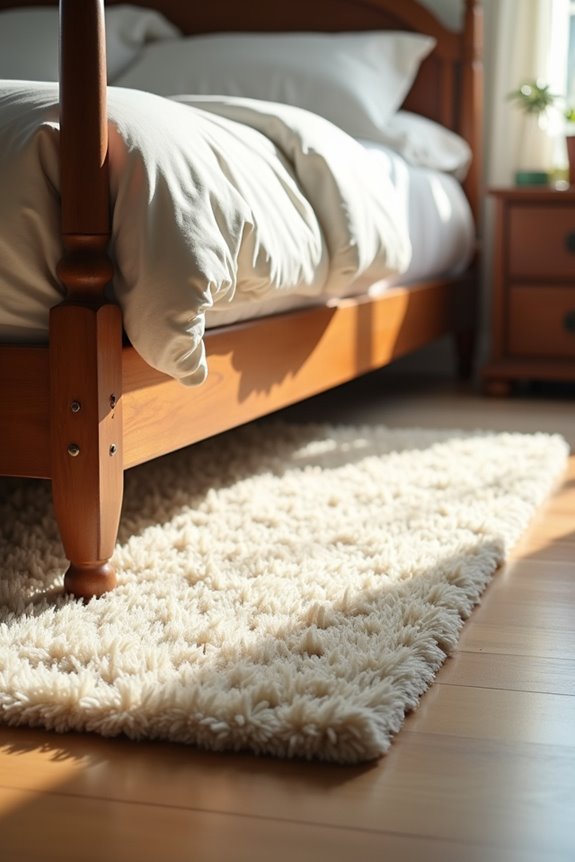
How should you position a bedroom rug for the best visual balance? Position your rug so it extends at least one-third underneath your bed. This bedroom rug placement grounds your sleeping area without overwhelming the space.
Position your bedroom rug to extend at least one-third underneath the bed for optimal visual balance and grounding effect.
Why This Works
When you anchor your bed on the rug this way, you create a unified foundation. The rug supports the bed proportionally while maintaining visual harmony throughout your room.
How to Apply It
Measure your bed’s depth and calculate one-third of that length. Place the rug’s edge so it extends that distance under the bed frame. This approach works especially well in smaller bedrooms where scale matters. You’ll notice the rug grounds your entire sleeping zone, creating a unified, intentional appearance.
Extend the Rug Beyond Bedside Tables for Visual Balance
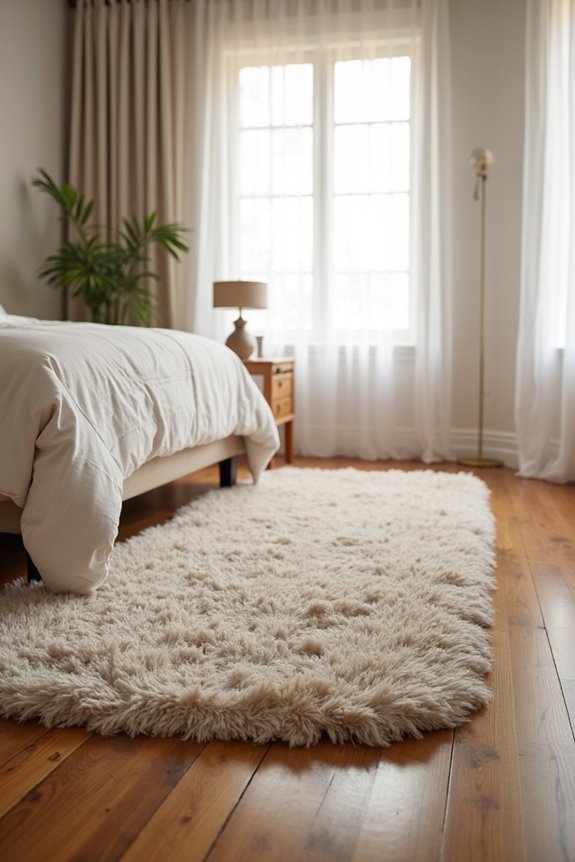
Why does your bedroom rug seem disconnected from your bed? Extending your rug beyond bedside tables creates visual balance and unity.
Rug Placement Strategy for Balance
| Bed Size | Recommended Rug Size | Side Extension |
|---|---|---|
| Queen | 8×10 ft | 18–24 inches |
| King | 9×12 ft | 18–24 inches |
| Full | 6×9 ft | 12–18 inches |
Proper rug placement means positioning the front legs of nightstands on the rug itself. This anchors your sleeping area and prevents a fragmented appearance. You’ll want bedside rugs or a larger area rug that extends beyond both sides of the bed.
The result: a unified, grounded bedroom layout. Visible rug edges around furniture create intentional visual balance. This approach works particularly well in smaller bedrooms where runners flanking the bed provide proportion without overwhelming the space.
Keep About 28 Inches of Clear Space at the Bed Edge
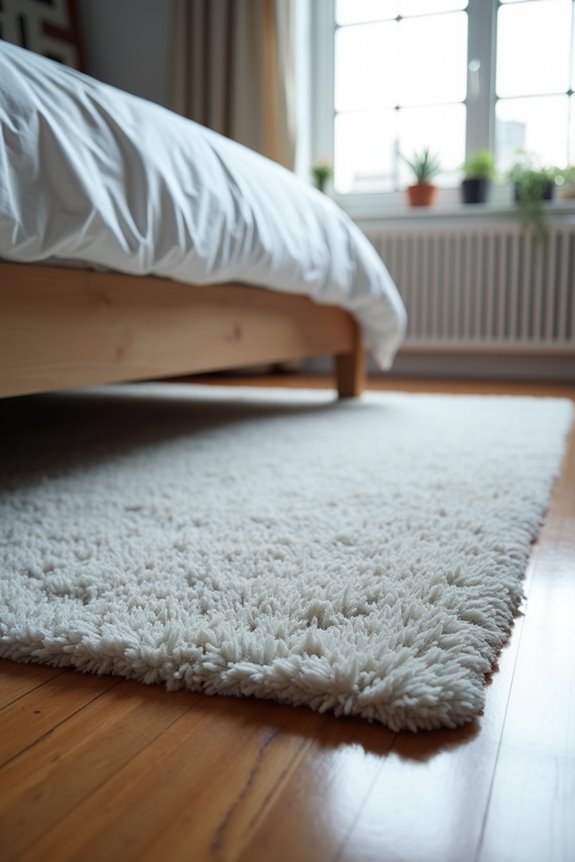
You’ll want to measure roughly 28 inches from your bed’s edge to where your rug ends, providing comfortable foot space when you step down. This clearance prevents your rug from bunching under the bed frame and keeps your bedroom feeling open and balanced. To measure accurately, use a tape measure from the bed’s outer edge and mark where your rug should stop for optimal spacing.
Measuring The Bed Edge
Where should your rug sit relative to your bed? You’ll want to measure carefully to achieve proper rug placement and clearance. Start by identifying your bed’s footprint and edges.
Consider these measurement guidelines:
- Measure 28 inches from your bed edge toward the room’s center
- Mark this clearance zone with painter’s tape for visualization
- Extend your rug beyond the bed edges by 18-24 inches minimum
- Position front furniture legs fully on the rug surface
- Check that nightstands sit just outside the rug edge
This strategic clearance prevents crowding while anchoring your bedroom layout. You’ll create visual flow from bed to surrounding furniture. Accurate measurements support both function and design. Take time with this step—it improves your entire room’s appearance and usability.
Creating Comfortable Foot Space
Now that you’ve measured your bed’s edges, focus on the clear floor space surrounding it. You’ll want to maintain approximately 28 inches of bedroom clearance around your bed’s perimeter.
This space accomplishes three important goals: it creates a natural foot traffic space for daily movement, prevents your rug from visually overwhelming the bed area, and establishes a calm space within your bedroom.
Why This Measurement Matters
The 28-inch margin works with various rug sizes—whether you’re considering an 8×10 ft or 9×12 ft option. This rug placement strategy ensures your anchor piece complements rather than crowds your sleeping area.
Practical Application
Step back and visualize how this clearance defines your layout. You’ll notice the balanced proportions between furniture and flooring create harmony. This uncluttered zone makes your bedroom an organized, welcoming space.
Position Runners on Each Side for Narrow Layouts
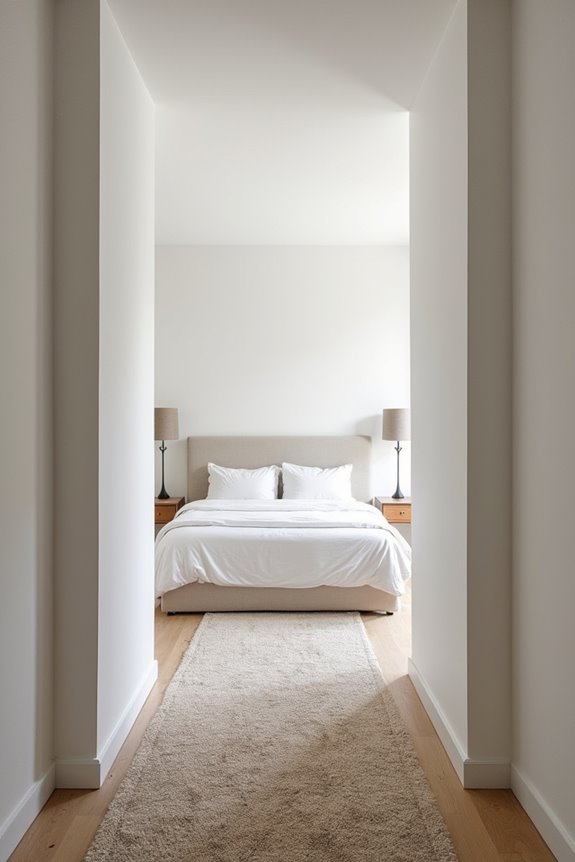
Why settle for one large rug when two runners can work better? Matching runners flanking your bed solve common bedroom layout challenges while maintaining visual balance. This approach works especially well in narrow spaces where a centered rug feels cramped or awkward.
Key advantages of the runner approach:
- Creates plush warmth without consuming valuable floor space
- Ideal for smaller bedrooms with asymmetrical layouts
- Showcases hardwood or tile flooring you want visible
- Maintains proportional balance when positioned wider than nightstands
- Keeps your room feeling open and uncluttered
Position each runner to extend from the bed’s side to just before the foot. This strategic placement preserves your bedroom layout while providing underfoot comfort. The result: a minimalist solution that serves a clear purpose in your space.
Select Low-Pile Rug Materials for Smooth Movement
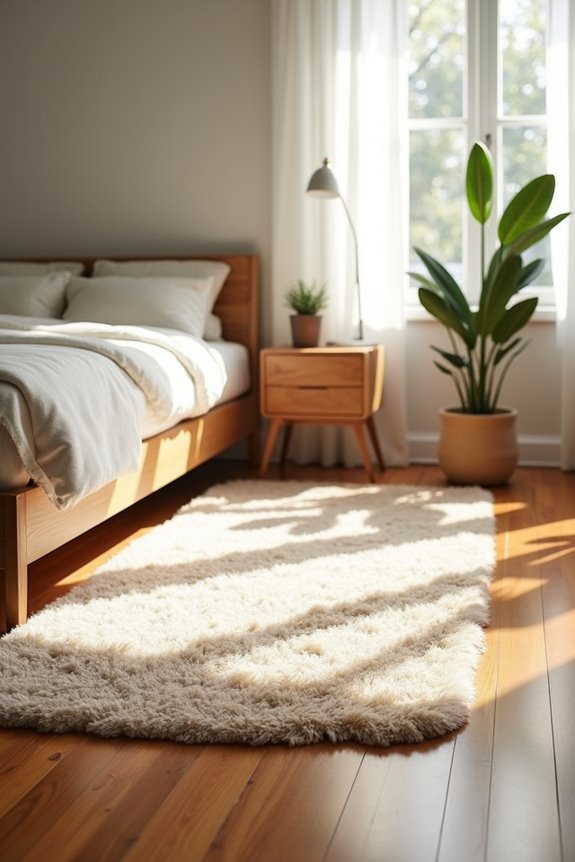
The material you choose affects how your bedroom functions daily. Low-pile rugs create a practical foundation for comfortable bedroom living. They minimize friction under furniture legs, enabling smooth repositioning without excessive effort or strain.
Why Low-Pile Works
Flatweave and short-cut pile materials support safe movement around beds and nightstands. You’ll experience distraction-free transitions when rolling onto the rug from your bedside. Chair legs glide easily across low-pile surfaces, preventing snagging and damage.
Practical Benefits
Low-pile options simplify stain management in high-traffic bedroom areas. They preserve clean lines alongside wooden floors and timber finishes, maintaining a cohesive aesthetic. Your rug placement strategy becomes more flexible when you select materials that facilitate natural movement patterns.
Choosing low-pile means your bedroom layout works with you, not against you.
Position Your Rug to Define Pathways
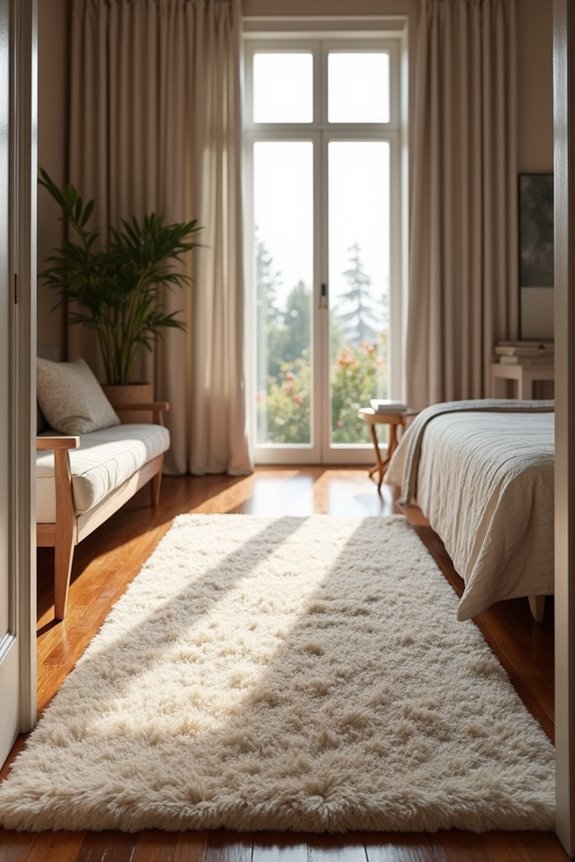
Position Your Rug to Define Pathways
Where should your bedroom rug actually sit? Strategic bedroom rug placement creates natural traffic patterns. Your rug anchoring system guides movement through the space effectively.
Consider these pathway-defining approaches:
- Place the rug so front legs of your bed sit on it
- Leave 12–18 inch borders of bare floor around all edges
- Extend the rug under nightstands to ground the sleeping area
- Position rugs to create clear walking routes between furniture
- Keep pathways clear rather than cramped or cluttered
This rug anchoring system establishes visual flow throughout your bedroom. Define pathways by anchoring key furniture pieces on the rug. The bare floor borders prevent the space from feeling overcrowded. Strategic placement creates a functional bedroom that feels both spacious and grounded. Your bedroom becomes more practical and visually balanced when pathways are clearly defined.
Layer Rugs to Add Texture and Depth
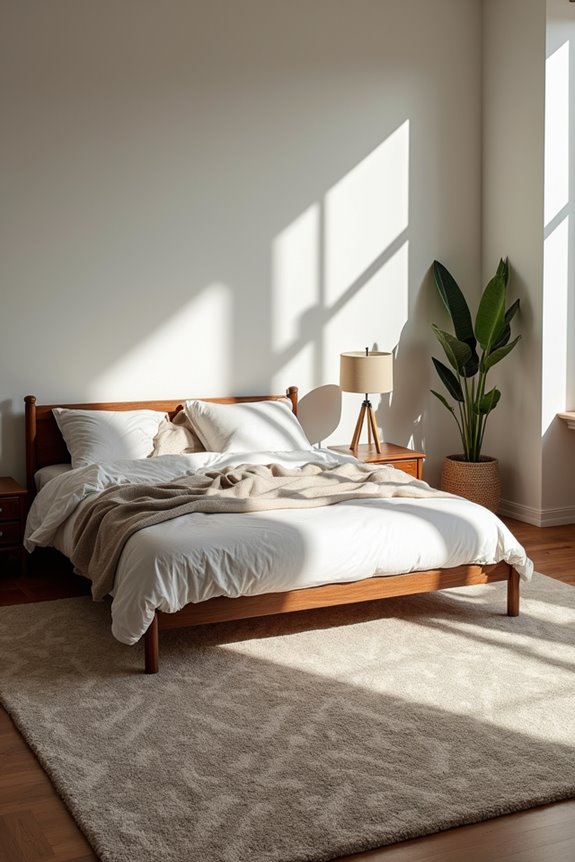
You can layer rugs by combining a neutral base rug with a patterned or textured top rug for visual interest. Try placing a low-pile wool underlay beneath a higher-pile patterned rug to provide warmth while maintaining easy foot traffic. Extend the top rug’s visible edges beyond the base layer to create defined boundaries and increase your bedroom’s depth.
Texture and Material Contrast
How can layering different rug textures improve your bedroom’s visual appeal? Strategic rug layering creates depth through intentional materials contrast. You’ll combine complementary textures to achieve visual interest while maintaining cohesion.
Key texture combinations:
- Pair plush wool rugs with natural jute underlays for earthy contrast
- Layer smooth synthetic fibers over woven base rugs for dimension
- Combine soft pile textures with flat-weave materials for balance
- Mix nubby, textured tops with smooth neutral bases
- Blend matte and subtle sheen finishes for sophisticated appeal
Start with a neutral, lighter base rug to brighten your space. Add a darker, textured top rug for visual complexity. This approach grounds your bedroom while introducing varied tones and weaves. Materials layering makes your rug placement feel deliberate and considered, creating the polished aesthetic you’re seeking.
Neutral Base With Pattern
Building on texture layering, a neutral foundation paired with patterned layers delivers visual interest and bedroom cohesion. You’ll start by selecting a lighter neutral rug as your foundational layer, keeping your bedroom feeling airy and spacious. Then you’ll introduce pattern through a secondary rug or textured weave for depth.
Position your neutral base so it extends beyond bed edges by 18–24 inches, leaving floor space around the perimeter. Your patterned layer should feature softer colors than the base to maintain visual harmony. Choose smaller-scale patterns on top to prevent clutter against larger furniture pieces like beds and nightstands.
| Layer | Color | Scale | Placement | Purpose |
|---|---|---|---|---|
| Base | Light neutral | N/A | Under bed | Foundation |
| Secondary | Soft pattern | Small | Top layer | Texture |
| Border | Bare floor | N/A | Perimeter | Balance |
| Extension | Neutral | N/A | 18–24 inches | Proportion |
| Visual | Cohesive | Complementary | Throughout | Harmony |