
Like detecting smoke before finding fire, a sewer smell in your bathroom signals a plumbing problem you shouldn’t ignore. The culprit isn’t always obvious—it could be a dried P-trap, blocked vent, or cracked toilet seal. You’ll need to identify where the smell originates and when it appears. But here’s what most people miss: the source determines your fix. Keep reading to discover which problem you’re actually facing.
Where Sewer Smells Come From
Why’s your bathroom smelling like a sewage plant? Several common culprits trap sewer gases inside your home.
Several common culprits trap sewer gases inside your home, creating that unmistakable sewage plant smell in your bathroom.
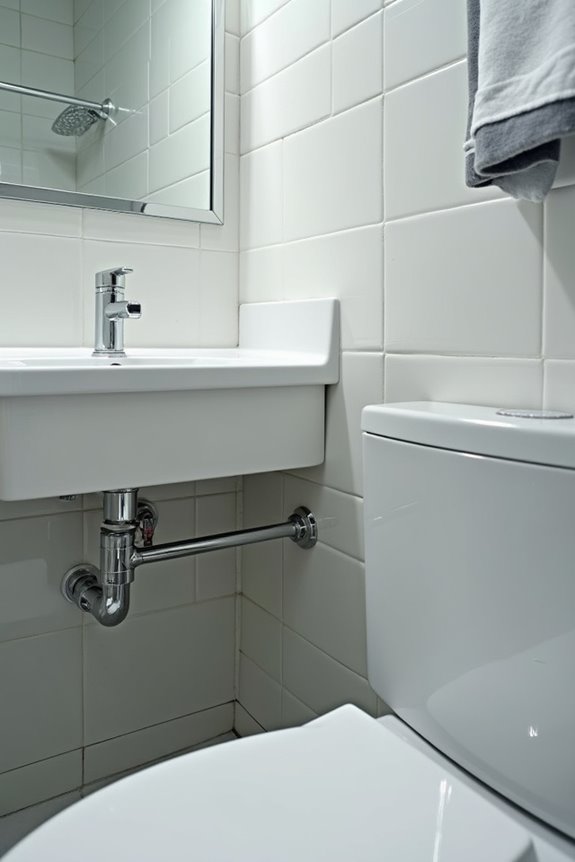
Your P-trap—that curved pipe under your sink—holds water that blocks sewer gases. When your dry trap loses this water barrier, effluent odors escape freely into your bathroom.
Vent pipes channel sewer gases safely outside. Blocked or damaged vent pipes fail at backflow prevention, forcing gases backward into your space.
Clogged drains filled with hair and soap scum trap bacteria. These create foul, sewage-like smells that linger.
Your toilet seal deteriorates over time. A faulty toilet seal allows sewer gases to seep around the base.
Sewer line cracks from tree roots or damage release gases directly into indoor spaces. These structural problems demand immediate professional attention for your home’s health.
Smell Location and Timing: Your First Diagnostic Clues
Where you notice the odor—and when—tells you what’s actually wrong. Pay attention to your bathroom’s specific trouble spots.
Near the sink or fixtures: A dry P-trap is likely culpable. Evaporation removes the water barrier protecting you from sewer gases.
Around the toilet base: A broken wax seal allows sewer gases to escape. This requires immediate attention.
Multiple drains simultaneously: A blocked or cracked vent pipe fails to vent sewer gases outdoors properly.
After rainfall: Exterior sewer issues or tree-root intrusion affect your main sewer line.
From drain openings: Clogged drains trap hair, soap scum, and bacteria. These emit persistent sewage-like smells.
Your smell timing and location narrow the diagnosis considerably. This detective work saves money and time.
Dry P-Traps: Why It’s the #1 Culprit
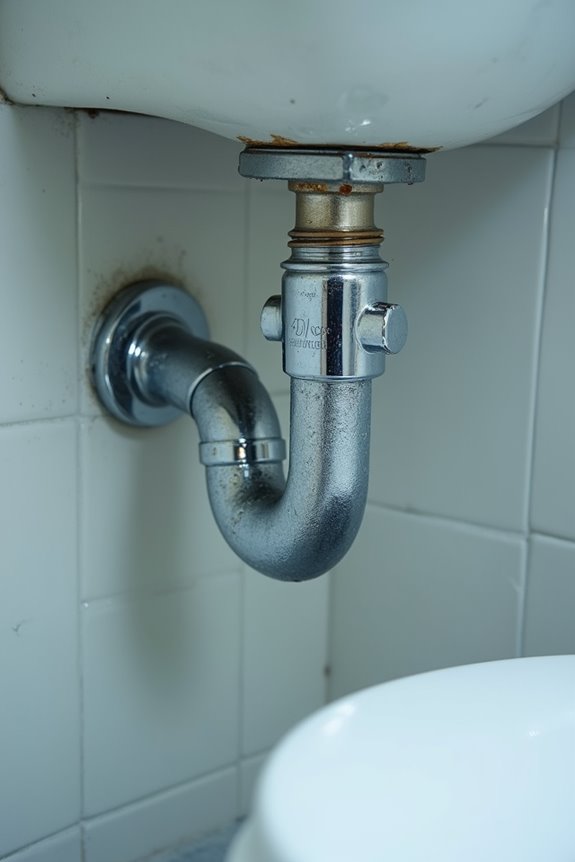
If your smell originates near the sink or fixtures, a dry P-trap is almost certainly the problem. The P-trap is the U-shaped pipe beneath your drain that holds water. This water creates a barrier blocking sewer gases from entering your home.
When you don’t use a fixture regularly, evaporation dries out your trap. Without that water seal, sewer gases escape freely into your bathroom. You’ll notice:
- Persistent odors near unused sinks or showers
- Stronger smells after extended periods away
- Odors disappearing after running water through the drain
Restoring the water seal is straightforward. Run water through the fixture for several seconds. For rarely used drains, consider adding mineral oil to slow evaporation. Regular water use prevents dry-trap problems and eliminates bathroom odor concerns completely.
Blocked Sewer Vents: Why Your Bathroom Is the Problem
Your home’s sewer vent stack—typically located on your roof—can become blocked by leaves, debris, animal nests, or buildup, trapping dangerous gases inside your plumbing system. When you can’t vent these gases outdoors properly, they get forced back through your drains and fixtures, creating that unmistakable sewer smell in your bathroom. Clearing the blockage restores normal airflow, eliminates the trapped gases, and stops the odors from returning to your home.
How Vent Blockages Trap Gases
When sewer gases can’t escape through your roof vents, they’ve got nowhere to go but back into your home. A vent blockage creates an odor trap that affects your entire drainage system.
Here’s what happens when air pressure can’t equalize:
- Sewer gases back up into your bathroom through drains and fixtures
- Gurgling drains signal trapped air struggling to move properly
- Your bathroom smell intensifies as gases accumulate indoors
Debris, leaves, animal nests, or ice commonly clog roof vents. This obstruction disrupts airflow and pushes unwanted odors downward instead of outside.
Professional Solutions:
Vent cleaning removes blockages effectively. Smoke testing helps locate leaks in your vent system. A professional assesses your roof vent design and recommends necessary repairs to restore proper venting and eliminate sewer gas issues permanently.
Clearing Blocked Vents Restores Flow
How can you fix a sewer smell that keeps coming back? Clearing your blocked vents is the solution. A vent blockage stops sewer gas from escaping outdoors properly. Debris, leaves, animal nests, and ice commonly clog your vent stack. You’ll notice slow drains and drainage gurgling throughout your home when blockages form.
Start by inspecting your vent stack from the roof. Remove visible debris carefully. For deeper blockages, professional vent clearing becomes necessary. A professional plumber has specialized tools to safely restore proper venting.
Once cleared, sewer gas vents correctly outdoors. Your bathroom odor disappears. Slow drains improve. Gurgling stops.
If blockages recur despite vent repair attempts, contact a professional plumber immediately. Recurring issues indicate deeper problems requiring expert inspection and comprehensive vent system service.
Cracked Toilet Seals and Leaky Sewer Lines
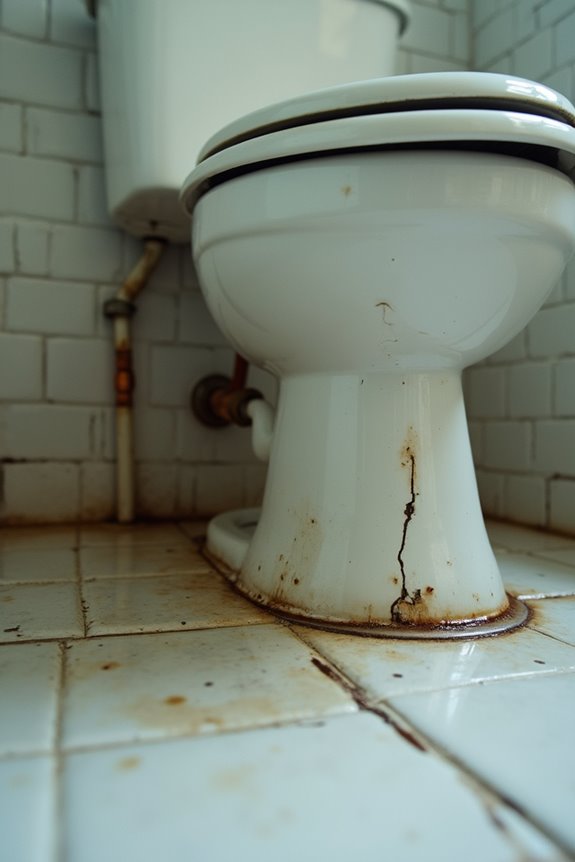
One of the most common culprits behind bathroom sewer odors? A cracked toilet seal or broken wax ring. Your toilet sits on a wax ring that creates an airtight seal. When this seal fails, sewer gases escape into your bathroom.
You’ll notice:
- Strong odors concentrated around your toilet base
- Visible moisture or water stains underneath the toilet
- Soft flooring near the toilet indicating hidden water damage
A loose toilet seal can cause both leaks and gas smells simultaneously. Fixing this requires turning off water, removing the toilet, cleaning old wax, installing a new wax ring, and reseating the toilet with proper base caulking.
Hidden leaks behind walls demand professional inspection. A plumber can confirm whether your toilet seal is the source and ensure correct installation for lasting results.
Clogged Drains and Biofilm Buildup
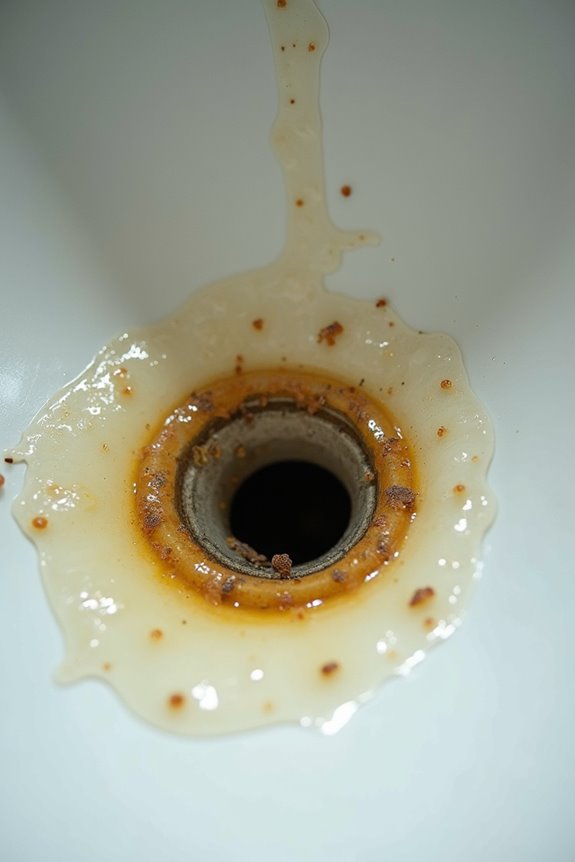
You’re likely dealing with clogged drains when hair, soap scum, and debris accumulate inside your pipes. These trapped materials create moisture and organic matter that bacteria feed on, producing those foul sewage-like odors you’re noticing. Biofilm buildup in drainage areas compounds the problem, releasing sulfur or rotten smells even when your sewer system functions normally.
Hair and Debris Accumulation
When hair, soap scum, and debris pile up in your bathroom drain, they create blockages that trap moisture and foster bacterial growth. You’re not alone in facing this common household challenge.
The consequences of accumulation include:
- Foul, sewage-like odors from bacterial colonies thriving in stagnant water
- Biofilm buildup on drain surfaces and overflow openings producing sulfur-like smells
- Slowed water flow that increases moisture retention behind blockages
Regular maintenance prevents odor development effectively. Remove visible hair and debris weekly. Use enzymatic cleaners instead of harsh chemicals to break down organic matter safely. If blockages persist, a drain snake or hydro-jetter clears resistant buildup. These proactive steps protect your drains from odor-causing bacteria and keep your bathroom fresh.
Bacterial Growth and Odors
How does a clogged drain transform into an odor factory? Blocked drains trap moisture and organic debris, creating ideal conditions for drain bacteria to thrive. As waste decomposes, these microorganisms produce foul odors that smell distinctly like sewer gases.
Over time, biofilm accumulates in your drain pipes and overflow passages. This sticky bacterial layer intensifies bathroom odor through decomposition, sometimes releasing a sulfur smell reminiscent of rotten eggs.
You can combat this buildup through regular maintenance. Use enzymatic cleaners monthly to prevent bacterial accumulation naturally. For persistent blockages, a drain snake removes trapped debris effectively.
Ignoring the problem allows sewer gases to escape into your bathroom continuously. Taking action now—whether through enzymatic treatment or professional drain cleaning—stops odors before they worsen significantly.
Quick Fixes You Can Try Before Calling a Plumber
Before you dial a plumber’s number, several simple solutions might eliminate that sewer smell. You can tackle many issues yourself with basic tools and techniques.
Start with these three approaches:
- Run water in unused sinks to restore your P-trap barrier and block sewer gases from entering your home
- Use a plunger or drain snake to clear clogs that trap odors and bacteria in your pipes
- Inspect roof vent pipes for debris, nests, or blockages that push sewer gases back indoors
Check your toilet’s wax seal for damage around its base. A faulty seal releases gases that create persistent odors.
Avoid harsh drain chemicals—they damage pipes and worsen problems. These quick fixes address common issues before professional inspection becomes necessary.