You’d think master bedrooms could fit a small house inside them—but that’s not how most homes work. Your master bedroom probably needs to be somewhere between 144 and 360 square feet, though the exact size depends on several factors. Before you decide what works for your space, you’ll want to understand standard dimensions, furniture requirements, and common sizing mistakes homeowners make. Here’s what you should know first.
Standard Master Bedroom Dimensions and Square Footage
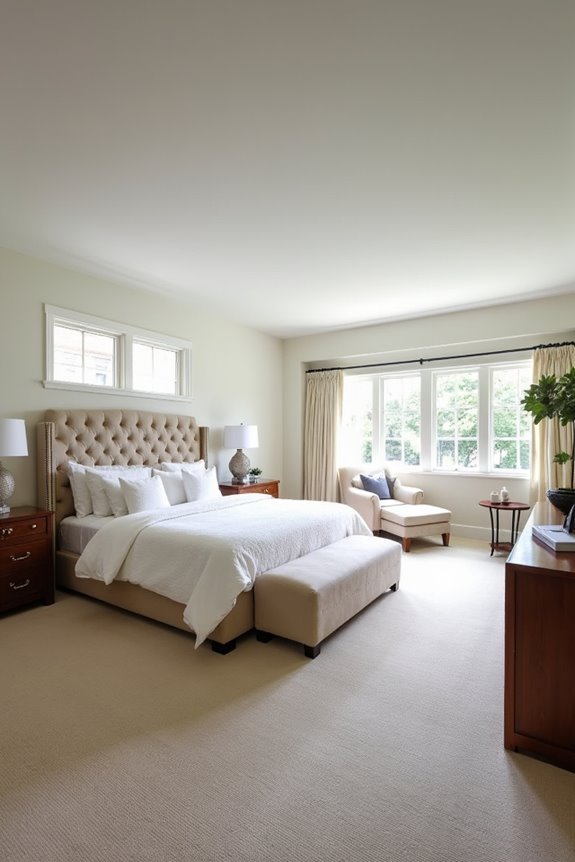
Most master bedrooms range from 144 square feet to 360 square feet, though you’ll typically find them hovering around 224 square feet. Common dimensions include 12 by 12 feet, 14 by 16 feet, and 18 by 20 feet.
Master bedrooms typically range from 144 to 360 square feet, with most averaging around 224 square feet.
When planning your master bedroom, consider these standard sizes: 180 square feet (12′×15′), 198 square feet (15′6″×12′9″), and 210 square feet (16′10″×12′6″). These dimensions accommodate essential furniture placement effectively.
Furniture arrangement requires specific clearances: your bed needs approximately 30 inches of open space on three sides. This ensures comfortable movement and practical daily use.
Master bedrooms typically account for 11-15% of your home’s finished floor space. This percentage reflects their importance as the largest bedroom in most houses.
Master Bedroom Sizes by Home Type
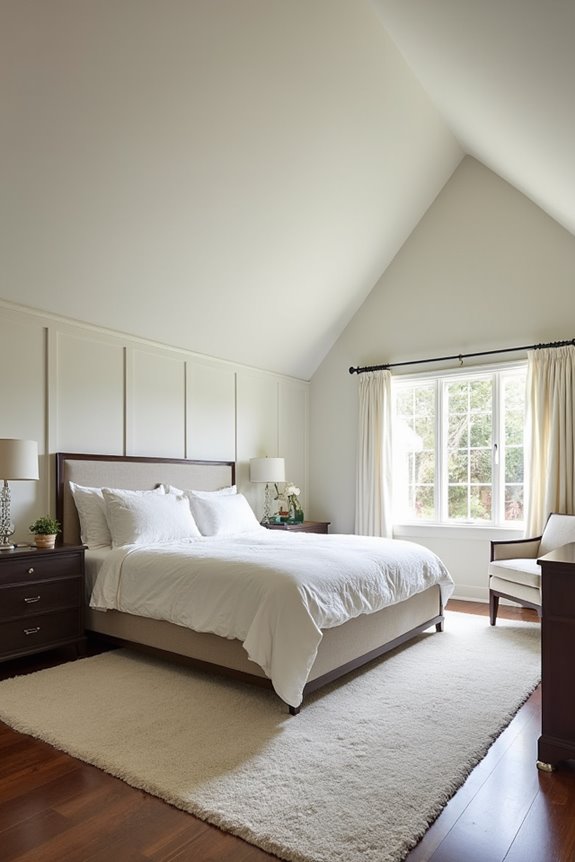
How does your home’s overall size shape your master bedroom dimensions? Your home type directly determines master bedroom size and floor space percentage.
Small Homes: You’ll find master bedrooms around 200 square feet. The Independence plan exemplifies this at 180 square feet, offering efficient layouts for compact living.
Standard Homes: You can expect master bedroom sizes between 200–350 square feet. The Adams plan features 248 square feet, representing typical middle-range proportions.
Large Homes: You’ll enjoy master bedrooms exceeding 350 square feet comfortably.
Luxury Homes: You gain expansive master suites ranging 400–600+ square feet.
Master bedroom size typically represents 11.3% of finished floor space. Some home type bedroom sizes range from 12.7% to 15.4%. Understanding these benchmarks helps you evaluate whether spaces match your needs.
What Determines Your Ideal Master Bedroom Size?
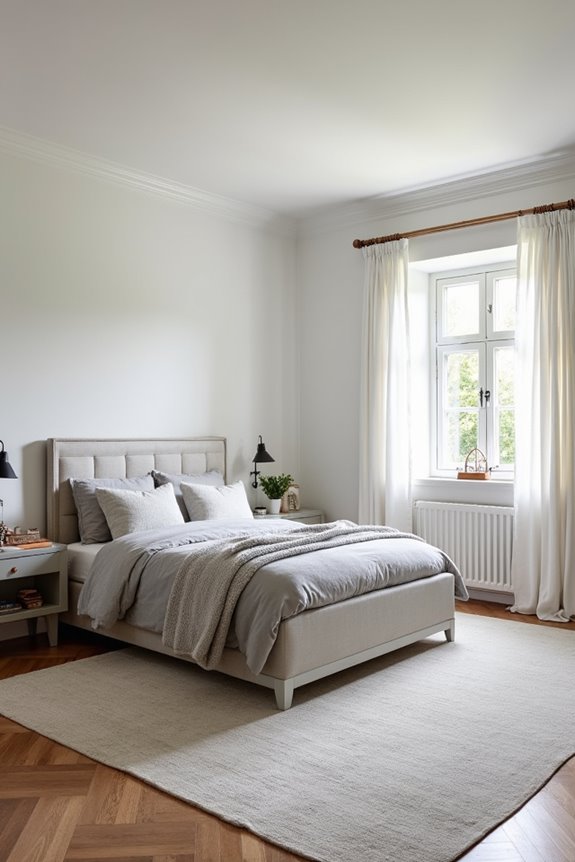
Your personal needs and home layout shape what makes a master bedroom work for you.
Consider these key factors when determining your ideal master bedroom size and standard dimensions:
| Factor | Impact on Size |
|---|---|
| Bed type (queen vs. king) | King beds need 14′×16′ minimum |
| Walking space around bed | Requires 30 inches on all sides |
| Additional furniture needs | Dressers and seating add 50–100 sq ft |
| Home’s total square footage | Master should be 11–15% of finished space |
Your layout considerations matter significantly. A 12′×12′ bedroom works for minimal needs, while 14′×16′ accommodates standard furniture plus movement. Larger homes benefit from 16′×20′ suites offering sleeping, dressing, and sitting zones. Assess your actual requirements: Do you need a sitting area? Will a queen or king bed fit your lifestyle? These questions directly determine whether 180 square feet suffices or 320 square feet better serves your family’s comfort and daily routines.
Furniture and Layout Planning for Master Bedrooms
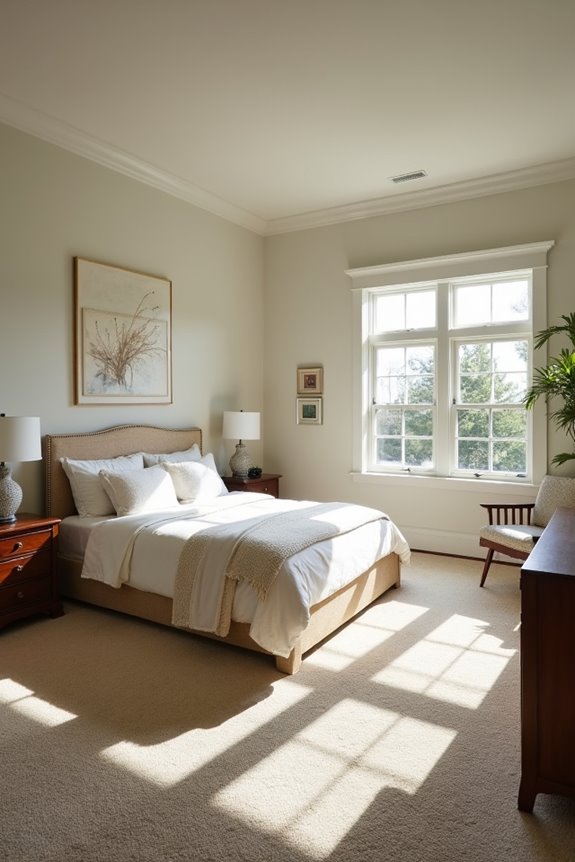
Strategic furniture placement transforms a master bedroom from cramped to comfortable. Your room dimensions and furniture planning determine how well you’ll move through the space daily.
Consider these essential furniture and layout elements:
- Position your bed with 30 inches of clearance on three sides
- Place nightstands within arm’s reach of your bed
- Position dressers against walls to maximize floor space
- Arrange seating areas away from sleeping zones
- Keep TV stands at appropriate viewing distances
A practical master bedroom layout divides the space into sleeping and activity zones. Queen beds measure 60 by 80 inches; Kings measure 76 by 80 inches. Understanding your room dimensions helps you select appropriately-sized furniture. This strategic approach creates functional zones without overcrowding your 224-square-foot master bedroom.
Master Bedroom Sizing Mistakes Homeowners Make
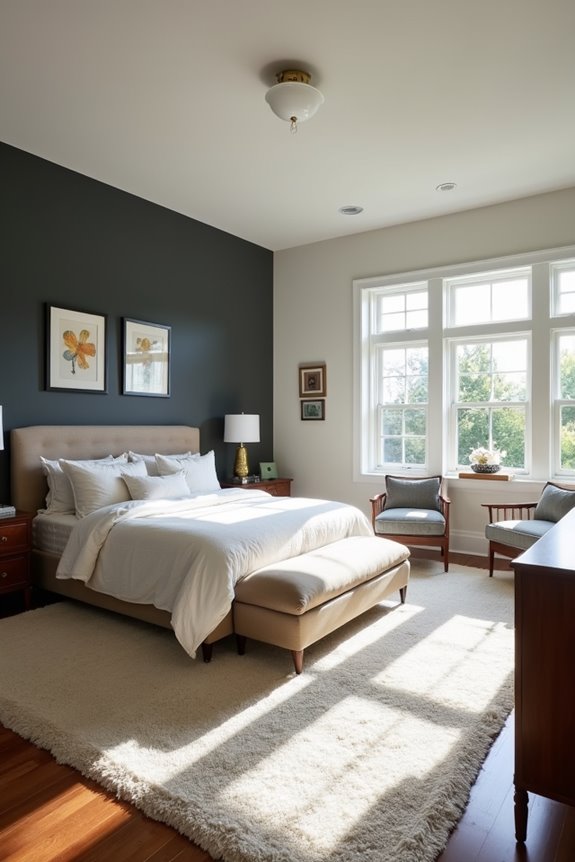
When planning a master bedroom, sizing errors often undermine functionality before construction even begins. You’ll want to avoid three critical pitfalls that compromise your space.
Underestimating Clearance Space
Many homeowners neglect the recommended 30 inches of clearance space around beds. This oversight creates cramped layouts that feel restrictive and limit movement.
Mismatching Master Bedroom Size
You shouldn’t base master bedroom size solely on total home square footage. This approach ignores essential functional zones like seating areas and private bathrooms that require dedicated space.
Ignoring Vertical Elements
Overlooking ceiling height and vertical storage makes even spacious masters feel confined. Tall built-ins and higher ceilings dramatically improve perceived space and storage and layout effectiveness.
Avoid these mistakes by planning adequate clearance space, designing appropriate master bedroom size relative to function, and maximizing vertical storage solutions from the start.