
You’re standing at a crossroads that many homeowners face: you’ve got exterior paint on hand, and your bathroom needs refreshing. Here’s what you need to know before you crack open that can. Exterior paint contains chemicals designed for outdoor durability—not indoor safety. The real question isn’t whether you can use it; it’s whether you should. Understanding the specific risks will determine your next move.
Why Exterior Paint in Bathrooms Is Risky (and When to Stop)
Why would exterior paint cause problems indoors? Exterior formulas contain chemicals designed for outdoor durability, not indoor air quality. You’ll encounter three main concerns:
Health Hazards: Exterior paints carry higher VOC levels that off-gas for weeks or months. You may experience headaches, dizziness, and respiratory irritation in enclosed bathroom spaces.
Chemical Additives: These formulas include mildewcides and fungicides unsuitable for indoor breathing. UV blockers and other outdoor-focused ingredients weren’t designed for interior exposure.
Performance Issues: You’ll likely face poor adhesion, peeling, or bubbling in humid bathroom conditions. Moisture damage becomes inevitable because exterior paint doesn’t bond properly to indoor surfaces.
Stop using exterior paint immediately if you’ve already applied it. Your health and your bathroom’s condition depend on switching to interior moisture-resistant, low-VOC alternatives with mildew resistance.
VOCs, Mildewcides, and UV Blockers: What Makes Exterior Paint Toxic Indoors
What’s really in that can of exterior paint you’re considering? Exterior formulas contain additives you won’t find in interior paints. These chemicals create serious indoor air quality problems.
| Additive | Purpose | Indoor Risk |
|---|---|---|
| VOCs | Weather resistance | Eye, nose, throat irritation |
| Mildewcides | Kill outdoor mold | Prolonged off-gassing |
| UV blockers | Sun protection | Respiratory irritation |
| Fungicides | Prevent fungal growth | Lingering chemical odors |
| Resins | Durability | Poor adhesion indoors |
You’re exposing yourself to chemicals that off-gas for weeks or months in enclosed bathroom spaces. Higher VOC levels irritate your respiratory system continuously. Even “low-VOC” claims require verification—off-gassing persists after drying. Your bathroom’s humidity accelerates chemical release into your breathing air. These additives aren’t designed for indoor environments where you spend significant time daily.
How Bathroom Humidity Amplifies Exterior Paint Failure
bathroom humidity doesn’t just make you uncomfortable—it actively works against exterior paint. High moisture slows drying and curing markedly. You’ll notice tackiness persisting for weeks instead of days.
Adhesion Breakdown
Bathroom water vapor weakens the bond between paint and surfaces. Exterior resin formulas lose grip in humid conditions. You risk peeling, bubbling, and accelerated wear within months.
VOC Intensification
Humidity traps chemical off-gassing indoors. Exterior paint’s mildewcides and UV blockers release harmful VOCs longer in moist environments. You’re exposing yourself and your family to sustained chemical exposure.
The Reality
Exterior paint fails faster in bathrooms because moisture-rich air works directly against its outdoor-focused formulation. Interior, humidity-rated paints won’t break down under these conditions. They’re engineered for your space’s actual environment.
Step 1: Verify Your Paint’s VOC Content and Additives
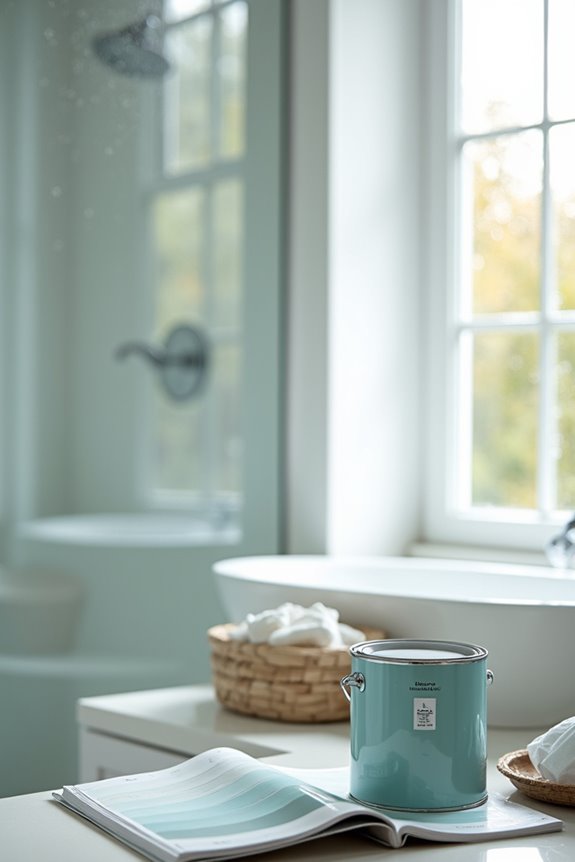
Before you paint, you’ll need to check your paint’s VOC (volatile organic compound) level on the product label—look for anything below 50 g/L for safer indoor use. Next, identify any harmful additives like mildewcides, fungicides, or UV blockers listed in the ingredients, as these chemicals can irritate your eyes, nose, and throat in enclosed bathrooms. If the manufacturer doesn’t explicitly approve the paint for interior use, don’t use it inside, no matter how low the VOC claims seem.
Check VOC Levels First
Why does exterior paint behave differently indoors? Exterior paints contain higher VOC levels than interior formulas, causing prolonged off-gassing in enclosed spaces. You’ll want to verify your paint’s exact VOC content before committing to indoor use.
How to Check VOC Levels:
Start by reading your paint’s product label carefully. Look for VOC measurements listed in grams per liter. Next, request the Safety Data Sheet from your paint manufacturer or retailer—this document provides complete chemical information you need.
Compare your findings against interior paint standards: low-VOC paints contain under 50 g/L, while zero-VOC options contain virtually none.
Critical Step: If the label doesn’t clearly state indoor-use approval or VOC data remains unclear, skip this paint entirely. Choose an interior-graded alternative instead. Your bathroom’s air quality depends on this decision.
Identify Harmful Chemical Additives
What’s lurking in your exterior paint beyond high VOCs? Manufacturers add chemicals specifically designed for outdoor durability. These additives off-gassing indoors create potential health concerns in your bathroom.
Common harmful additives in exterior formulas include:
- Mildewcides: Prevent mold growth but may irritate respiratory systems indoors
- Fungicides: Kill fungal spores; can off-gas toxins in confined spaces
- UV blockers: Protect outdoor surfaces; unnecessary and potentially harmful inside
- Performance chemicals: Enhance weather resistance; pose risks in poorly ventilated areas
You’ll find this information on your paint’s label. Check the additives section carefully. If transparency seems unclear, contact the manufacturer directly. Request the Safety Data Sheet (SDS) listing all chemical ingredients and their concentrations. This step ensures you understand exactly what you’re introducing into your bathroom environment.
Step 2: Create Extreme Ventilation Before You Paint
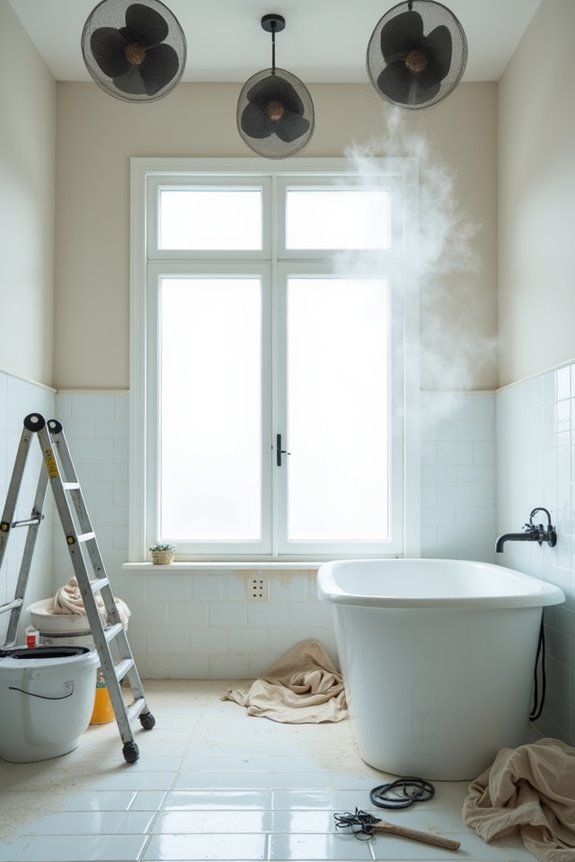
How can you safely remove harmful fumes from your bathroom? Exterior paint releases volatile organic compounds (VOCs) that accumulate indoors. You’ll need aggressive ventilation strategies.
Open all windows and doors immediately. Position a fan to blow air outward, creating cross-ventilation that pushes fumes outside. Run exhaust fans at full speed during painting and for several hours afterward.
Use portable HEPA air purifiers with VOC-filtering capabilities. These devices capture lingering chemicals as you ventilate the space.
Extend ventilation for weeks if odors persist. The smell indicates ongoing off-gassing.
Keep children and pets away from the bathroom during and after painting to minimize their exposure to harmful fumes.
Choose mild temperatures and low humidity when possible. Better outdoor conditions maximize natural air exchange and reduce indoor VOC concentration significantly.
Step 3: Apply Exterior Paint With Extended Drying Expectations
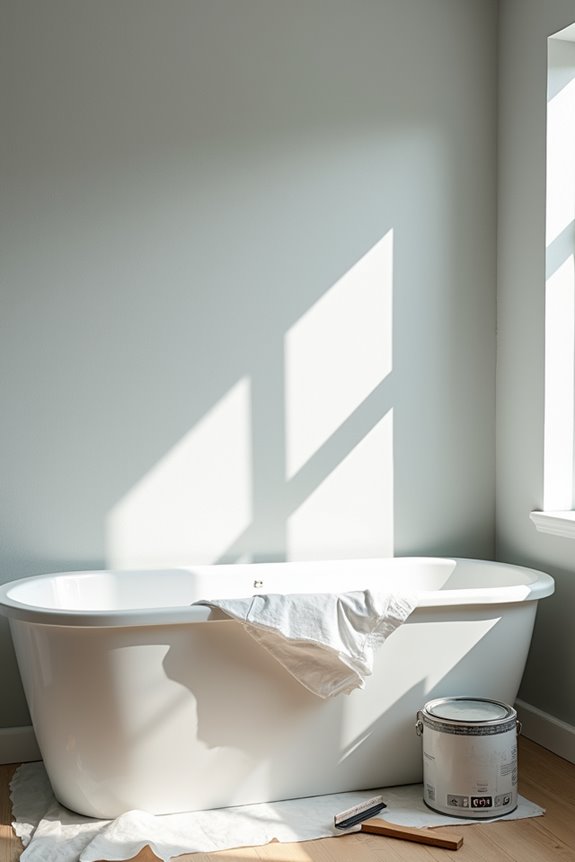
Applying exterior paint indoors requires patience you won’t need with interior formulas. Exterior paints contain additives that create extended off-gassing periods lasting weeks or months. You’ll notice VOCs releasing chemicals even after the surface feels dry to the touch.
Manage this process strategically:
- Maintain constant ventilation throughout drying and well beyond the manufacturer’s timeline
- Monitor humidity levels since moisture slows evaporation and prolongs off-gassing significantly
- Expect extended drying times compared to interior paint applications in your bathroom
- Plan for extended occupancy restrictions until fumes dissipate completely from your space
The additives in exterior formulas—including mildewcides and UV blockers—require thorough air circulation to escape safely. Don’t assume drying completion based on touch alone. Prioritize keeping bathroom doors open and fans running continuously during this critical phase.
Step 4: Monitor for Peeling, Bubbling, and Poor Adhesion
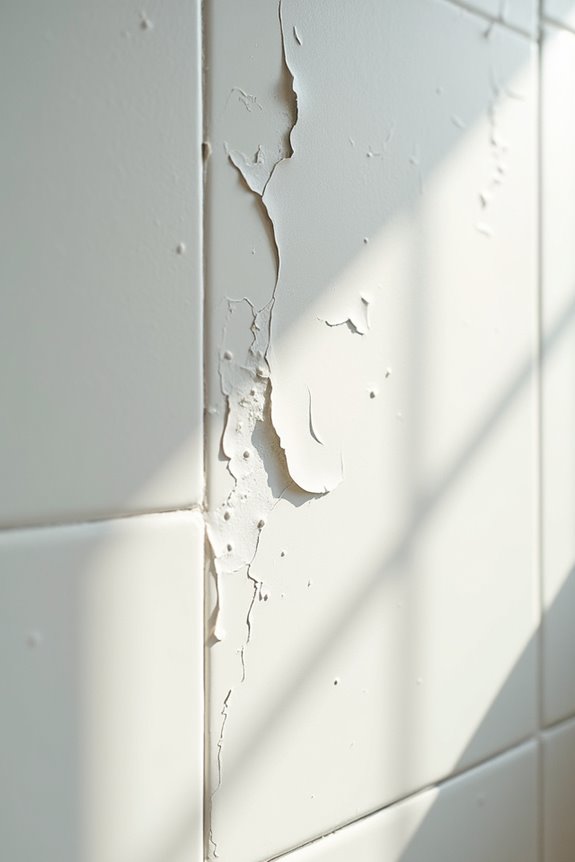
You’ll need to inspect your bathroom surfaces closely after the paint fully cures, which takes several weeks. Watch for adhesion problems like blistering, peeling, or bubbling—especially after showers or steam exposure—since moisture triggers paint failure on improperly prepared substrates. If you spot these issues, you’ll remove loose film, sand lightly, and apply moisture-resistant primer before recoating with interior paint to restore durability.
Adhesion Problems In Bathrooms
Even with careful preparation, exterior paint won’t always stick properly to bathroom surfaces. The moisture-prone bathroom environment creates unique challenges that you’ll need to monitor closely.
Watch for these common adhesion problems:
- Peeling edges: Paint lifts away from corners, trim, or wall seams where moisture penetrates easily
- Bubbling spots: Water trapped beneath the paint layer creates visible blisters and soft areas
- Chalky residue: Exterior paint indoors breaks down, leaving dusty powder on your fingers when touched
- Separation from primer: The bond between layers fails, causing entire sections to crack and flake
High humidity undermines adhesion bonds even when application seems successful initially. Check your bathroom weekly during the first month. If you notice any peeling, bubbling, or poor adhesion developing, plan to strip the area and reapply interior-grade paint immediately. Early intervention prevents widespread failure.
Moisture-Induced Paint Failure
How long does it take for bathroom moisture to damage exterior paint? You’ll typically notice problems within weeks. Bathroom humidity cycles create repeated moisture exposure that softens exterior paint formulas.
What happens: Exterior paint indoors absorbs moisture differently than interior coatings. Water trapped beneath the surface causes bubbling, peeling, and blistering as it seeks escape routes. High VOC exterior paints worsen this issue because they’re engineered for outdoor conditions, not humid bathrooms.
Warning signs to monitor:
- Visible bubbles or blisters within the paint layer
- Peeling edges around trim and corners
- Soft, tacky paint texture after weeks of drying
You’ll protect your bathroom walls by choosing interior moisture-resistant paints instead. These formulas resist mildew and handle humidity properly, preventing the costly damage exterior coatings guarantee in wet environments.
Long-Term Surface Durability
Catching moisture damage early prevents expensive repairs down the road. Exterior paint’s high VOC content and poor moisture resistance create durability challenges indoors. You’ll notice adhesion problems within weeks or months in bathrooms.
Monitor these warning signs:
- Peeling or bubbling appearing near moisture sources like shower walls
- Tackiness persisting after the paint dries completely
- Blistering that spreads across previously painted surfaces
- Discoloration or staining indicating water penetration beneath the paint
Inspect your bathroom walls weekly during the first month. Check corners, ceiling edges, and areas near ventilation fans carefully. Don’t ignore small bubbles—they expand quickly in humid conditions.
If problems develop, sand the affected area mechanically. Apply an interior moisture-resistant primer next. Finish with interior latex paint in semi-gloss sheen for lasting protection and better adhesion.
Step 5: Encapsulate Fumes With Interior Primer and Sealant
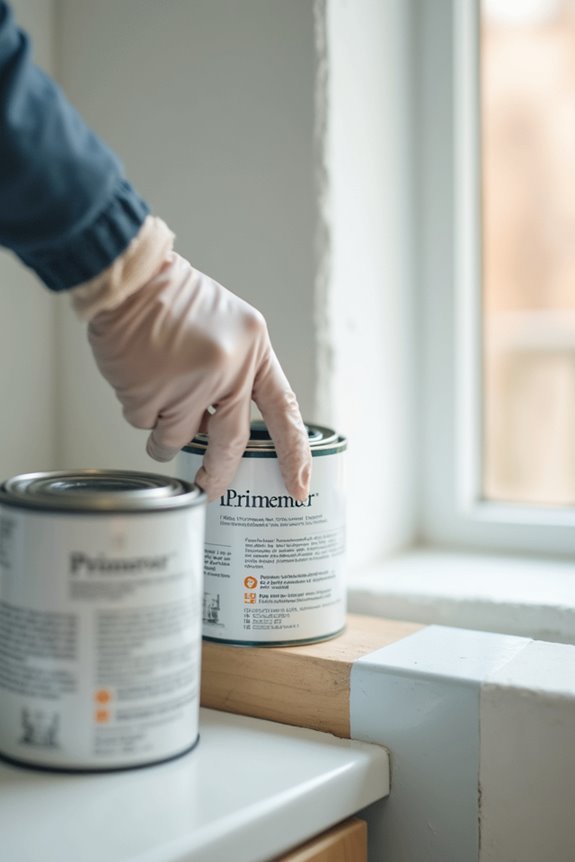
Once you’ve applied exterior paint indoors, you’ll need to seal in those lingering fumes.
An interior primer creates a protective barrier against VOC off-gassing. You’ll want to choose oil- or shellac-based primers designed specifically for interior use. These primers ensure strong adhesion and effective encapsulation of exterior coatings.
| Primer Type | Best For | Drying Time |
|---|---|---|
| Oil-based | Maximum VOC encapsulation | 8-24 hours |
| Shellac-based | Fast sealing, adhesion | 1-3 hours |
| Latex-based | Low odor application | 2-4 hours |
After priming, apply a compatible low-VOC interior sealant or topcoat. This second layer further encapsulates residual fumes and improves surface odor control. Maintain proper ventilation throughout: open windows and run exhaust fans for multiple weeks. Finally, repaint with interior, zero-VOC paints to restore your bathroom’s air quality completely.
Step 6: Repaint With Low-VOC Mildew-Resistant Interior Paint
You’ll need to select an interior latex paint with semi-gloss or satin finish that’s specifically formulated as low-VOC and mildew-resistant for bathroom moisture. Apply this paint over your primed surfaces using proper ventilation—open windows, run exhaust fans, and use air purifiers to minimize fumes during and after application. Follow the manufacturer’s cure time completely before closing windows or reintroducing moisture, ensuring any residual off-gassing dissipates fully.
Interior Paint Selection Process
Why does bathroom paint fail so quickly? Moisture and mildew destroy standard interior coatings. You’ll need a strategic selection process to protect your investment.
Consider these essentials when choosing your replacement paint:
- Low-VOC formula: Select paints with zero or minimal volatile organic compounds to protect your indoor air quality and family health.
- Mildew-resistant additives: Verify the label confirms mold inhibitors are included for bathroom-specific protection.
- Latex acrylic base: Choose interior latex with semi-gloss or satin finish for superior moisture resistance and easier cleaning.
- Moisture-resistant primer: Apply this undercoat before painting to improve adhesion and reduce off-gassing risks.
Check product labels carefully before purchasing. You’re building a moisture barrier that’ll last years longer than standard paint. Proper selection prevents future mold problems and maintains healthier indoor air.
Application And Ventilation Tips
Now that you’ve selected the right paint, proper application matters just as much. You’ll apply your low-VOC mildew-resistant interior paint in layers, starting with a moisture-resistant primer. This foundation prevents exterior paint indoors from causing damage or adhesion problems.
Ventilation is critical during application. Open windows and doors immediately, then maintain continuous airflow for 48–72 hours afterward. This accelerates VOCs off-gassing and reduces harmful indoor air pollutants substantially.
| Step | Action | Duration | Benefit |
|---|---|---|---|
| 1 | Prime walls | 2–4 hours | Moisture barrier |
| 2 | Apply topcoat | 3–5 hours | Coverage |
| 3 | Ventilate continuously | 48–72 hours | VOCs reduction |
| 4 | Allow cure time | Per manufacturer | Safe occupancy |
Follow the manufacturer’s cure times before resuming normal bathroom use.
Watch for VOC Exposure: Headaches, Respiratory Issues, and Pet Symptoms
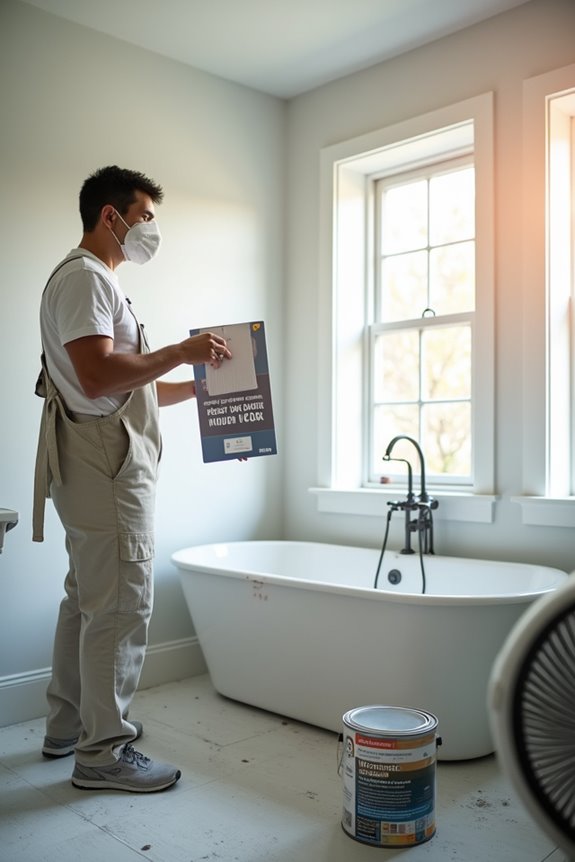
Exterior paints release volatile organic compounds (VOCs) at higher levels than interior paints, creating real health risks indoors. These chemicals linger for weeks or months, even after paint dries. Watch for these warning signs:
Exterior paints release volatile organic compounds at dangerously high levels indoors, with chemicals lingering for weeks or months after drying.
- Headaches and dizziness during and after painting sessions
- Eye, nose, and throat irritation that persists despite ventilation efforts
- Respiratory problems like coughing or breathing difficulty, especially in children
- Pet symptoms including letharness or unusual behavior
Your bathroom’s poor ventilation traps fumes, intensifying exposure. Switch to low-VOC or zero-VOC interior paint instead. Exterior paint wasn’t formulated for indoor spaces. If you’ve already applied exterior paint, increase air circulation immediately using fans and open windows. Monitor your household’s health closely over the coming weeks.
Should You DIY or Call a Professional?
When you’ve used exterior paint in your bathroom, deciding between a DIY fix and professional help depends on three key factors: your household’s health status, the paint’s coverage area, and your ventilation setup.
| Factor | DIY Approach | Professional Help |
|---|---|---|
| VOC off-gassing | Requires active ventilation | Expert assessment included |
| Health concerns | Risky with kids/pets | Safer recommendation |
| Surface prep | Time-intensive | Thorough evaluation |
| Encapsulation | Difficult alone | Properly executed |
| Timeline | Weeks of ventilation | Faster remediation |
Professional painters assess exterior paint indoors situations comprehensively. They evaluate your ventilation capacity, recommend appropriate primers, and guide remediation steps. If your household includes children or pets, professional guidance ensures you follow proper Health Department standards. They’ll determine whether thorough ventilation alone suffices or if encapsulation and repainting with interior low-VOC paint become necessary for your specific situation.
The Hidden Cost: Exterior Paint Versus Proper Interior Alternatives
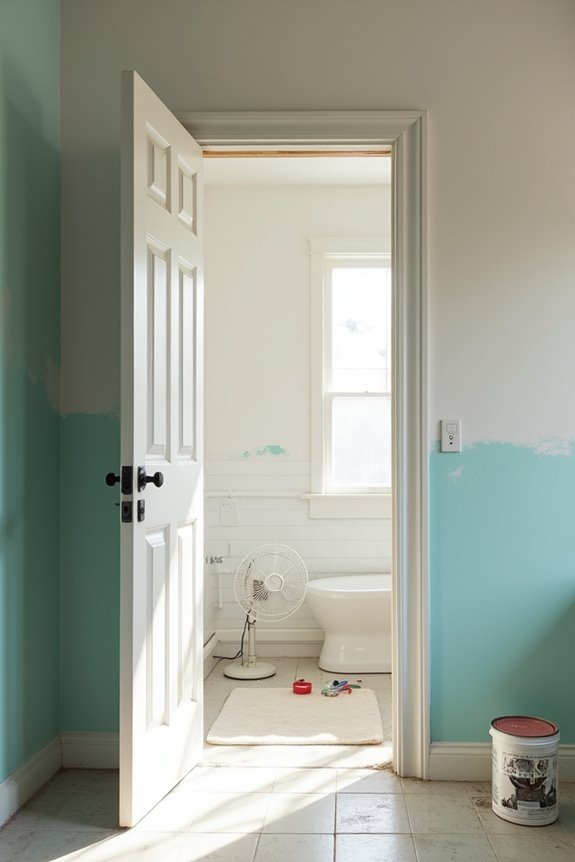
Why does exterior paint create problems in your bathroom when interior alternatives exist?
You’re investing time and money into your bathroom project. Exterior paint indoors introduces unnecessary risks that interior bathroom paint eliminates entirely. Consider these hidden costs:
- VOCs and health risks: Exterior formulas off-gas for weeks, irritating your eyes, nose, and throat in confined spaces
- Peeling and bubbling: Exterior paint isn’t designed for bathroom moisture, causing premature failure and requiring costly repainting
- Long-term expenses: You’ll spend more replacing failed exterior coats than investing once in proper interior bathroom paint
- Better performance: Interior moisture-resistant paints with mildew-resistant properties and semi-gloss finishes provide superior durability and easier cleanup
Interior bathroom paint specifically addresses your space’s unique demands. You avoid health concerns, ensure lasting protection, and achieve better results. Choose the right product from the start.
Moisture-Resistant Interior Paints Designed for Bathrooms
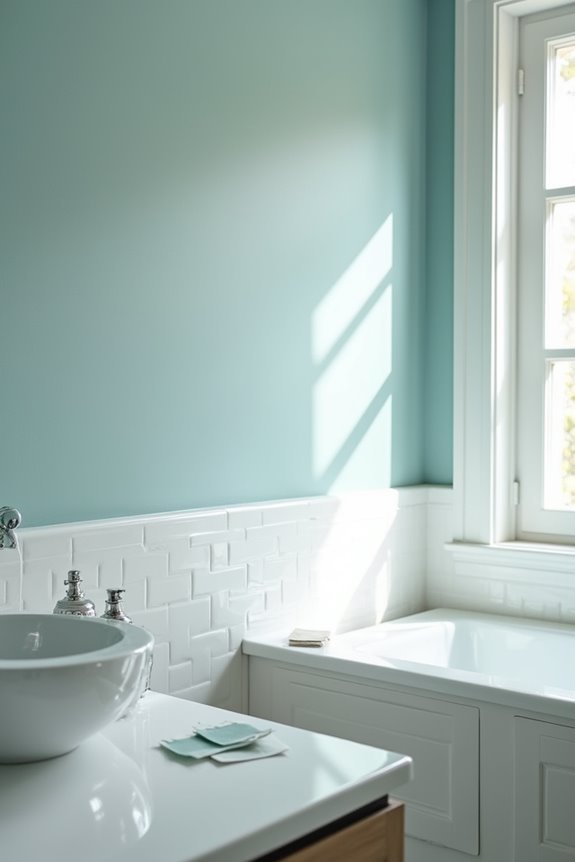
Interior bathroom paints solve the problems exterior formulas create. You’ll find specialized options that actually work in humid spaces. Look for paints labeled moisture-resistant or mildew-resistant specifically.
Interior bathroom paints solve humidity problems exterior formulas can’t handle. Choose moisture-resistant or mildew-resistant options for specialized protection.
Key Features to Choose:
Semi-gloss and satin finishes offer superior water resistance and cleaning ease. Acrylic latex paints with low or zero VOC safety standards protect your air quality while resisting moisture damage. Antimicrobial additives and mold-proofing technology prevent growth on walls.
Application Strategy:
Pair moisture-resistant interior paints with bathroom-specific primers. This combination improves adhesion and reduces moisture-related peeling. You’re creating a protective barrier against humidity.
Avoiding exterior paint indoors protects your bathroom investment. These specialized formulations work together to keep your walls healthy and protected long-term.
How to Ventilate and Protect Your Family During Application
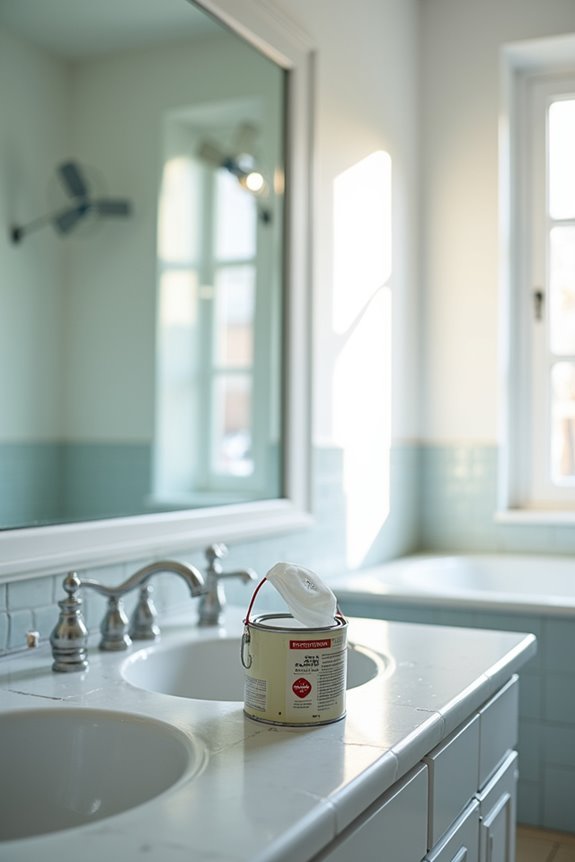
How’s your bathroom’s air flow right now?
Proper ventilation protects your family during exterior paint application. You’ll need to establish strong air circulation to disperse VOCs and chemical fumes effectively.
Essential ventilation steps:
- Open all exterior bathroom windows completely to create cross-ventilation pathways
- Run your exhaust fan continuously during painting and for several hours after
- Use a portable fan to boost air movement and circulation
- Keep doors closed to upper floors to contain fumes in one area
Low-VOC paints reduce off-gassing, but exterior formulas still release harmful compounds. Limit bathroom occupancy until odors diminish noticeably. If you used standard exterior paint, plan for weeks of ventilation ahead.
Air purifiers capture lingering volatile compounds effectively. Your family’s safety depends on consistent, thorough ventilation throughout the entire process.