
You’d be shocked how many Georgia homeowners unknowingly sleep in rooms that violate building codes. Your bedroom likely needs a compliant egress window—that’s your legal escape route during emergencies. But here’s the catch: size, ceiling height, and ventilation matter too. Miss these requirements, and your “bedroom” becomes a bonus room. That distinction tanks your home’s value and complicates financing. Before you renovate or sell, you’ll want to know exactly what your county building department demands.
Do Georgia Bedrooms Need Windows? The Short Answer
Why do Georgia bedrooms need windows? You’ll need an egress window to create a legal bedroom in Georgia. This isn’t optional—it’s part of Georgia building codes that protect your safety and home value.
An egress window serves as your emergency exit. You’re required to have a fully operable window with a minimum net clear opening of 5.7 square feet. The sill height can’t exceed 44 inches from the floor.
Legal bedroom requirements demand dual means of escape: a door plus an egress window. Without this window, appraisers classify your room as a bonus room or office instead of a bedroom.
That distinction matters substantially for resale value and marketability. Meeting Georgia building codes from the start saves you inspection headaches later.
IRC Requirements for Bedroom Windows and Egress
To legally qualify as a bedroom, your window must meet specific IRC standards for safe escape. You’ll need a minimum net opening of 5.7 square feet (or 5.0 sq ft for ground-floor rooms), with dimensions of at least 20 inches wide by 24 inches tall. Your window’s sill can’t sit higher than 44 inches above the floor, and you must be able to open it fully from inside without tools or special knowledge.
Minimum Window Opening Standards
Specific Dimensions Required:
- Width: at least 20 inches
- Height: at least 24 inches
- Sill height: no more than 44 inches above the floor
These measurements ensure you can achieve emergency escape and rescue if needed. The opening must be fully operable from inside without keys, tools, or special knowledge.
Window Types That Qualify:
Sliding and double-hung windows work well. Fixed, picture, hopper, and certain casement windows don’t meet requirements.
Meeting these standards gives you a safe, code-compliant emergency exit path.
Operational and Accessibility Requirements
Having the right window dimensions isn’t enough—your bedroom’s egress window must actually work when you need it. Your operable window serves as your primary means of egress during emergencies. You’ll need to open it quickly without tools, keys, or special knowledge.
Critical operational requirements:
- The window must operate fully from inside with one hand
- No locks, latches, or devices can prevent quick opening
- Hardware must remain accessible and function reliably over time
Your egress window should open smoothly every single time you test it. Hardware deterioration creates dangerous delays during actual emergencies. Regular maintenance ensures your means of egress stays dependable. This operational capability transforms a window from decorative to life-saving.
Sill Height and Dimensions
Once your window operates smoothly, you’ll need to measure its physical dimensions carefully. Your egress window dimensions must meet specific IRC requirements for safety.
Critical Measurements You’ll Need:
| Requirement | Minimum | Maximum |
|---|---|---|
| Width | 20 inches | No limit |
| Height | 24 inches | No limit |
| Sill height | N/A | 44 inches |
Your sill height—the bottom edge of your window frame—cannot exceed 44 inches above the floor. This ensures you can exit quickly during emergencies.
The minimum opening area requires 5.7 square feet for most bedrooms, or 5.0 square feet for ground-floor rooms. These egress window dimensions work together to guarantee safe, efficient escape routes. Measure twice to confirm compliance before considering your bedroom legally safe.
Georgia’s IRC Adoption and Local Enforcement Standards
How does Georgia enforce bedroom window requirements?
Georgia adopts versions of the IRC with state-specific amendments that you must follow. However, county-level enforcement means your local jurisdiction interprets these rules differently. You’ll need to understand how your specific area applies building code enforcement to bedroom egress windows.
Georgia IRC amendments require county-level interpretation, so local enforcement standards for bedroom egress windows vary by jurisdiction.
Key enforcement considerations in your area:
- County-level code enforcement varies by jurisdiction, affecting inspection standards and interpretations of Georgia IRC amendments
- Basements and attic conversions commonly fail inspections without compliant egress windows or exterior doors meeting size requirements
- Professional guidance helps you navigate local requirements, including window well specifications and sill height limits specific to your county
Contact your county building department before starting any bedroom project. They’ll clarify local enforcement standards and ensure your egress window meets all applicable codes from the start.
Legal Bedroom Size, Ceiling Height, and Space Requirements
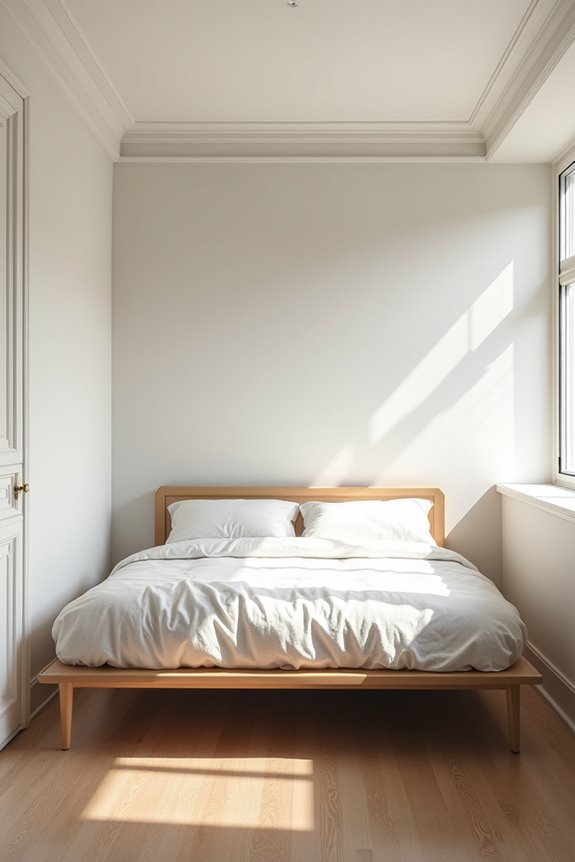
What separates a legal bedroom from a bonus room or office? Meeting specific dimensional standards.
Your bedroom needs a minimum floor area of 70–80 square feet. You’ll want at least 7 feet of ceiling height in one direction. If two people occupy the space, you must provide 50 square feet per person.
Beyond size, you need Natural Light and Ventilation. Your room requires glazing covering at least 5% of the floor area. You’ll also need unobstructed ventilation openings or mechanical systems.
For below-grade bedrooms, an Egress Window becomes mandatory. This emergency exit must meet specific size and sill-height standards. These requirements ensure your space qualifies legally. Without them, inspectors classify your room differently: bonus room or office instead.
Two Means of Egress: Doors, Windows, and Code Alternatives
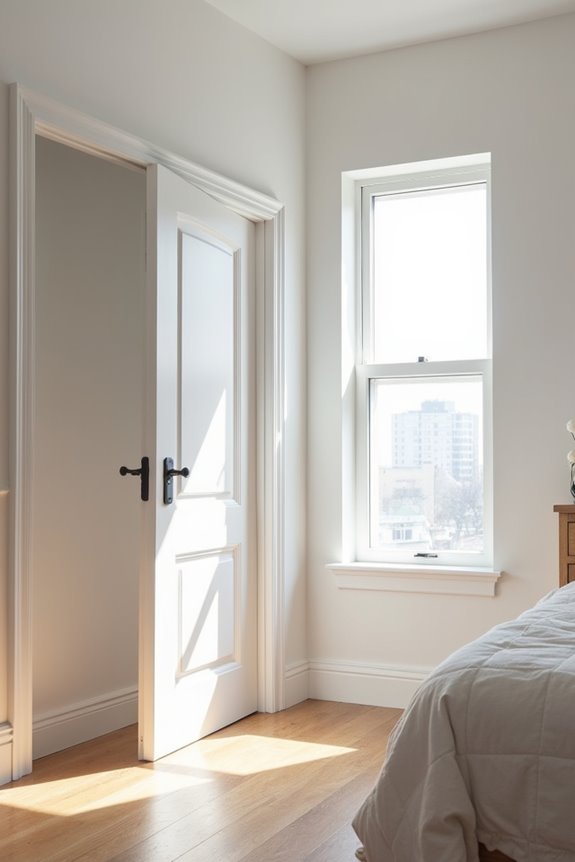
You’ll need two separate escape routes from your bedroom to meet building codes: typically a door combined with an egress window. If your bedroom lacks an exterior door, you must install an egress window meeting minimum dimensions—5.7 square feet of clear opening, at least 20 inches wide and 24 inches tall—with a sill no higher than 44 inches. Some jurisdictions accept alternative routes like skylights, though you should verify your local code requirements since standards vary by location.
Door and Window Pairing
When it comes to bedroom safety, building codes aren’t leaving escape routes to chance. You need both a door and an egress window working together for complete protection.
Your bedroom door provides your primary exit route. However, it alone doesn’t satisfy egress requirements during emergencies when hallways fill with smoke or flames block your path.
This is where your egress window becomes critical:
- Operable windows meeting size standards (minimum 5.7 square feet) offer secondary emergency escape routes
- Fixed or picture windows don’t count—you need windows you can open from inside without keys
- Proper sill height (no higher than 44 inches) ensures safe, quick exit during fires
Together, your door and compliant egress window create redundancy. If one route becomes blocked, you’ve got another way out. This pairing saves lives.
Skylight and Alternative Routes
Can’t fit a traditional egress window into your bedroom layout? You’ve got options. A skylight qualifies as an egress route when it meets local code requirements. It must open fully, provide adequate size for escape, and remain accessible during emergencies.
Window Well Requirements
If you install a window well below ground level, ensure it offers a clear exit path. You’ll need sufficient clearance—typically 36 inches wide minimum. Many codes require ladders or steps for safe escape.
Meeting Code Standards
Your skylight or window well must satisfy minimum opening area and sill height standards set by local building officials. Fixed picture windows don’t count as egress. Verify that your chosen alternative meets your jurisdiction’s specific requirements before finalizing bedroom designs.
Minimum Egress Window Dimensions and Sill Height Standards
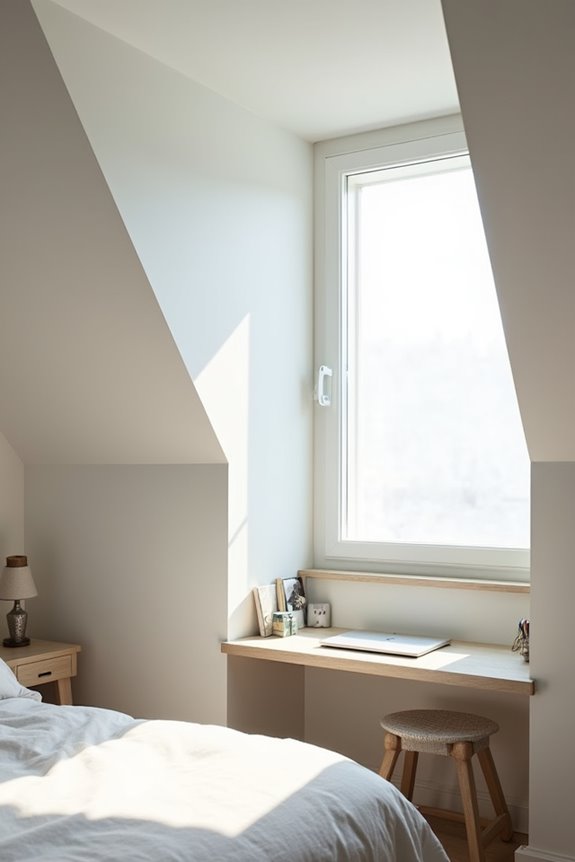
What exact measurements make an egress window safe and legal? Your bedroom’s egress window must meet specific size requirements to function as a legitimate emergency exit. Building codes establish clear standards you’ll need to follow:
- Minimum net clear opening: You need at least 5.7 square feet (5.0 sq ft for grade-floor rooms)
- Width and height dimensions: Your window must be at least 20 inches wide and 24 inches tall
- Sill height limit: The windowsill cannot exceed 44 inches above your floor
These measurements ensure you can quickly exit during emergencies. You’ll operate the window fully from inside without keys or tools. Meeting these egress window standards protects your safety and satisfies legal requirements.
Why Operable Windows Matter: Fixed Windows Don’t Count
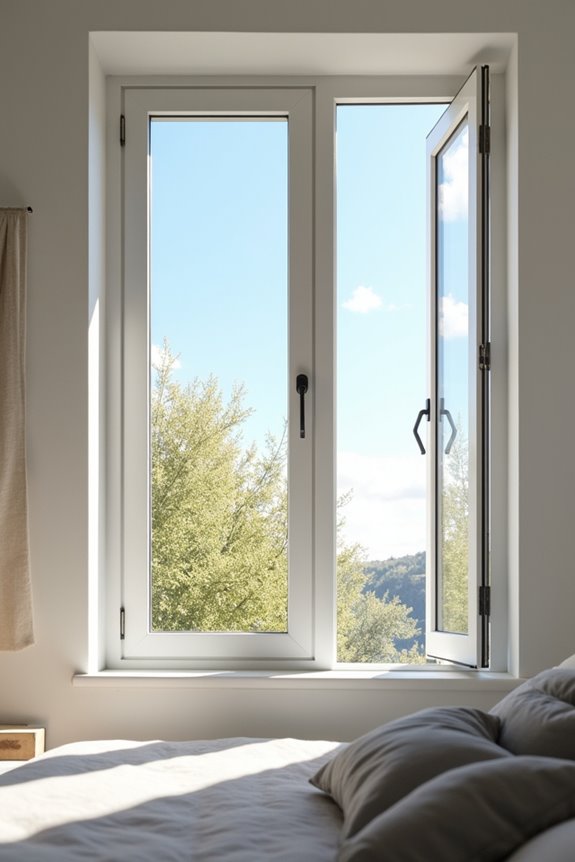
Your bedroom’s window must actually open—here’s why that matters. Fixed or picture windows look nice, but they won’t satisfy legal bedroom requirements. You need an operable window that opens easily from inside.
The Egress and Ventilation Connection
An operable window serves two critical functions: egress and ventilation. During emergencies, you need a way out fast. Fixed windows trap you inside. Additionally, operable windows provide fresh air circulation—essential for healthy sleeping spaces.
What “Operable” Really Means
Your window must open smoothly without tools or special knowledge. Sliding windows, casements, and double-hungs all work. The mechanism must function reliably every time.
Building inspectors verify operability during final inspections. Skip this requirement, and your bedroom won’t legally qualify as a bedroom. That affects your home’s value and marketability significantly.
Basements and Below-Grade Bedrooms: Special Egress Challenges

If you’re converting a basement into a bedroom, you’ll need to meet strict egress requirements that don’t apply to above-grade spaces. Your egress window must have a net clear opening of at least 5.7 square feet, a sill height no higher than 44 inches, and a compliant window well with 550 mm of clearance for escape. Without these elements—or without an exterior door—your basement won’t legally qualify as a bedroom, and you’ll face inspection failures and resale complications.
Window Wells And Accessibility
Basement bedrooms present unique egress challenges that above-grade rooms don’t face. You’ll need proper window wells to make your egress window functional and safe.
Window wells serve critical purposes:
- Provide clearance space – Wells must allow at least 21.7 inches of clearance for escape during emergencies
- Enable safe exit – Ladders or permanent steps help you climb out quickly when needed
- Protect the opening – Enclosures prevent debris from blocking your egress window
Your window well sill height matters notably. Keep it around 44 inches above the floor for easy emergency access. You’ll appreciate how proper installation protects your safety while meeting code requirements. Well-designed window wells aren’t optional—they’re essential for converting basement spaces into legal bedrooms.
Below-Grade Egress Compliance Standards
What makes a below-grade bedroom legally safe for occupancy? You need an egress window that meets specific code requirements in your jurisdiction.
Your egress window must provide a minimum net clear opening of 5.7 square feet. The opening width should measure at least 20 inches by 24 inches. The sill height can’t exceed 44 inches above the floor.
If your window doesn’t meet these dimensions, you’ll need a compliant window well. This well requires sufficient clearance—typically at least 550 millimeters—for safe escape. Deep wells often demand permanent ladders or steps.
Without proper egress compliance, your below-grade bedroom won’t qualify as a legal bedroom. This affects property value, marketability, and occupancy permits. Many jurisdictions require engineered solutions for non-standard layouts.
Basement Bedroom Legal Requirements
Meeting egress standards is only the first step—your basement bedroom must satisfy several additional codes to gain legal status. An egress window alone won’t qualify your space without meeting complementary requirements that protect occupants and establish legitimate sleeping areas.
Your basement bedroom needs:
- Ceiling height of at least 7 feet in most jurisdictions to accommodate safe, comfortable sleeping
- Floor area typically 70-100 square feet minimum, depending on local codes like Georgia or Ontario standards
- Natural light and ventilation through code-compliant egress windows that open fully without tools
These requirements work together. Your egress window provides emergency escape, while ceiling height and floor area ensure livability. Non-compliant spaces get reclassified as bonus rooms or offices, reducing resale value significantly. Upgrade strategically to achieve full code compliance.
Window Wells, Ladders, and Permanent Steps for Basement Escape Routes
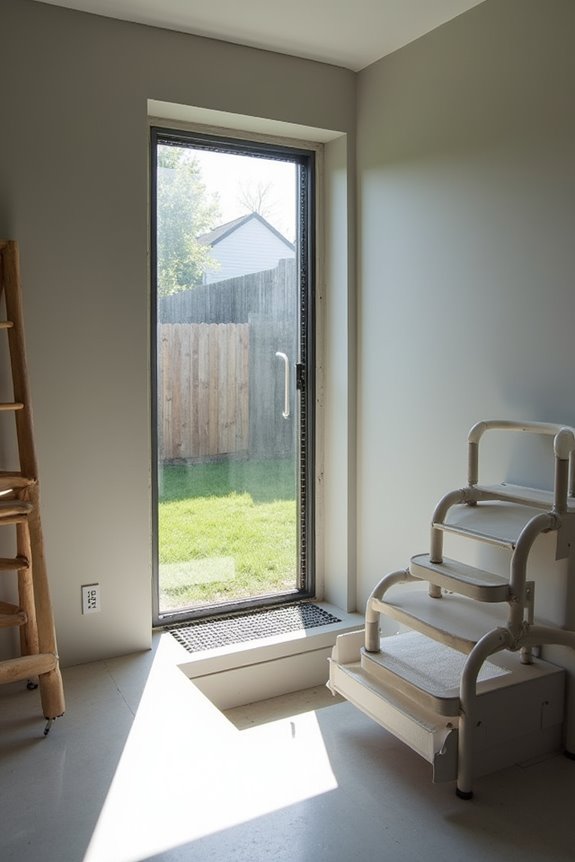
How deep’s your basement window well? If it exceeds 44 inches, you’ll need either a ladder or permanent steps for safe egress. This requirement exists because basement escape routes must be accessible during emergencies.
Your window well must maintain at least 550 mm (about 22 inches) of clearance. This space allows you to exit quickly without obstruction. Permanent steps work better than removable ladders since they’re always available when you need them.
Install steps securely into your well’s bottom. Ensure your egress window’s sill height stays around 1,000 mm maximum. Deep wells create genuine safety concerns—they’re not just code technicalities. Building inspectors verify that your basement escape route remains functional and unblocked by furniture or storage items.
Natural Light and Ventilation: Code Allowances vs. Practical Design
You’ll find that building codes don’t always require a traditional exterior window if you meet specific natural light and ventilation standards through alternative methods. Your bedroom can satisfy lighting needs via borrowed light from adjacent rooms or mechanical systems, while ventilation requires either a 0.28 m² unobstructed opening or a mechanical air exchange system. This flexibility lets you design functional bedrooms in challenging layouts—like interior corridors or deeper floor plans—without sacrificing code compliance.
Window Requirements and Code Standards
What separates a legal bedroom from an illegal one? Meeting window requirements and code standards.
Your bedroom needs specific features to comply with building codes:
- Natural light: You must have unobstructed glazing equal to 5% of the room’s area, unless local codes allow borrowed light alternatives.
- Egress window: An openable window serves as your emergency exit route, meeting minimum area and height criteria set by your jurisdiction.
- Ventilation: You need either an unobstructed opening of at least 0.28 m² or equivalent mechanical ventilation for air circulation.
Exterior wall windows remain the gold standard for compliance. However, some jurisdictions permit interior borrowed light or mechanical substitutes. Check your local building department’s specific provisions. These standards ensure your bedroom meets safety and habitability requirements, protecting both your health and property value.
Ventilation Beyond Natural Light
Can’t your bedroom stay healthy without an exterior window? Yes—mechanical ventilation systems meet California Building Code standards effectively. You can choose between natural light through windows or approved mechanical systems for air quality.
Ventilation System Comparison
| System Type | Air Changes/Hour | Installation Cost | Maintenance Needs |
|---|---|---|---|
| Natural Window | Varies | $0 | Minimal |
| Ducted Mechanical | 6-8 per hour | $2,000–$5,000 | Quarterly filter changes |
| Exhaust Fan Only | 4-6 per hour | $500–$1,500 | Monthly cleaning |
| Heat Recovery Unit | 6-8 per hour | $3,000–$6,000 | Annual service |
| Hybrid System | 7-9 per hour | $4,000–$7,000 | Bi-annual inspection |
Mechanical ventilation doesn’t replace natural light requirements entirely. Many jurisdictions still mandate windows for emergency egress and psychological comfort. Your design strategy should integrate purposeful airflow paths with adequate lighting solutions to create functional, code-compliant bedrooms.
Design Flexibility Within Regulations
Building codes offer designers meaningful flexibility when creating compliant bedrooms without traditional windows. You’ll discover multiple pathways to satisfy egress requirements and bedroom ventilation standards.
Consider these code-compliant strategies:
- Mechanical ventilation systems deliver continuous air circulation, meeting CBC 1204.1 standards without exterior openings
- Artificial lighting combined with borrowed light from adjacent spaces satisfies natural light provisions when properly documented
- Emergency egress windows or doors fulfill safety codes while allowing interior bedroom placement
You’ll need to document how your design achieves ventilation, lighting, and egress compliance in your design narrative. Local amendments may influence acceptability, so verify requirements with your jurisdiction. This documentation demonstrates to inspectors and future buyers that your bedroom meets all applicable codes despite lacking traditional windows.
Non-Compliant Bedrooms: How They Tank Property Value
Why does a bedroom without proper egress suddenly become a “bonus room” on your appraisal? Real estate agents and appraisers must reclassify non-compliant bedrooms, reducing your official bedroom count and property value.
Missing egress windows or inadequate window wells create legal problems. Lenders won’t finance properties with non-code-compliant bedrooms. Buyers discover issues during inspections, triggering renegotiations or deal cancellations.
The compliance checklist includes: egress window minimum 5.7 square feet opening, sill height limits, proper window well dimensions, and functioning heating or ventilation systems.
Verify bedroom compliance before listing. Non-compliance delays sales, requires costly renovations, and signals problems to potential buyers. Addressing these issues upfront protects your investment and maximizes marketability.
Marketing and Disclosure: What Sellers Need to Know Before Listing
How you describe your bedrooms on listing documents directly impacts buyer interest and sale price. Accurate bedroom marketing requires understanding legal bedroom requirements in your area.
Critical Disclosure Steps:
- Verify each room has a compliant egress window meeting local codes before claiming “bedroom” status
- Document window measurements, sill heights, and well dimensions to prove code compliance
- Disclose non-compliant rooms as “bonus rooms” or “offices” rather than bedrooms
Georgia sellers must ensure basements and attics have proper egress windows. Misrepresenting non-compliant spaces as legal bedrooms exposes you to liability and inspection failures.
Work with your real estate agent to accurately categorize each room. Honest bedroom marketing builds buyer confidence and protects your transaction from costly disputes or deal collapse.
Getting Compliant Egress Windows: What Installation Looks Like
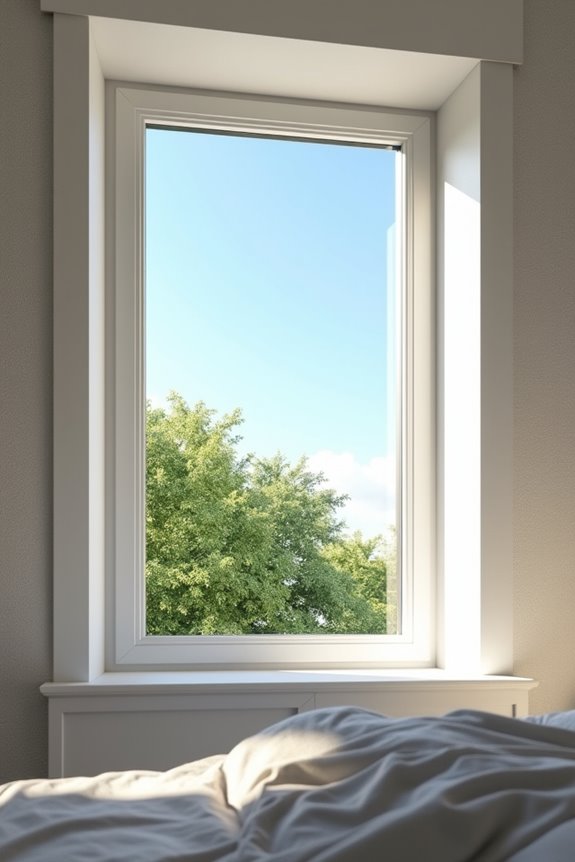
Once you’ve decided that an egress window upgrade is necessary, you’re facing a specific project: meeting code requirements while staying within budget.
The Core Requirements
Your egress window must provide a net clear opening of at least 5.7 square feet. The window needs to measure 20 inches wide by 24 inches tall minimum, with a sill positioned no higher than 44 inches above the floor. These measurements ensure safe emergency exit.
Installation Essentials
A window well becomes necessary for basement installations. Your well requires at least 550 millimeters of clearance and must include a ladder or permanent steps. Professional installation typically costs $2,000 to $5,000, depending on site conditions. Verify local code requirements before beginning work.
Verifying Egress Window Compliance Before You Sell
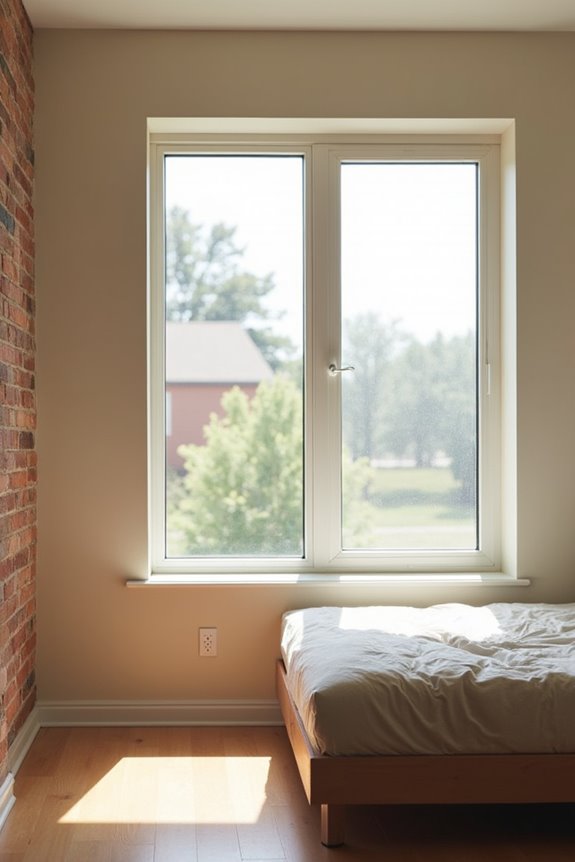
Before you list your home, you’ll need to verify that every bedroom meets egress requirements—this directly affects your property’s marketability and appraised value.
Verify bedroom egress requirements before listing—proper windows directly impact your home’s marketability and appraised value.
Start your code compliance verification now:
- Measure your windows: Check width (minimum 20 inches), height (minimum 24 inches), and sill height (maximum 44 inches from floor).
- Calculate net clear opening: Ensure your emergency egress window provides at least 5.7 square feet of unobstructed space (5.0 for on-grade rooms).
- Test operability: Verify you can open the egress window fully from inside without keys, tools, or special knowledge.
For below-grade bedrooms, inspect window wells for proper clearance and permanent escape ladders. Contact your Georgia county inspector early—addressing issues before listing prevents appraisal complications and maintains your bedroom count.