Hang your dining light 30–36 inches above the tabletop for 8-foot ceilings. Add roughly 3 inches per extra foot of ceiling height. Measure from the table surface to the fixture’s bottom, not the ceiling. Center the chandelier over your table—match its diameter to about 50% of table width. Test height using temporary fixtures before permanent installation. Verify head clearance and sightlines from seated positions. Use adjustable downrods to fine-tune in 3–4 inch increments. Proper placement improves dining comfort and functionality.
The 30–36 Inch Rule for Standard 8-Foot Ceilings
Most designers agree on one key measurement: hang your dining room light 30 to 36 inches above the tabletop.
This 30–36 inch rule serves a practical purpose. It creates clear sightlines across your table while providing adequate illumination for dining. You’ll see your guests’ faces without obstruction, and light reaches your food and plates evenly.
Interior designers rely on this guideline because it balances two competing needs: visibility and brightness. Your dining room chandelier shouldn’t block conversation or cast harsh shadows on diners’ faces.
To apply this rule: measure from your table surface upward. Mark 30 to 36 inches on your wall. This marks where your fixture’s bottom should hang. Standard 8-foot ceilings accommodate this height comfortably.
Higher Ceilings: Add 3 Inches Per Additional Foot
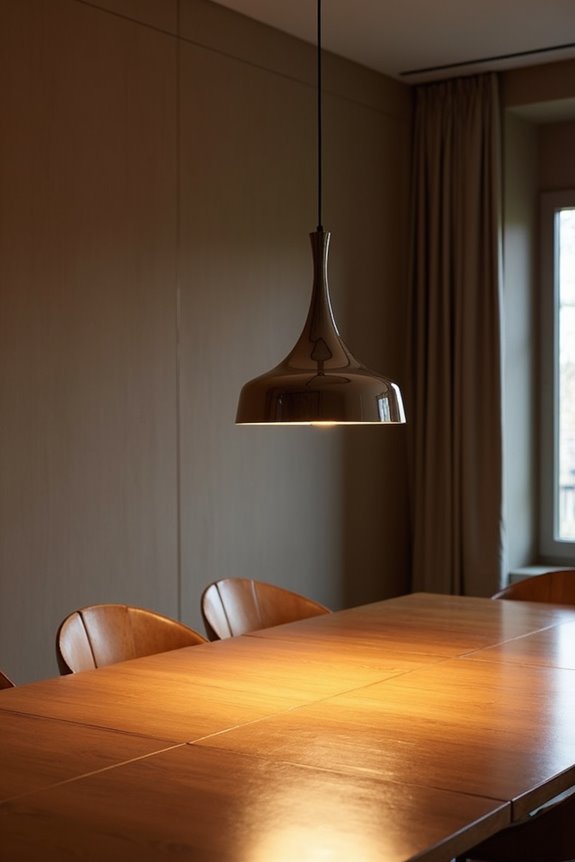
What happens when your ceiling stretches beyond the standard 8 feet? You’ll need to raise your chandelier’s hanging height proportionally. For every full foot above 9 feet, add 3 inches to your drop measurement. This adjustment keeps your fixture visually balanced with the room.
| Ceiling Height | Recommended Drop |
|---|---|
| 9 feet | 33–36 inches |
| 10 feet | 36–39 inches |
| 11 feet | 39–42 inches |
This scaling system prevents your chandelier from appearing too small or overwhelming. Higher ceilings require greater hanging heights to maintain proper sightlines. You’ll avoid glare and create visual harmony between your fixture and table. Verify your final adjustment by checking sight angles from seated positions before finalizing installation.
How to Measure From Tabletop to Fixture Bottom
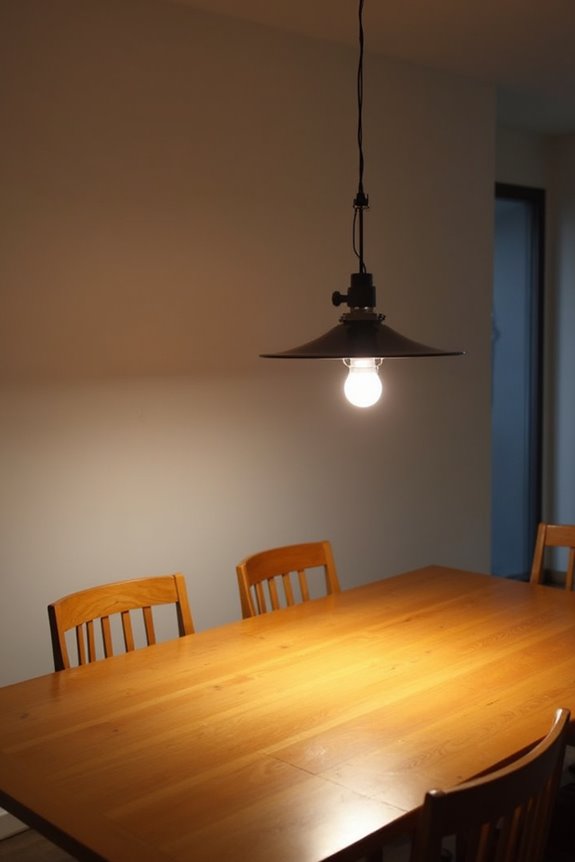
Getting this measurement right is important: you’ll measure from your tabletop surface to the bottom of the light fixture itself. This isn’t measured to your ceiling or to the fixture’s top canopy—only to the lowest point.
Here’s your process: First, identify your ceiling height. Second, determine your target hanging distance based on that ceiling height. For 8-foot ceilings, aim for 30–36 inches. Higher ceilings? Add 3 inches per additional full foot.
Finally, use a measuring tape from your tabletop to calculate the exact distance. Mark this measurement carefully. You can fine-tune later using adjustable fixtures or additional downrods if needed. This tabletop measurement provides proper balance and sight lines for everyone dining below.
Head Clearance: Why Hanging Height Matters for Safety
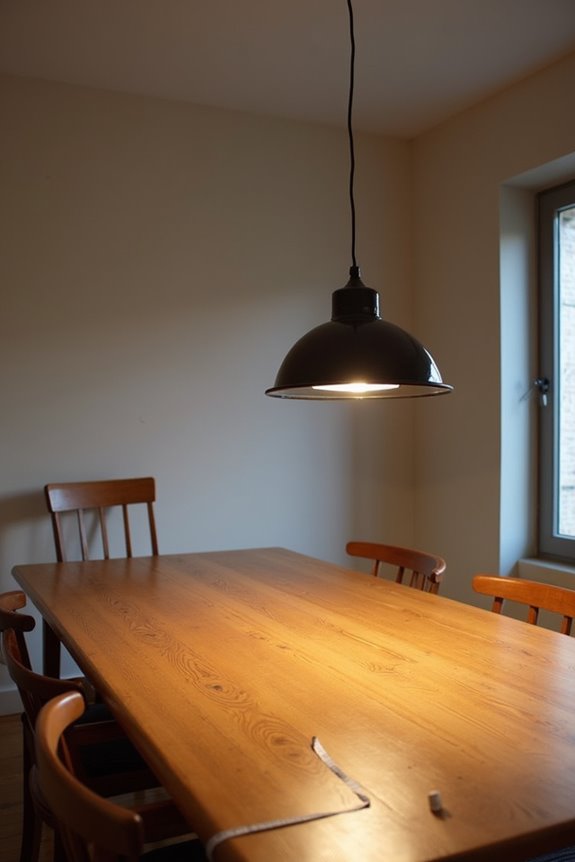
Why does head clearance matter when hanging your dining room light? Proper hanging height prevents accidents and maintains comfort during meals. You’ll avoid bumping heads and keep clear sightlines across your table.
| Ceiling Height | Recommended Distance | Safety Priority | Eye Comfort |
|---|---|---|---|
| 8 feet | 30–36 inches | High | Excellent |
| 9–10 feet | 33–39 inches | High | Excellent |
| 11+ feet | Add 3–4 inches per foot | Critical | Good |
Your chandelier’s bottom should clear seated diners’ heads by several inches. This spacing prevents discomfort and potential collisions. Additionally, position the fixture so seated guests see across the table without obstruction. Calculate your exact height before installation to balance safety and functionality.
Center the Fixture Over Your Table: Shape-Specific Tips
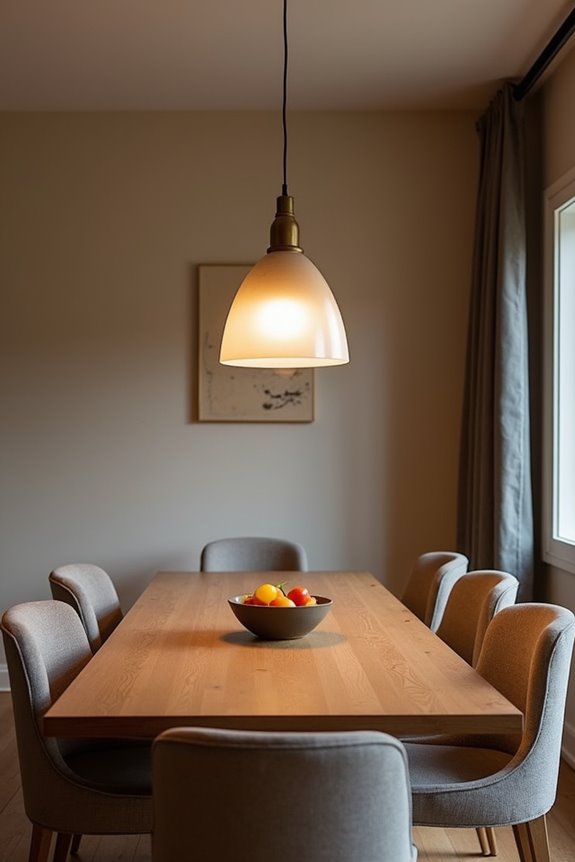
Your table’s shape determines how you’ll position your chandelier for visual balance. Rectangular and oval tables need the fixture centered along their length at 30–34 inches above the surface, while round and square tables require centered placement with slightly adjusted heights: round tables work best at 28–32 inches, and square tables at 30–34 inches. These shape-specific measurements help your light complement your table’s proportions and create an inviting dining space.
Rectangular And Oval Tables
Rectangular And Oval Tables
How do you know if your chandelier’s positioned correctly over a rectangular or oval table? Center it along the table’s length for even light distribution across the entire surface.
Hanging Height Guidelines
For 8-foot ceilings, hang your fixture 30 to 34 inches above the tabletop. This range prevents glare while maintaining visibility for diners on all sides.
Sizing Matters
Your chandelier width should equal about 50% of your table’s width. For rectangular shapes, never exceed two-thirds of the table’s length. This proportion keeps sightlines clear and prevents the fixture from visually overwhelming your dining area.
Ceiling Adjustments
Higher ceilings require adjustment: raise the fixture approximately 3 inches for each foot above 9 feet. This maintains visual balance throughout your space.
Round And Square Tables
Centering your fixture over round and square tables requires precision—but the process itself is straightforward. For round dining tables, position your chandelier directly above the center point. Aim for a hanging height of 28 to 32 inches above the tabletop. Square tables demand the same centered approach: place the fixture in the middle and maintain 30 to 34 inches of clearance above your surface.
Size matters equally. Choose a fixture diameter roughly 50% of your round table’s width. This proportion creates visual balance without overwhelming your dining table. With square tables, select a fixture length close to the table’s length.
Always prioritize sightlines. Position the chandelier’s bottom well above eye level when seated. This prevents glare and provides comfortable dining experiences for all guests.
Why Chandelier Height Affects Your Dining Sightlines
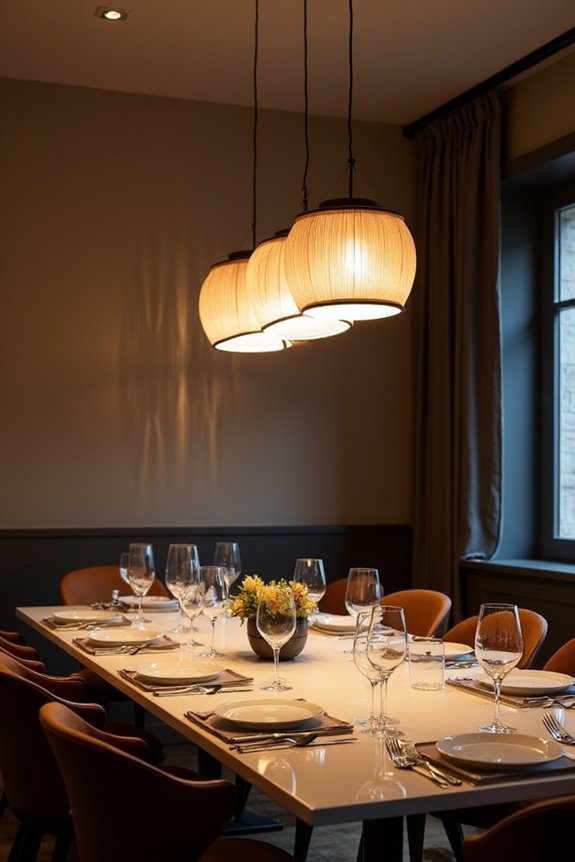
Your chandelier’s hanging height directly impacts whether you can see across the table comfortably during meals. If it hangs too low, the fixture blocks your sightline to other diners; if it’s too high, you lose the visual connection that makes the chandelier part of your dining space. Proper positioning—30–36 inches above an 8-foot table—keeps your eye level clear while maintaining the fixture as a balanced element in the room.
Eye Level and Comfort
Why does a chandelier’s height matter so much when you’re sitting down to eat?
When you’re seated at your dining table, your eye level becomes the reference point. A chandelier positioned too low creates three main concerns:
- Glare interference: Direct light hitting your eyes disrupts conversation and dining comfort
- Visual obstruction: The fixture blocks sightlines across the table between diners
- Spatial imbalance: Improper height makes the room feel cramped or awkward
The ideal positioning places the chandelier’s bottom 30 to 36 inches above your tabletop on standard eight-foot ceilings. This distance keeps the light source above your natural eye level while seated, eliminating glare and preserving clear views across the table. You’ll notice the difference immediately—better visibility, easier conversation, and a more inviting atmosphere.
View Obstruction Prevention
How much of the table can you actually see when a chandelier blocks your view? A fixture hung too low intrudes directly into your eye-level sightlines. You lose the ability to see guests across the table comfortably.
The Right Height Range
Maintain 30–36 inches between the chandelier’s bottom and your dining surface on standard 8-foot ceilings. This clearance preserves unobstructed sightlines along the entire table. For each additional foot of ceiling height, raise the fixture approximately 3 inches higher.
Centering Strategy
Position your chandelier directly over rectangular or oval tables. This centered placement maintains visual flow and prevents diagonal sight obstruction. A misaligned fixture creates awkward viewing angles that disrupt conversation comfort and room balance throughout your dining space.
Avoid Glare: Adjust Chandelier Height for Better Light
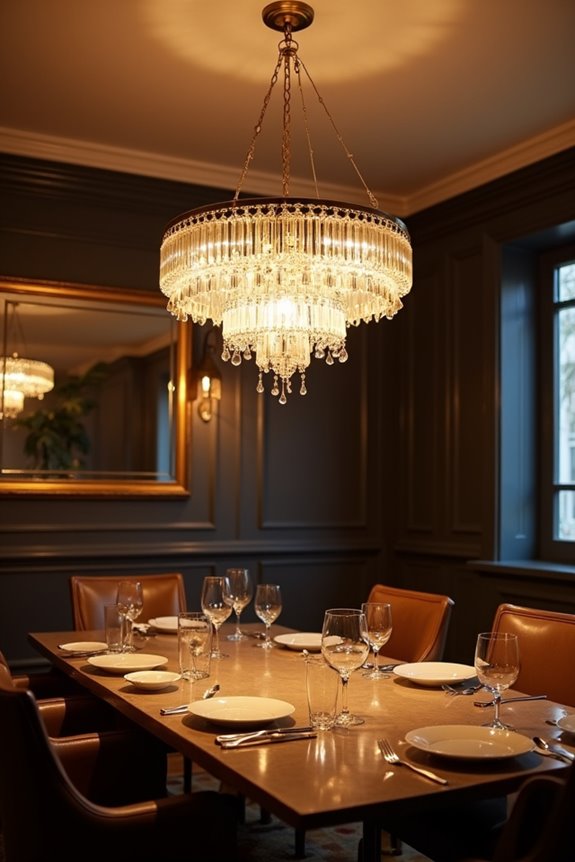
Getting your chandelier height right makes a real difference in dining comfort. Glare and visibility go hand in hand when you’re positioning your fixture.
Key Adjustments for Optimal Lighting:
- Hang fixtures 30–36 inches above the table for standard 8-foot ceilings
- Add roughly 3 inches of clearance per extra foot above 9 feet
- Test height using adjustable chains before permanent installation
Too high, and you’ll experience increased glare reflecting down. Too low, and the light blocks sightlines across your table. You’re aiming for balance: enough brightness to see food and faces clearly, without the source creating uncomfortable brightness.
Use temporary testing methods to find your ideal position. Adjustable-hanging fixtures let you fine-tune positioning easily. This approach helps diners enjoy conversation without squinting or obstruction.
Match Fixture Size to Table Width
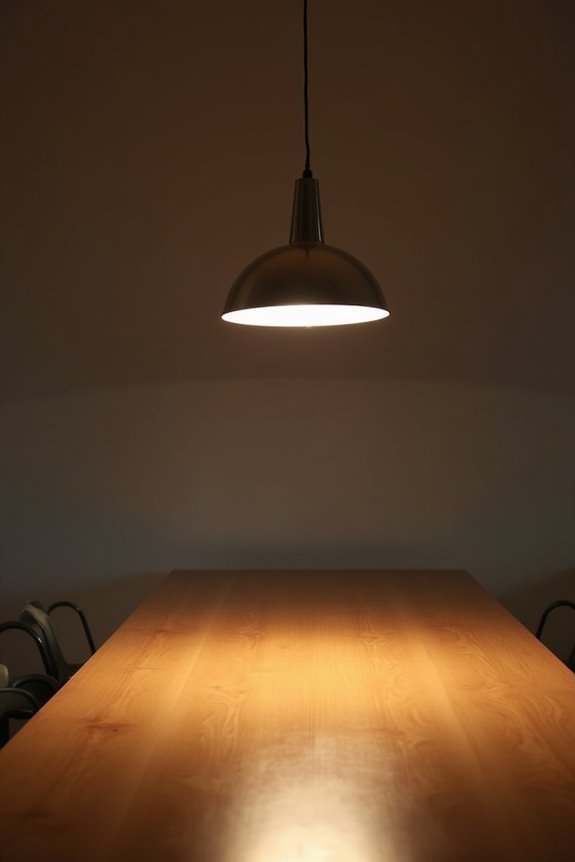
Once you’ve nailed the height, sizing matters just as much. Your chandelier’s diameter should be roughly 50% of your table’s width for proper proportionality. This creates visual balance and prevents the fixture from looking too small or overwhelming.
For a 40-inch round table, choose a chandelier between 20–28 inches in diameter. For rectangular tables, match both dimensions: a 40×60 inch table needs a 24-inch diameter fixture about 36 inches long. A 40×84 inch table calls for a 24-inch diameter and 60-inch length.
Keep your fixture at least 12 inches smaller than your table’s smallest dimension. This spacing keeps the chandelier centered and proportional. Getting these measurements right results in a dining space where everything coordinates well together.
Common Mistakes That Make Dining Lights Hang Too High
Why do so many dining rooms feel awkward and disconnected? You’re likely making one of these common installation errors:
Why do so many dining rooms feel awkward and disconnected? You’re likely making one of these common installation errors.
- Ignoring ceiling height adjustments: You skip the three-inch raise per additional foot above eight feet, leaving fixtures too high
- Failing to account for table width: Your chandelier size doesn’t match your table proportions, creating visual imbalance
- Placing fixtures without centering: Your light sits off-center, disrupting the room’s visual anchor
A 45-inch hanging height above your table feels visually overwhelming and creates excessive air space. Your diners lose sightlines and feel disconnected from the light source. The solution requires measuring your specific ceiling height first. Then calculate your ideal hanging height using the standard 30-36 inches for eight-foot ceilings. This approach preserves eye level and creates an intentional, welcoming dining environment.
Test Your Chandelier Height Before Installing Permanently
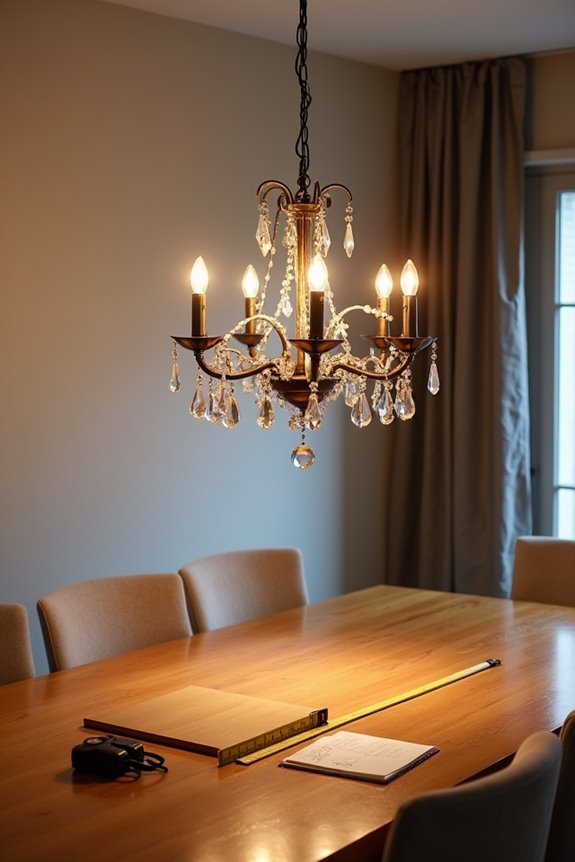
Before you drill holes and commit to permanent installation, testing your chandelier height helps you avoid costly mistakes. You’ll use temporary fixtures or painter’s tape to simulate the chandelier’s bottom. This approach lets you assess sightlines and head clearance without damage.
| Testing Method | Purpose |
|---|---|
| Painter’s tape outline | Visualize fixture dimensions |
| Temporary hanging | Check seated eye level |
| Head clearance test | Verify safe passage |
| Conversation sightline check | Confirm unobstructed views |
Position the mock fixture at your planned height. Sit at the dining table and evaluate your perspective. Ask yourself: Does the light obstruct conversation? Can people pass underneath safely? Adjust the mock height by 3–4 inch increments until you’re satisfied. This testing phase prevents permanent installation regrets and allows your chandelier to hang correctly for your space and needs.
Fine-Tuning Your Chandelier With Adjustable Downrods
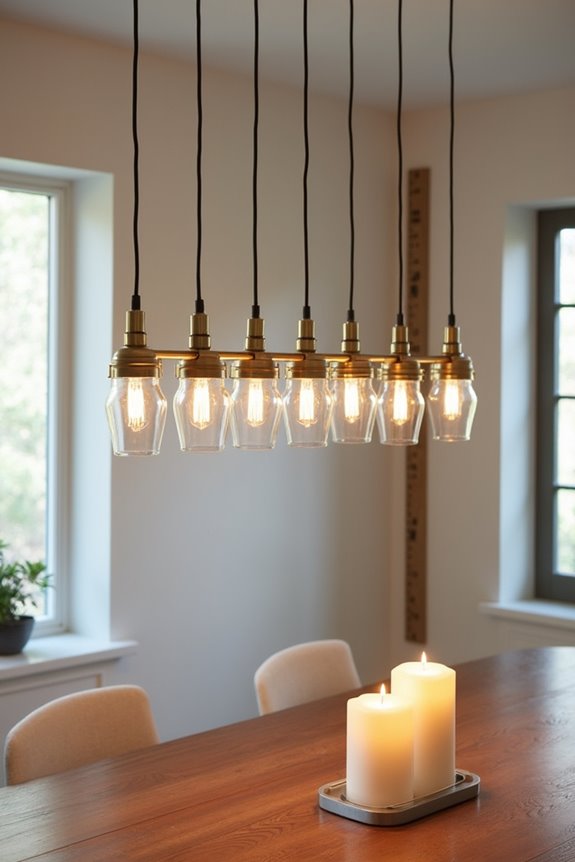
You can adjust your chandelier’s height by adding or removing 12-inch downrod sections to match your ceiling and table proportions. Start with the four included rods to create 12, 24, 36, or 48-inch drops, then measure from your tabletop to the fixture’s bottom—aiming for that ideal 30–36 inch range. Make small adjustments in increments to test balance before securing everything permanently to your ceiling box.
Adjustable Rod Length Options
How do you achieve the perfect chandelier height when standard measurements don’t quite fit your space? Most fixtures like the Edie Two-Tier Chandelier include multiple downrods you can customize:
- Four 12-inch pieces allow you to combine them for total hanging length
- You can shorten or lengthen by 3–4 inch increments to balance sightlines
- Adjustable-height designs accommodate eye level and seating comfort
Start with the recommended 30–36 inches above your table for 8-foot ceilings. Add 3 inches for each additional foot of ceiling height. Re-measure after initial installation. Adjust in small increments until you achieve proper headroom and visual balance.
When installing, verify all downrods thread securely. Check that your canopy accommodates the combined rod length and fixture weight. This approach helps you create the ideal dining experience.
Customizing Height For Balance
Once your chandelier is mounted, the real fine-tuning begins. Adjustable downrods let you perfect your lighting’s position after installation. You’ll adjust in 3 to 4 inch increments until you achieve the ideal look.
Start with the standard 30–36 inch range above your table for 8-foot ceilings. Use your downrods to move gradually toward the height that works best. Check your eye level and verify adequate clearance above diners’ heads.
For higher ceilings, add roughly 3 inches of airspace per extra foot of ceiling height. This maintains visual balance throughout your space.
Before finalizing, temporarily mount with extra slack or temporary cords. This simulates different clearances without commitment. Once you’ve found your preferred height, secure the downrods permanently. Your customized positioning preserves sightlines and dining comfort.