
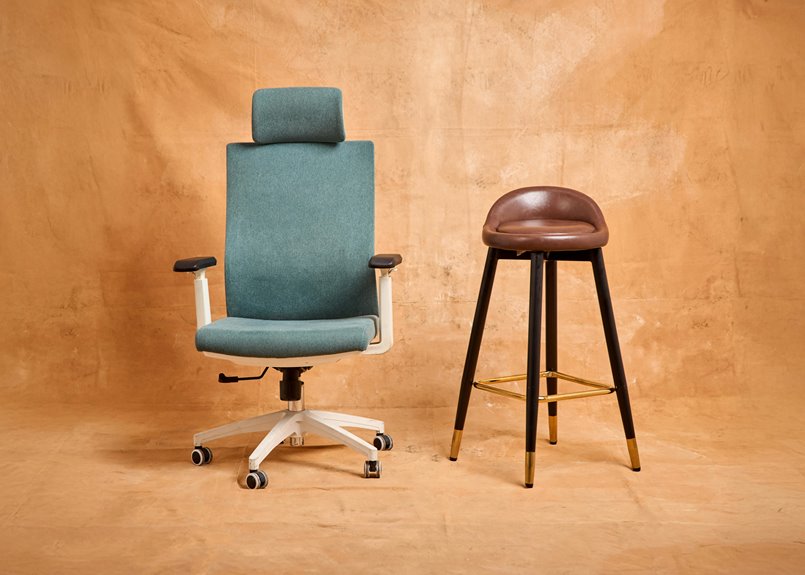
A standard dining chair seat measures 18 inches tall. You’ll pair this height with a typical 30-inch table to create the ideal 10-to-12-inch knee clearance for comfortable seating. Some chairs range from 17 to 19 inches, depending on style and design. This standard pairing prevents leg cramping, hunched posture, and lower back strain. If your current setup feels uncomfortable, measuring your table’s underside and selecting the right chair height can improve your dining experience—discover specific adjustment techniques next.
Standard Dining Chair Seat Height: 18 to 19 Inches
What’s the standard measurement for a comfortable dining chair? You’ll find it at 18 inches. This seat height represents the industry standard dining chair measurement that works with most table configurations.
Here’s why this matters: your dining room chair height directly affects comfort. An 18-inch seat pairs well with a 30-inch table height. This combination gives you proper legroom and underside clearance of approximately 10 to 13 inches between your knees and the table.
While some chairs range from 17 to 19 inches, 18 inches remains the industry standard. This consistency helps you choose dining chairs with confidence. You’re investing in furniture that fits your space and supports comfortable meals with family and friends.
Why the 10-to-12-Inch Gap Between Chair and Table Matters
Now that you know an 18-inch chair pairs with a 30-inch table, understanding the gap between them matters even more. That 10–12 inch clearance between your chair’s seat height and the table underside creates necessary legroom for comfortable dining.
Without adequate under-table space, your legs feel cramped during meals. You’ll struggle to cross your legs or shift positions naturally. This gap directly affects your dining room comfort and how long you’ll enjoy eating.
Cushion compression reduces your actual seated height by 1–2 inches, further affecting table clearance. Account for this when selecting dining chairs. Proper chair-to-table proportion maintains ideal legroom while preserving your room’s visual balance.
When mixing chair styles, keep seat heights within the 17–19 inch range. This consistency preserves your dining experience and maintains proportional aesthetics throughout your space.
Standard, Counter, and Bar-Height Setups: Matching Your Chair

Standard Height Setup pairs 28–30 inch dining tables with 17–19 inch chair heights. This creates 10–12 inch clearance for comfortable knee room and proper seating ergonomics.
Counter Height Setup uses 34–36 inch table height paired with 24–29 inch counter stools. You’ll maintain proper clearance while achieving a contemporary aesthetic.
Bar Height Setup maximizes vertical space with 40–42 inch tables and 28–32 inch bar stools. This arrangement provides ample foot room and knee clearance.
Matching your seat height to table height prevents uncomfortable leg positioning. Consider your space’s purpose when selecting configurations. Each setup offers distinct advantages for different dining occasions and room layouts.
Measure Your Table and Find the Right Chair Height
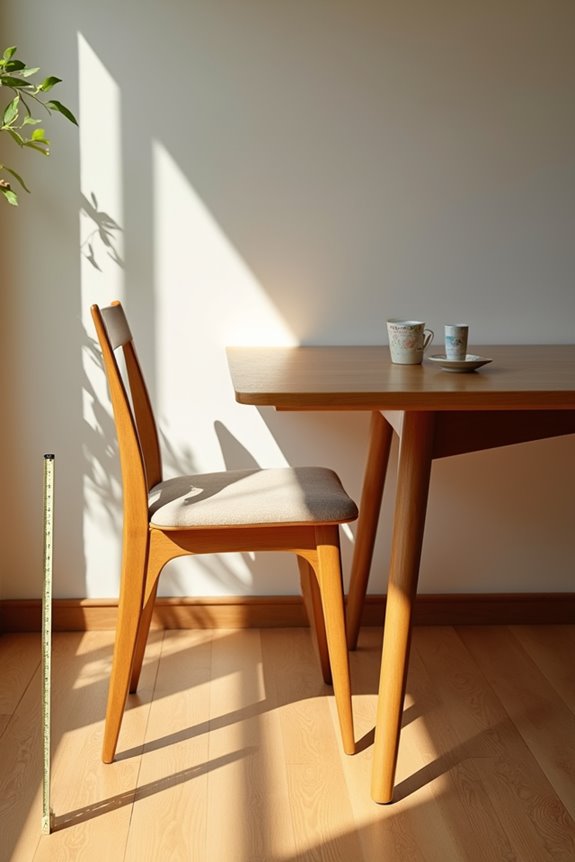
You’ve learned how standard, counter, and bar heights work together—now it’s time to measure your own dining space. Start by measuring your dining table height from the floor to its underside. A standard dining table sits around 30 inches tall.
Next, subtract 10–13 inches from your table underside height. This calculation gives you your ideal chair seat height. For a 30 inch table, you’ll want an 18 inch chair for proper legroom.
Most standard dining chairs feature an 18 inch seat height, making them versatile choices. However, if your table varies from standard dimensions, adjust accordingly. Maintaining consistent 10–13 inch clearance provides comfortable legroom for all diners. Verify measurements before purchasing to guarantee the right fit for your dining room.
Why Your Dining Chair Height Is Too Low (or Too High)
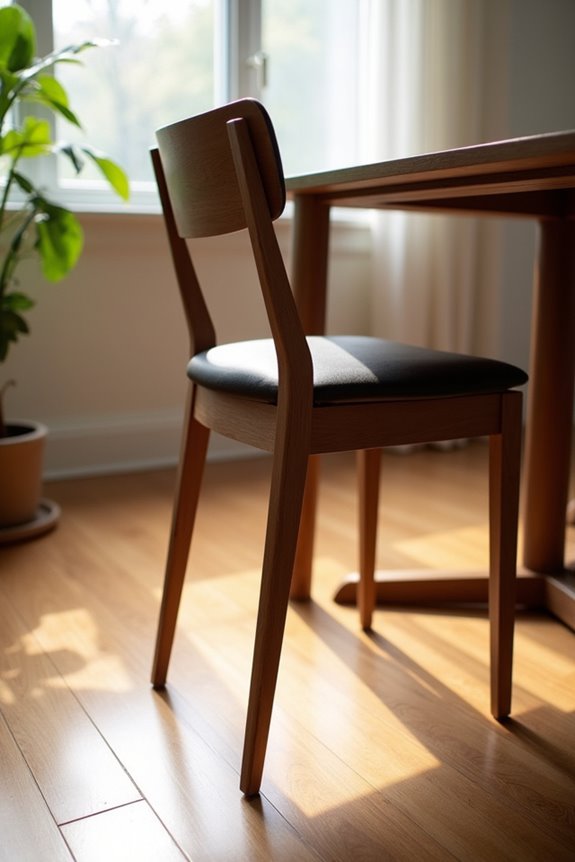
What’s the difference between a comfortable dinner and an awkward meal? Your chair height and dining table height.
When your seat height misaligns with your 30-inch table, discomfort follows. Poor ergonomics affect your entire dining experience.
| Issue | Symptom | Root Cause | Solution |
|---|---|---|---|
| Chair Too Low | Knee pain, hunched posture | Inadequate knee clearance | Raise to 18-inch seat |
| Chair Too High | Dangling feet, high knees | Excessive table-chair clearance | Lower to optimal dining height |
| Poor Clearance | Leg cramping | Insufficient space under table | Maintain 10–13 inches clearance |
| Awkward Angles | Lower back strain | Mismatched seat and table | Maintain ergonomic proportions |
An 18-inch seat paired with a 30-inch table creates proper knee clearance. This optimal dining height positions your hips and knees correctly. Your feet rest flat, your posture improves, and conversations flow naturally. Designer recommendations emphasize this balance for functional, comfortable dining spaces.