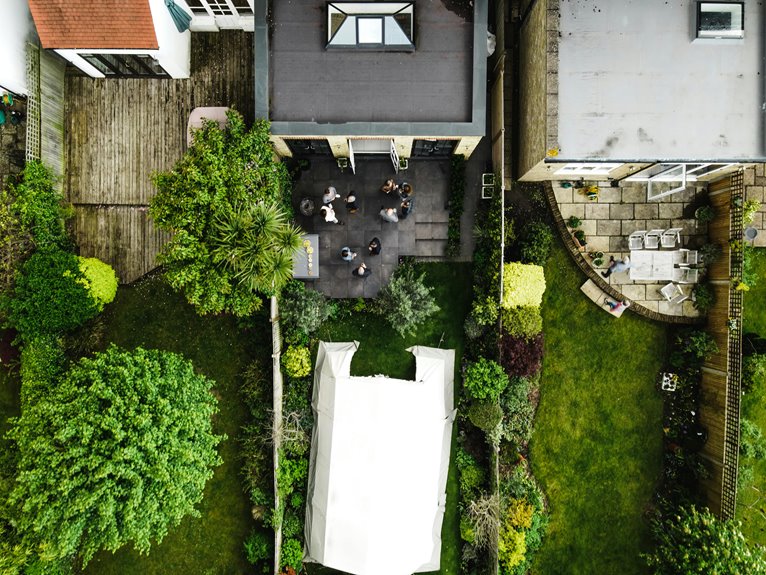
Putting Green Size: Why Square Footage Is Your First Cost Driver
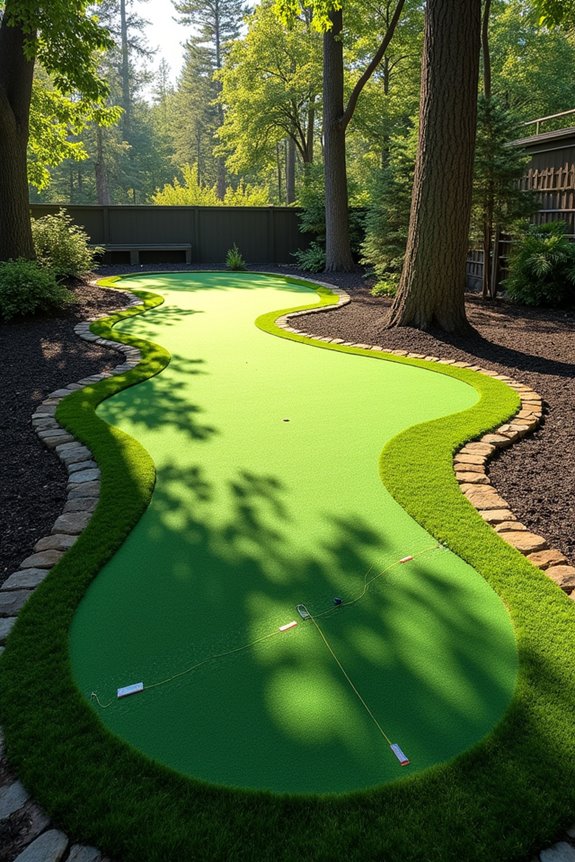
Understanding the Size-to-Cost Relationship
Your putting green’s square footage directly determines how much you’ll spend. Larger spaces require more materials, labor, and site preparation work. Before you budget for installation, you need to know your desired square feet.
Cost Ranges by Green Size
Small greens under 200 square feet typically cost between $3,000 and $6,000. Medium spaces from 200 to 500 square feet range from $6,000 to $12,000. Large greens exceeding 500 square feet start at $12,000 and can reach $20,000 or beyond.
Per-Square-Foot Pricing
Professional installation costs between $15 and $40 per square foot for basic builds. Mid-range projects average $20 to $30 per square foot. Premium custom greens reach $40 to $50 per square foot.
Additional Costs That Increase Your Budget
Site preparation and design complexity add significant expenses beyond base pricing. Features like bunkers, lighting systems, or water features push your total cost higher. Landscape grading, drainage installation, and soil removal all contribute to final expenses. You should account for these additions when planning your budget.
Synthetic vs. Natural Turf: Material Costs That Shape Your Budget
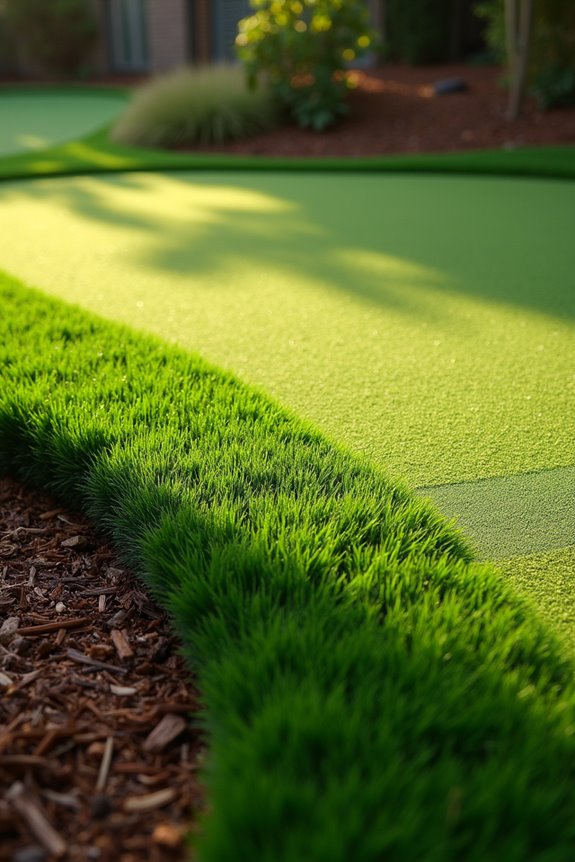
Once you’ve determined your green’s size, your turf choice becomes the next major budget decision. Your material costs will substantially shape your overall spending plan.
Comparing Your Turf Options:
- Synthetic turf: Ranges from $6–$15 per square foot, with premium options at $12–$20+ per square foot
- Natural turf: Costs $8–$15 per square foot upfront but requires higher ongoing maintenance expenses
- Base preparation: Adds $9–$25 per square foot regardless of your turf choice
Synthetic turf provides year-round usability with lower maintenance needs. This option may deliver long-term savings despite higher initial material costs. Natural grass requires less upfront investment but involves sustained maintenance spending over time.
Your installation approach also affects total expense. DIY installation reduces labor costs significantly. Professional installation increases your total expense but ensures proper setup and grading.
When deciding between synthetic and natural turf, weigh both immediate material costs and long-term maintenance expenses. Consider how often you’ll use your putting green and how much time you want to spend maintaining it. Synthetic turf works well if you want minimal upkeep. Natural grass works well if you prefer lower initial costs and don’t mind regular care.
Design Complexity: How Curves and Features Drive Up Costs
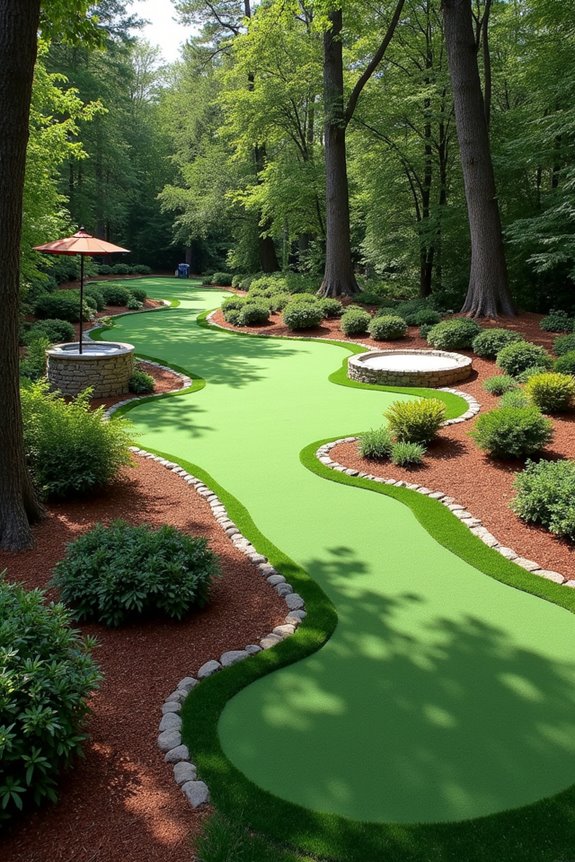
Your putting green’s final price depends heavily on the design choices you make. Curved shapes, sloped surfaces, and extra features require more labor and materials than a basic flat layout.
Bunkers are a common addition that increases expenses. Each bunker costs between $1,500 and $4,000 depending on size and depth. Lighting systems add another layer of cost: expect to pay $2,000 to $6,000 for quality outdoor illumination.
Multiple cup holes represent smaller but meaningful expenses. Each additional hole runs $100 to $300. These customizations stack up quickly when combined with curves and slopes.
The core principle: complexity requires more skilled work and premium materials. A landscape contractor can help you identify which features fit your budget while still achieving the look you want.
Design Complexity’s Cost Impact
Understanding Your Expense Drivers
Grading and slopes: When you add breaks and contours to your green, you need skilled workers to grade precisely. This raises your costs compared to flat surfaces.
Site preparation: Your project requires drainage work and accessibility planning. These needs increase labor hours and base work expenses significantly.
Multiple cups: Adding extra holes means more cups to install and maintain over time. Ongoing upkeep costs increase with each additional cup you add.
Calculating Design Complexity Costs
Flat greens cost less than designs with slopes and undulations. Each slope you add requires skilled grading work and higher labor expenses.
Bunkers range from $1,500 to $4,000 per installation, depending on size and materials. Lighting systems run $2,000 to $6,000 once installed.
Choosing Your Design Approach
Your final price depends on how complex you make your layout. Simple, flat designs offer budget-friendly solutions for your project. Intricate layouts with multiple slopes, bunkers, and lighting deliver premium playing experiences at higher costs.
Consider starting with a basic flat design, then add features like slopes or bunkers only in high-play areas. This approach balances cost with quality playability.
Curves and Feature Expenses
Understanding the Cost of Design Choices
Adding curves and design elements to your putting green increases installation costs significantly. The extra grading and base work required for curved surfaces demands precision installation, which raises labor expenses notably.
Bunkers and Fringe Pricing
When you incorporate features like bunkers and fringe, your expenses climb further. Bunkers typically run $1,500–$4,000 per bunker, while fringe costs $4–$8 per square foot. These additions require specialized construction techniques and materials.
Additional Features and Their Impact
Multiple cups on greens and additional holes add $100–$300 per extra hole. Each enhancement—whether curves, bunkers, or fringe—demands extra grading work and careful installation.
Landscape architect Michael Torres notes that “design complexity directly correlates with final project cost.” Your choices about feature density and type determine your overall budget needs.
Making Informed Decisions
Understanding these feature costs helps you evaluate your putting green’s complexity level. Consider which elements matter most to your project before finalizing your design plans. This approach allows you to prioritize features within your available budget.
Customization Beyond Basic Layouts
Design complexity increases your putting green’s final cost substantially. You’ll spend more money when you add features requiring specialized installation work.
Key Customization Elements
Bunkers and fringe areas: These cost between $1,500 and $4,000 each. They demand precise shaping and professional sand installation for proper play.
Lighting systems: Your installed lighting system ranges from $2,000 to $6,000. This cost covers electrical work and professional setup by trained technicians.
Drainage and grading: Professional grading ensures proper water flow across your green. The exact cost depends on your site’s specific soil and slope conditions.
Turf Selection and Additional Cups
Your choice between synthetic turf and natural grass affects both upfront and long-term costs. Synthetic turf costs more initially but requires less maintenance over time. Adding cups beyond your standard 2–4 increases base preparation needs substantially.
Each additional cup requires extra grading work to maintain consistent playability. Professional grading protects your investment by managing water flow through varied terrain challenges.
Site Prep and Base Work: Hidden Costs That Add Up
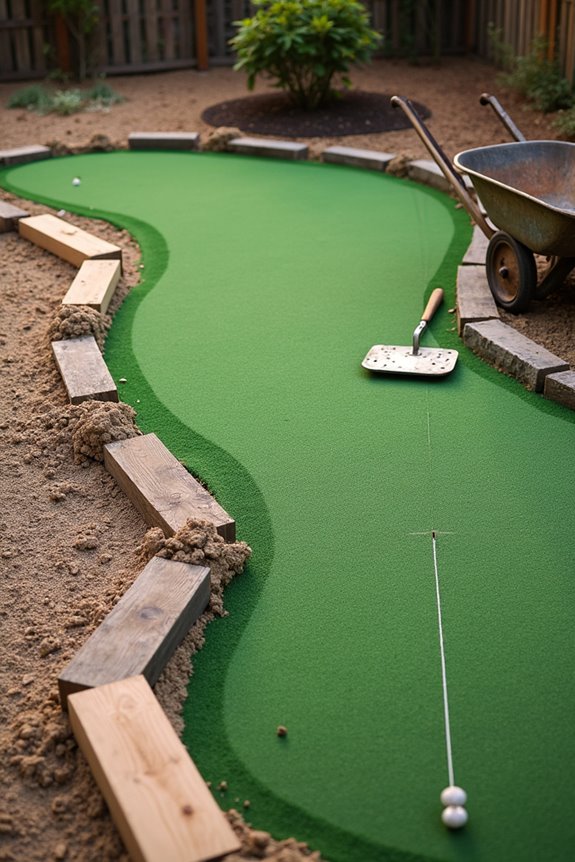
Site Prep and Base Work: Hidden Costs That Add Up
Before your putting green becomes playable, you need to complete three major site preparation tasks. These tasks are: clearing and leveling the ground, selecting base materials, and installing drainage systems.
Your ground clearing and leveling costs depend on your site’s current condition. Expect to pay $1–$5 per square foot for materials and $15–$40 per square foot for professional installation work.
Select crushed stone or similar base materials for proper support underneath your turf. Your contractor will recommend specific stone sizes based on your soil type and drainage needs.
Proper drainage design matters most on sloped sites. Without adequate drainage, water pools under your turf, causing grass to die and requiring expensive repairs later. Drainage systems typically include perforated pipes, gravel layers, and sloped base work to direct water away from your putting surface.
The solution: have a drainage specialist evaluate your site before construction begins. This evaluation costs $200–$500 but prevents problems that cost thousands to fix afterward.
Work with your contractor to create a detailed site plan showing all drainage routes, base material depths, and grading slopes. This plan serves as your guide during installation and helps you avoid costly mistakes.
Clearing and Leveling Ground
When should you start site prep work? Before you install anything on your property. Clearing and leveling ground creates the foundation for your putting green’s durability and performance.
This initial step prepares your site for success in three ways:
- Remove obstacles: Trees, rocks, and debris that raise installation costs and affect how the green plays
- Grade the terrain: Create proper slope for water drainage and an even playing surface
- Compact the soil: Build a stable base that prevents settling and shifting over time
Understanding Your Costs
Professional leveling typically costs $15–$40 per square foot. Base materials add another $1–$5 per square foot to your project. Your site’s natural slope and how workers can access the area will affect your final price. Difficult access raises labor costs significantly.
Why Proper Preparation Matters
Skipping thorough base preparation creates problems later. Poor drainage leads to turf deterioration and expensive maintenance. Investing upfront in clearing and leveling protects your putting green investment.
Base Material Selection Costs
What Goes Underneath Your Putting Green
What’s hidden beneath your putting green’s surface affects how well it performs. Base preparation costs typically range from $1–$5 per square foot.
Choosing the Right Base Materials
Your base material choice determines both performance and how long your green lasts. You’ll usually select crushed stone or gravel bases for your foundation. These materials support proper drainage and keep your green stable.
The solution: proper base materials prevent water from collecting and stop turf from breaking down.
Professional Installation and Costs
Installing your base correctly requires professional expertise. Installation services average $15–$40 per square foot. You’re paying for skilled workers who understand proper layering and compaction techniques.
Landscape contractor Mike Torres recommends having professionals handle base installation to ensure your materials compact evenly. Quality installation reduces how often you’ll need maintenance and repairs later.
How Drainage Affects Your Green
Proper drainage is critical to your green’s success. When professionals install appropriate base materials correctly, your surface becomes more stable. Good drainage reduces times when your green becomes unplayable and extends its useful lifespan.
Drainage System Implementation
Your putting green’s drainage system determines its lifespan. Proper drainage prevents turf damage and keeps your green usable year-round.
Essential Components
Your drainage system needs three key parts:
- Crushed stone or gravel bases: These materials support water flow and provide stability during base preparation.
- Strategic grading: This directs water away from playing surfaces toward designated outlets.
- Site access considerations: These affect your labor costs and overall system complexity.
Cost and Installation
Base preparation typically costs $1–$5 per square foot. Professional installation ranges from $15–$40 per square foot. Poor drainage requires expensive regrading or additional improvements later.
Steeper terrain or limited site access increases labor demands. Difficult access means workers need more time to install your system properly.
Long-Term Planning
Investing in quality drainage upfront prevents costly repairs later. You’ll maintain consistent playing conditions throughout every season.
Practice Cuts: Why More Varieties Cost More
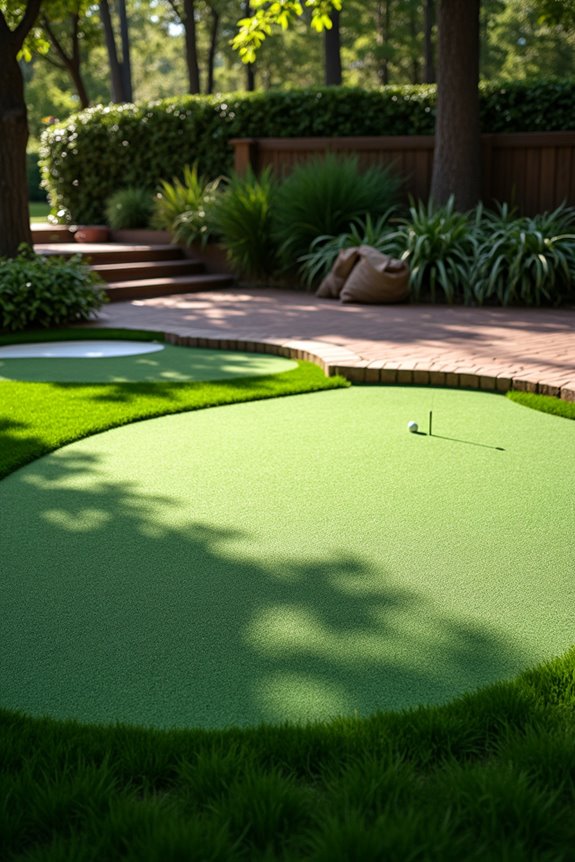
How many different shots do you want to practice? Your answer directly impacts your project budget. More practice cuts require significant planning and investment.
Design and Installation Complexity
Multiple cuts demand higher design complexity. You’ll need extensive contouring work, upgraded drainage systems, and additional cups and inserts throughout your green. Tour Greens confirms that supporting various shot types requires careful undulation planning and precise grading to handle different playing angles and distances.
Labor and Material Investments
Installation labor increases substantially with each cut variety. Your crew handles more edging considerations, positioning work, and placement precision. The solution: budget for additional cups, inserts, and materials that directly increase your project costs and timeline.
Maintenance Considerations
Complex layouts require detailed maintenance planning. You’ll establish longer-term care protocols for each green section to keep all cuts playable throughout the year.
Bunkers, Water Features, and Enhancements: Add-Ons That Stretch Your Budget
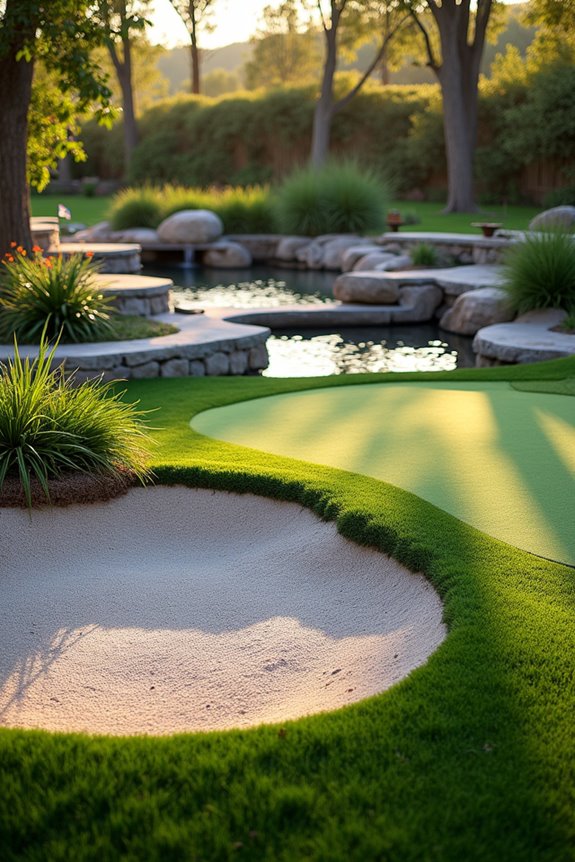
Once you’ve settled on your basic green design, you’ll face decisions about premium features. These additions transform your backyard but require careful budget planning.
Popular Enhancement Options:
Bunkers cost $1,500–$4,000 each and add $4–$8 per square foot to surrounding turf. Water features exceed $5,000 and demand specialized drainage systems. Lighting systems run $2,000–$6,000 installed, extending usability year-round.
Installation Complexity
Each enhancement complicates your installation costs considerably. Bunkers and water features require extensive drainage work beneath the surface. You’ll need to account for increased labor hours when integrating multiple cups, dry creeks, or ball returns.
Scheduling extends substantially with these additions. Base preparation becomes more intricate, and precise installation demands skilled technicians. Drainage professionals often recommend installing French drains or perforated pipe systems beneath water features to prevent pooling and turf damage.
Budget and Timeline Impact
These enhancements don’t necessarily raise your green’s base price. However, they dramatically impact your total project budget and timeline. Plan for additional weeks of installation when combining multiple premium features.
Installation Challenges: When Site Access Raises Costs
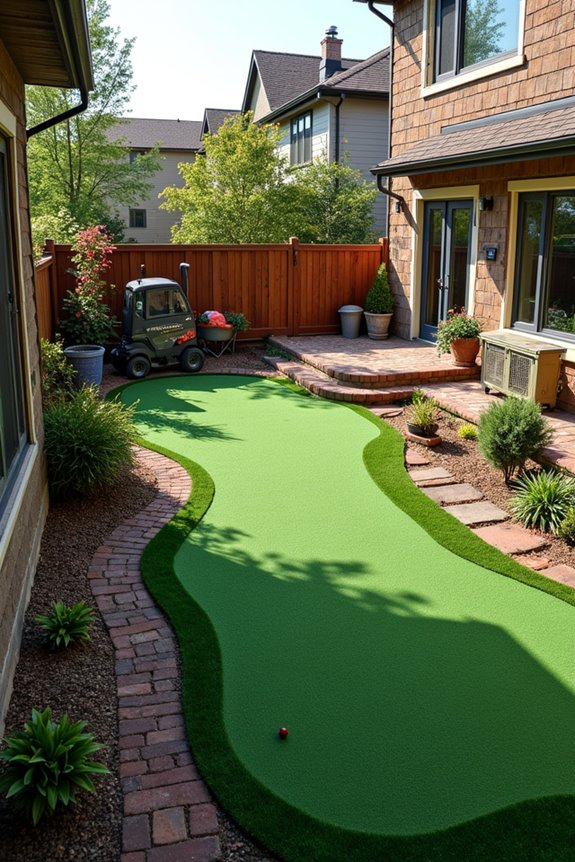
Difficult site access quietly inflates your putting green project costs. Restricted entry requires manual handling and creates scheduling delays. You’ll face extra expenses for labor, equipment, and materials.
| Challenge | Impact |
|---|---|
| Limited entry points | Increased manual labor |
| Blocked access routes | Delayed research and quotes |
| Narrow pathways | Extra transportation time |
| Poor site conditions | Additional grading needed |
| Remote locations | Higher delivery costs |
Planning for Access Problems
Limited site access demands temporary corridors for workers and equipment movement. You’ll need alternative routing solutions to move materials safely. Material delivery becomes complicated and expensive when standard paths don’t work.
These obstacles require site preparation work including grading and drainage adjustments. Professional installers account for access challenges during initial cost estimates. They factor in extra labor hours, equipment rentals, and transportation logistics.
Managing Transportation Costs
Transportation costs increase significantly when your backyard requires special delivery methods. Consider these factors when requesting installation quotes: driveway width, gate size, and distance from the street.
Your installer will assess whether standard equipment can reach your yard. Narrow driveways may require hand-carrying materials across longer distances. Steep slopes or soft ground conditions demand additional preparation before equipment arrives.
Getting multiple estimates helps you understand which access barriers affect your total price most. Each contractor may propose different solutions based on their equipment and experience.
DIY Kits vs. Professional Installation: Where You’ll Spend the Most
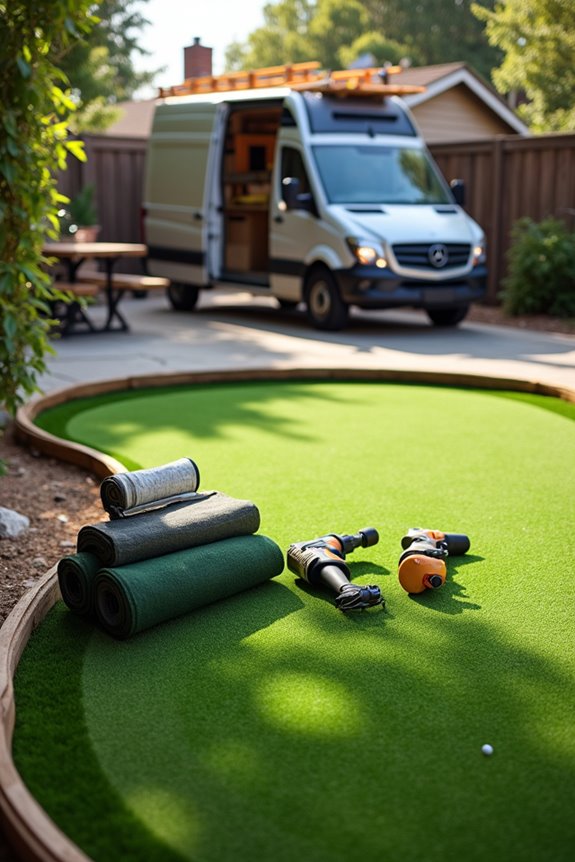
Should you install your putting green yourself or hire professionals? The cost difference is significant. DIY kits cost $5–$10 per square foot, while professional installation ranges from $15–$40+ per square foot.
Where You Save Money with DIY
Your biggest savings come from labor costs. DIY approaches save you 40–60% compared to professionals. A small green under 200 square feet works well for the DIY route.
What You Might Miss with DIY
However, consider what professionals handle that DIY kits typically exclude:
- Base preparation and drainage: These critical foundation elements require specialized knowledge and equipment.
- Design features: Professional builds often include lighting systems, bunkers, and ball return mechanisms.
Cost Comparison by Project Size
For larger projects, the price gap widens considerably. A 500+ square foot professional installation costs $12,000–$20,000+, while a DIY version runs $3,000–$6,000.
Making Your Decision
Before choosing your installation approach, weigh three factors: your comfort level with labor, long-term warranty protection, and design quality expectations. Bigger projects benefit from professional expertise due to complexity and durability concerns.
Location Matters: How Your Region Affects Labor and Material Costs
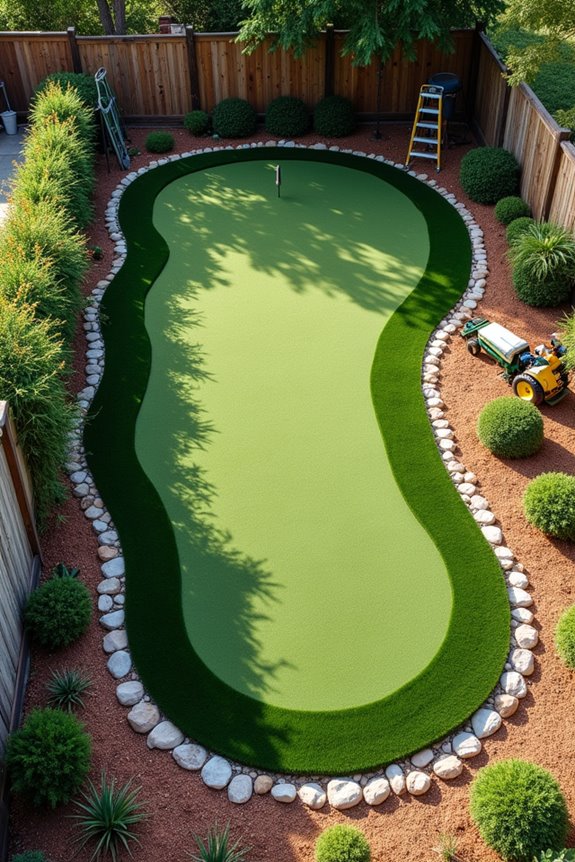
Where you live shapes your putting green’s final price tag significantly. Urban areas and rural locations charge different rates for labor and materials.
Labor Costs Vary by Location Type
Urban areas typically charge $25–$40 per square foot for installation labor. Rural locations often run $15–$20 per square foot, offering more competitive pricing. Your regional location directly impacts your total investment amount.
Material Availability Affects Your Expenses
Material costs fluctuate based on local suppliers in your area. Urban centers stock premium turf and drainage systems readily, which raises expenses. Rural regions may require shipping from distant suppliers, adding transportation fees to your bill.
Site Conditions Create Additional Challenges
Difficult terrain, poor drainage, or limited property access require extra labor hours. Grading challenges on urban properties often increase installation time and labor costs. These site-specific factors compound the regional pricing differences you’ll encounter.
Getting Accurate Local Quotes
Contact local contractors who understand regional labor rates and material availability specific to your neighborhood. These professionals know which suppliers serve your area and can factor in transportation costs. A localized approach ensures accurate pricing for your project’s unique conditions.
Annual Maintenance Costs: Plan for Ongoing Expenses
Your synthetic green requires yearly maintenance costs between $200 and $600. This budget covers two main tasks: brushing and rinsing your surface.
Regular brushing prevents matting and keeps ball roll consistent across your green. You should brush your surface every few weeks during the playing season. Periodic rinsing removes debris and clears your drainage systems so water flows properly.
Planning these predictable expenses upfront protects your investment and prevents surprise repair bills later.
Routine Brushing and Rinsing
Weekly brushing: Use a stiff-bristled broom to brush against the grain. This removes debris and prevents matting of your synthetic turf.
Monthly deep cleaning: Rinse your entire putting surface with water. This step eliminates dust and restores the turf’s appearance.
Seasonal rinsing: Flush drainage areas after heavy use to maintain proper water flow.
Your synthetic turf requires minimal upkeep compared to natural grass. Most homeowners spend 30 to 60 minutes weekly on maintenance tasks. These simple routines prevent costly problems from developing over time. Regular brushing and rinsing keep your green playable throughout the year. Consistent drainage maintenance ensures water flows properly and costs remain low.
Budget Planning Essentials
Once you install your backyard putting green, plan for ongoing maintenance costs. Your expenses depend mainly on your turf choice.
Maintenance Costs by Turf Type
Synthetic turf requires minimal upkeep and costs under $100 annually. Natural grass demands regular mowing, fertilizing, and pest control. Your annual natural grass budget ranges from $500 to $1,500.
Beyond turf maintenance, budget for these additional expenses:
| Maintenance Factor | Annual Cost Range |
|---|---|
| Drainage system checks | $50–$200 |
| Design complexity adjustments | $100–$400 |
| Base preparation repairs | $150–$300 |
Creating Your Long-Term Budget
Spread your installation costs over five to ten years. This approach gives you a clearer picture of annual expenses. A landscape contractor recommends having a professional assess your green yearly to catch problems early.
Synthetic turf needs only occasional brushing and rinsing. Your initial design complexity directly affects future maintenance needs and costs. Understanding these expenses helps you calculate your true backyard putting green investment and return over time.