
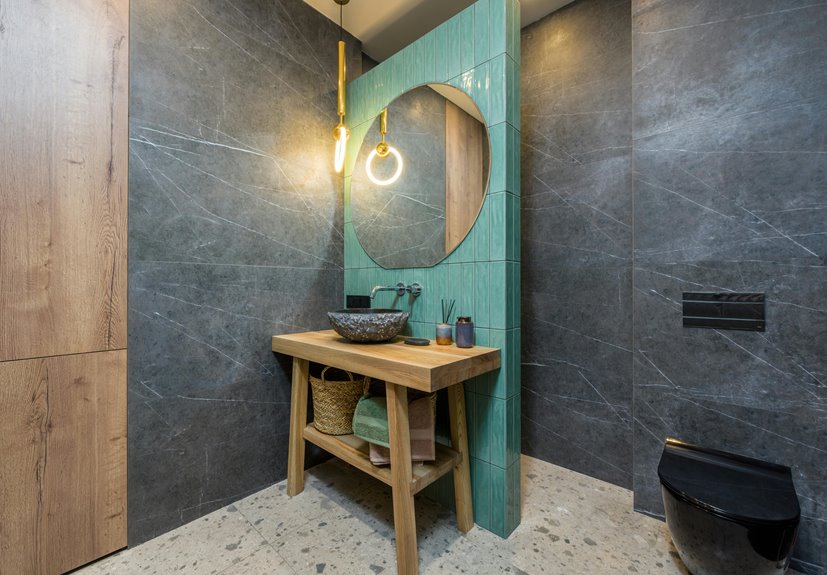
Your bathroom’s hardest-working furniture piece combines a sink, countertop, and storage into one functional unit. You’ll use it daily for grooming, getting ready, and organizing supplies. But here’s the challenge: picking the right vanity means balancing style, size, plumbing constraints, and durability. You’ll need to measure carefully, consider your household’s needs, and evaluate materials that withstand moisture. What makes one vanity perfect for your space while another fails? Let’s explore the key factors.
What a Bathroom Vanity Is and What It Must Do
What exactly does a bathroom vanity do? Your vanity serves as your bathroom’s functional centerpiece, combining a sink, countertop, and storage into one essential unit. It provides the counter space you need for daily grooming tasks while offering drawers and cabinets for organizing toiletries, towels, and cleaning supplies.
Your vanity must accommodate plumbing connections and clearances for doors and drawers. It requires materials that resist moisture and humidity: granite countertops, moisture-resistant wood, or engineered surfaces work well. The unit should fit your room’s footprint while leaving adequate knee space underneath.
Design matters too. Your vanity choice—whether featuring an undermount, vessel, or integrated sink—should complement your bathroom’s style and coordinate with your overall aesthetic vision for cohesive, functional design.
Measure Your Bathroom and Check Plumbing for Your Vanity
Before you’ll need to measure your bathroom carefully and understand your plumbing setup.
Essential Measurements and Planning Steps:
- Measure your bathroom’s width, depth, and height to determine vanity dimensions and available space.
- Confirm at least 30 inches of clearance space in front of the vanity for comfortable movement.
- Locate existing plumbing rough-ins and supply lines to verify compatibility with your planned vanity.
Next, consider how doors swing and where drawers open. These details prevent obstructions that frustrate daily routines. Check traffic flow patterns throughout your bathroom.
If you’re considering wall-mounted or floating vanities, plan for potential plumbing adjustments. Sometimes you’ll need to relocate supply lines or drain connections. Taking time now prevents costly complications during installation.
Understanding your space and plumbing ensures you’ll select a vanity that fits perfectly and functions reliably for years ahead.
Match Your Vanity to Your Bathroom Type and Household
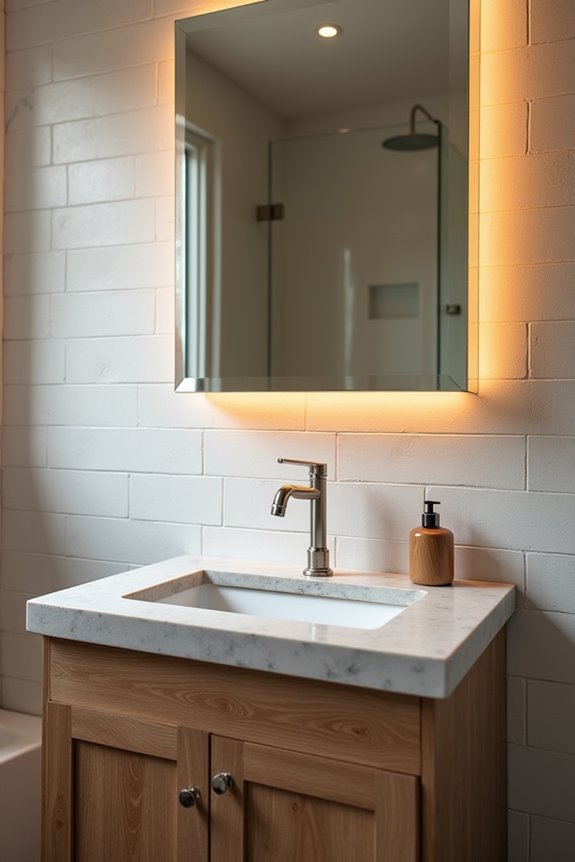
Before selecting a vanity, you’ll need to identify your bathroom’s purpose—whether it’s a powder room for guests or a primary bathroom for daily family use. A guest bathroom typically works well with a single-sink vanity and compact storage, while a primary bathroom usually demands a double-sink setup with extensive drawers for shared use. Your household’s specific needs will determine the storage capacity and counter space you actually require.
Identify Your Bathroom’s Purpose
Consider your bathroom’s role and who uses it regularly. Your bathroom’s purpose determines the vanity size and storage you’ll need.
- Guest bathrooms need compact single-sink vanities with minimal storage space
- Primary bathrooms require double sinks and extensive drawer organization for daily essentials
- Family bathrooms demand larger counter surfaces and accessible storage for multiple users
Think about your household’s specific needs. A powder room serves occasional visitors, so you’ll want a streamlined setup. Primary bathrooms, however, benefit from generous vanity size and organized drawers for makeup, medications, and toiletries.
Consider existing plumbing rough-ins carefully. Moving plumbing costs significantly more than working within current layouts. Identify whether your space accommodates your desired vanity configuration before purchasing. This alignment prevents expensive remodeling later and ensures proper functionality for your family’s routine.
Assess Household Usage Needs
How many people’ll share your bathroom daily? This question shapes your entire vanity decision. Multiple users benefit from double vanities with separate sinks and storage needs that prevent morning congestion.
Consider your household’s daily routines: makeup application, hair drying, and grooming activities demand counter space and extra outlets. A busy family needs expansive surfaces and organized drawers for toiletries.
User Accessibility Matters
Evaluate whether children or elderly household members use the space. Lower counter heights (30-32 inches) accommodate younger users safely. Rounded edges prevent injuries during daily routines.
Storage Solutions
Assess vanity usage patterns to determine cabinet depth and drawer quantity. Families need 15-20 inches depth for adequate storage. Guest bathrooms require minimal storage; primary baths demand comprehensive organization.
Your household’s specific needs guide vanity width, configuration, and accessibility features.
Floating, Freestanding, or Console: Which Style Works for You?
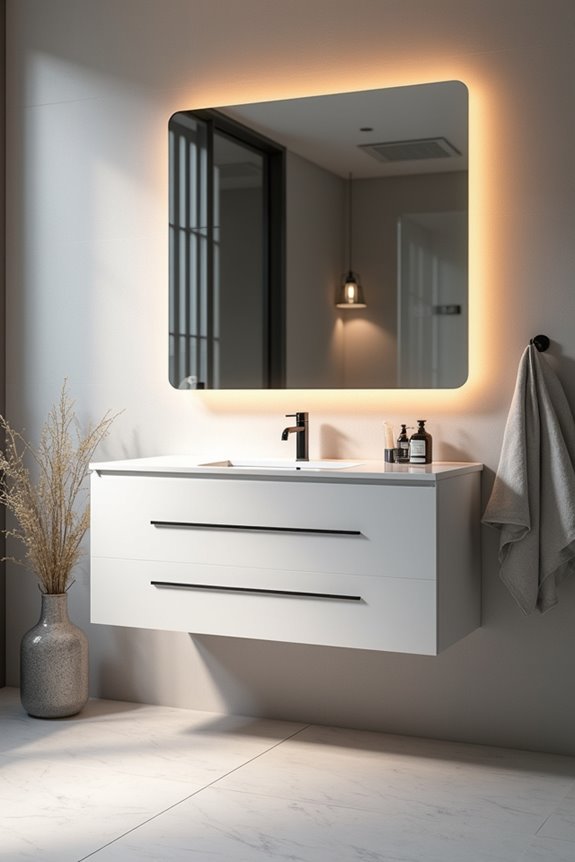
When you’re selecting a bathroom vanity, the mounting style you choose affects three critical factors: how much floor space appears open, how easily you can clean underneath, and how air moves through your bathroom.
Your main options include:
- Floating vanities – wall-mounted designs that expose floor, simplify cleaning, and improve airflow while requiring hidden plumbing behind walls
- Freestanding vanities – four-legged or base-supported units offering diverse styles and easier installation without wall modifications
- Console vanities – wall-mounted with leg support, blending traditional and modern aesthetics while maintaining some floor visibility
Floating styles maximize perceived space in compact bathrooms. Freestanding options provide flexibility and design variety. Console vanities balance aesthetics with practical support. Consider your bathroom’s layout, cleaning preferences, and ventilation needs when deciding between these three approaches.
Design Your Vanity Look: Sink, Materials, and Countertop
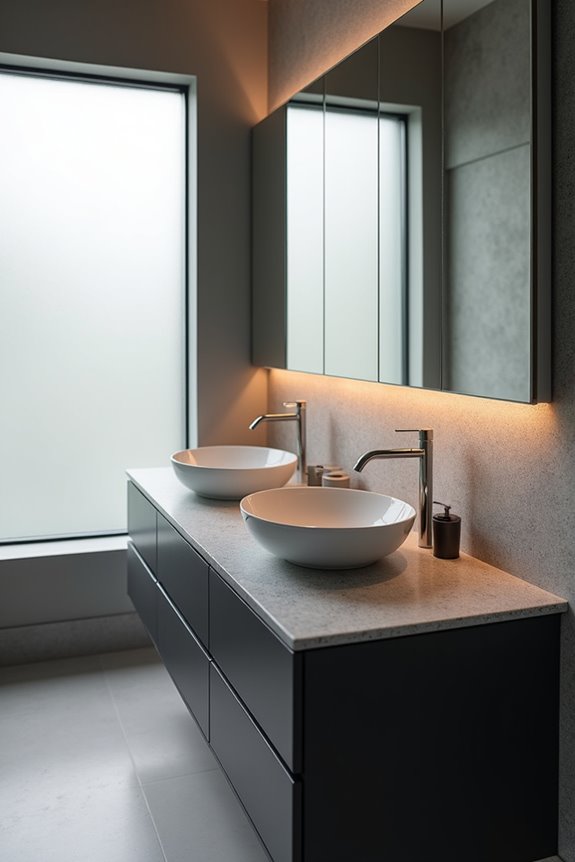
Your sink choice shapes how your vanity functions and looks every single day. You’ll find four main styles: vessel sinks sit atop your vanity top, undermount sinks tuck beneath for sleek lines, drop-in sinks rest in cutouts, and integrated sinks blend seamlessly with countertops.
Undermount sinks offer easier cleaning and modern aesthetics, though they need precise cutouts and compatible materials. Vessel sinks reduce under-counter storage but create visual interest.
Your countertop material matters too. Granite, quartz, and marble pair with different sink styles. Consider your daily routine: busy families benefit from double sinks, while smaller bathrooms work better with single configurations.
Match your sink style to your vanity material and finish for cohesive design that serves your household’s actual needs.
Choose Drawers, Cabinets, or Shelving for Your Needs
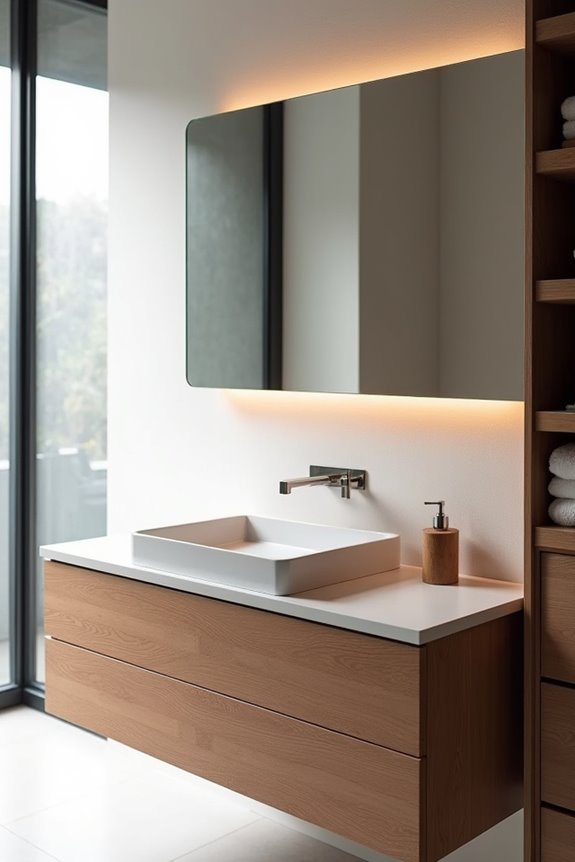
You’ll organize your bathroom storage by choosing between three main options: drawers for daily essentials like makeup and skincare, cabinets for towels and larger items, or open shelving for a spa-like aesthetic. Each storage type serves different purposes—drawers keep small items contained and accessible, cabinets hide clutter while maximizing vertical space, and shelves create visual appeal but require consistent tidying. The right choice depends on your daily routine, available space, and how much maintenance you’re willing to commit to keeping your vanity looking polished.
Drawer Organization for Essentials
How does one keep daily bathroom items accessible yet organized? Strategic drawer organization transforms your vanity storage into a functional system.
Effective drawer organization requires these key elements:
- Dividers and compartments — separate makeup, skincare, and toiletries into designated zones
- Drawer liners — protect surfaces while preventing items from shifting during use
- Clear containers — allow you to see contents without opening each drawer
Group similar items together within your bathroom organization system. Reserve top drawers for frequently used essentials like toothbrushes and daily skincare. Store less-used items in lower drawers. This hierarchy maximizes accessibility for your morning routine.
Small pull-out organizers work well for cosmetics and medications. Vertical dividers prevent drawer clutter from accumulating. Your vanity becomes a cohesive storage solution when everything has a designated spot.
Cabinet Storage Solutions
While drawer organization handles your daily essentials, the larger storage challenge demands a broader approach. Cabinets provide the ideal solution for storing towels, cleaning supplies, and bulkier items you need hidden away.
When selecting cabinets, consider your bathroom’s layout and moisture levels. Under-sink cabinets work well for toiletries and supplies. Closed storage protects items from humidity better than open shelving does.
Interior Organization Matters
Smart cabinet organization maximizes usable space. Install pull-out shelves to access items in back corners easily. Use dividers and bins to separate categories. This system keeps everything visible and accessible.
Many vanities combine drawers and cabinets together. This mixed approach gives you flexibility for different storage needs. You’ll find the right balance between accessible items and hidden supplies.
Open Shelving Aesthetic Appeal
Want your bathroom to feel more spacious and stylish? Open shelving creates that coveted spa-like atmosphere while maximizing your storage options. You’ll enjoy immediate visibility of items, which streamlines your daily routine and makes finding essentials effortless.
Consider these key advantages:
- Visual openness: Shelving won’t crowd smaller bathrooms or block sightlines
- Quick access: Items remain visible and within arm’s reach during routines
- Design flexibility: You display curated pieces that reflect your personal style
However, you must commit to regular tidying. Dust and moisture will accumulate on open shelving, so invest in moisture-resistant materials and finishes. Pair open shelves with closed cabinets underneath—this hybrid approach balances display items with hidden storage for less attractive necessities, creating organized, functional spaces that you’ll genuinely enjoy.
Is This a DIY Install or a Job for a Pro?
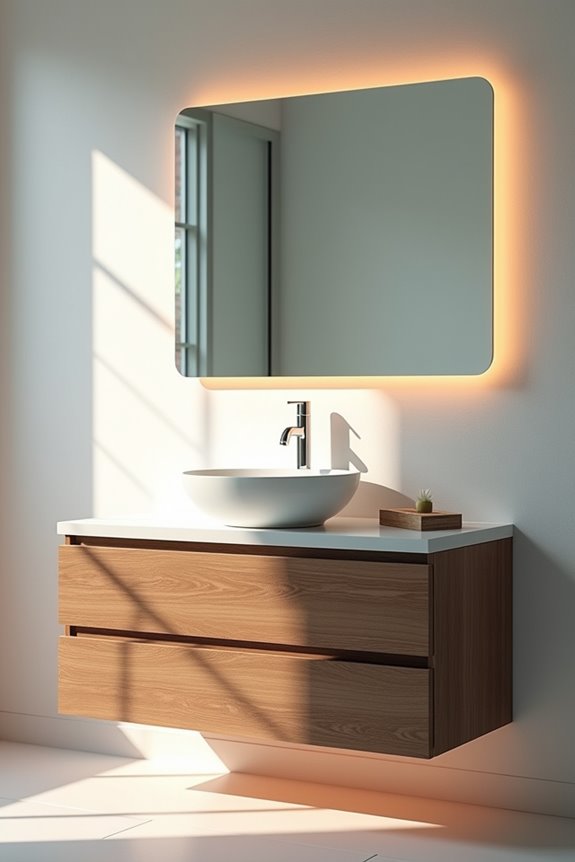
You should not install your new vanity yourself, or call in a professional? Consider these factors for your vanity installation decision.
DIY vs. Pro: Key Differences
If you’re comfortable with home improvements, DIY installation might work. You’ll save money and gain satisfaction. However, professional installation offers expertise and secure fitting that ensures quality results.
When to Go Professional
Floating or wall-mounted vanities require specialized framing, plumbing, and leveling. Professional installers handle heavy pieces safely and manage complex hookups. They prevent costly mistakes and provide warranties on their work.
DIY Success Factors
You’ll need model-specific instructions and tutorials from your brand. Evaluate plumbing complexity, wall mounting requirements, and alignment challenges carefully. Many brands offer free design consultations to guide your approach and boost your confidence before deciding.
How Long Will Your Vanity Last? Durability Red Flags
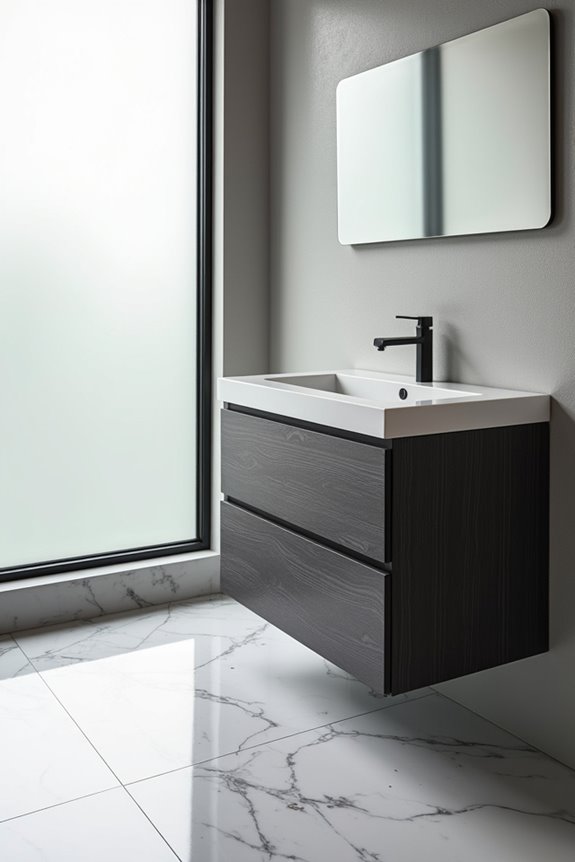
How much bathroom use will your vanity actually survive? Your vanity’s lifespan depends on material selection, finish quality, and maintenance habits. Understanding durability red flags helps you avoid costly replacements.
Key durability concerns:
- Material choice matters: Solid wood warps easily; plywood resists moisture better; MDF fails quickly in humid bathrooms
- Finish quality determines longevity: Cheap finishes peel and chip within years; quality finishes protect against peeling and cabinet failure
- Hardware corrosion risks: Non-corrosion-resistant hardware deteriorates from humidity and temperature changes
Natural stone requires regular sealing to prevent staining and water damage. Quartz and solid surface countertops offer superior non-porous durability with minimal maintenance. Timely repairs extend your vanity’s life significantly. Choose materials and finishes matching your bathroom’s moisture levels for lasting performance.
Style Guide: Modern, Farmhouse, Traditional, and More
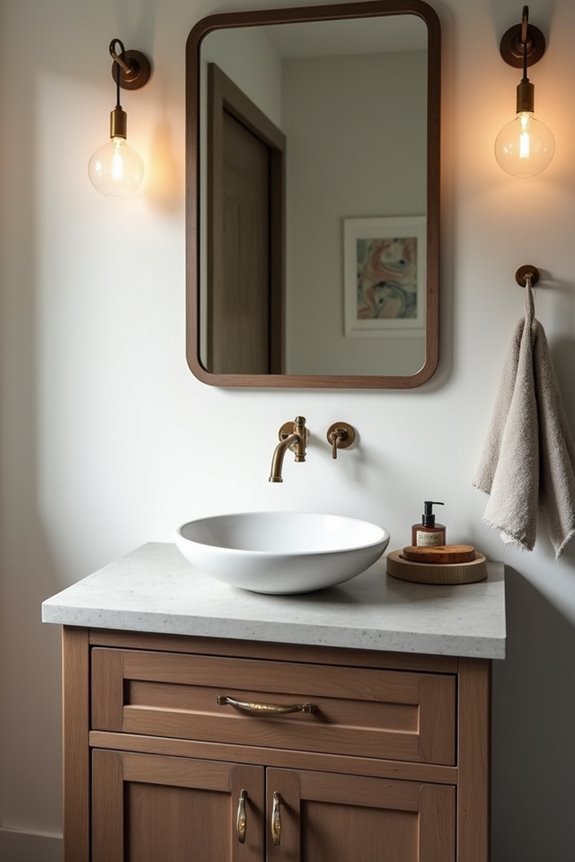
Your bathroom’s style sets the tone for the entire space, and your vanity is its centerpiece. The right design style transforms your bathroom into a cohesive room you’ll love. You’ll find vanities in four main categories, each offering distinct characteristics and finishes.
| Style | Materials | Finishes | Best For |
|---|---|---|---|
| Modern | Glass, metal, high-gloss | White, gray, bold hues | Contemporary homes |
| Farmhouse | Natural wood | Whitewashed, distressed | Rustic aesthetics |
| Traditional | Solid wood | Wood tones, deep colors | Timeless elegance |
| Transitional | Mixed materials | Neutral palettes | Balanced design |
Your finish choice defines the overall look considerably. White finishes blend versatility into any space. Gray adds sophisticated depth and neutrality. Wood tones and deep hues create texture and bold statements. Consider your home’s existing design style when selecting vanities that complement your vision perfectly.
Keep Your Vanity Looking New: Cleaning and Sealing by Material
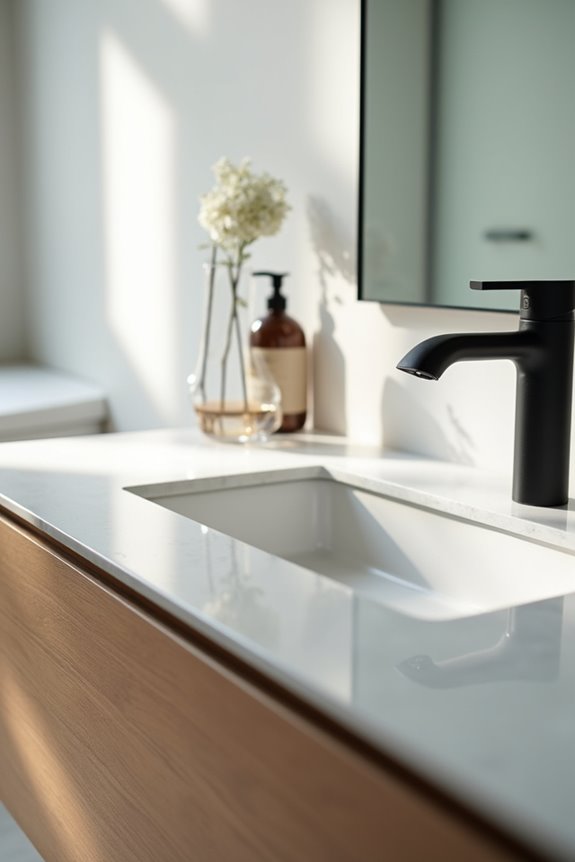
You’ll protect your vanity investment by establishing regular cleaning habits tailored to your specific material. Each vanity type—from granite to quartz to laminate—requires different sealing schedules and cleaning methods to prevent moisture damage. Understanding these material-specific approaches helps you avoid costly repairs and keep your bathroom looking fresh for years.
Regular Cleaning Routines Matter
Keeping your vanity pristine requires cleaning methods tailored to its specific material. You’ll protect your investment by establishing consistent habits that preserve both appearance and function.
- Weekly wipe-downs: Use dry brushing for wood, mild soap and water for melamine or laminate surfaces.
- Monthly sealant checks: Inspect stone and wood countertops for protective finish integrity.
- Immediate spill response: Address moisture on porous materials instantly to prevent damage.
Your vanity materials demand different approaches. Wood vanities benefit from microfiber cloths and dry brushing techniques. Melamine and PVC surfaces tolerate gentle soap solutions without soaking. Never use abrasive cleaners or scouring pads—these scratch finishes and dull surfaces.
Establishing a cleaning routine strengthens your moisture resistance strategy. Weekly maintenance combined with monthly sealant assessments keeps your vanity looking new while preventing costly water damage and staining issues.
Material-Specific Sealing Methods
While weekly cleaning routines protect your vanity’s surface, the real protection comes from sealing.
Wood Vanities
Solid wood requires moisture-resistant finishes and periodic re-sealing. This prevents water from penetrating the material and causing damage over time.
MDF and Plywood
These materials need moisture barriers on all exposed edges. Apply sealant carefully to prevent warping and swelling from bathroom humidity.
Melamine and Laminate
These veneers resist moisture best with sealed edges and grout-free countertops. This reduces staining risk significantly.
Stone and Concrete
Granite, marble, and concrete need penetrating sealants or topical sealers. Seal natural stone every 6–12 months depending on usage. This maintains pore protection and prevents water spots.
Matching your sealing method to your vanity’s material keeps it looking new longer.
Preventing Moisture and Damage
Moisture damage ranks among the most common threats to bathroom vanities, but it’s entirely preventable with the right approach. You’ll protect your investment by understanding your vanity’s specific needs.
Key moisture resistance strategies:
- Seal natural stone countertops annually to prevent water penetration and staining
- Wipe down quartz and solid surfaces regularly—their non-porous design resists moisture naturally
- Avoid standing water on laminate to prevent delamination over time
Your cabinet materials matter too. MDF and wood veneers require proper sealing and ventilation to resist warping. Regular cleaning with mild, non-abrasive cleaners maintains your finish’s durability and guards against moisture damage. This straightforward maintenance routine keeps your vanity looking new for years while building confidence in your home’s longevity.