
About 80% of bathroom ceiling paint fails within three years due to moisture damage. You’re probably wondering why your fresh coat peels so quickly—and the answer isn’t what you think. Standard interior paint simply can’t handle your bathroom’s humidity. Here’s what actually works: specific paint types, proper preparation methods, and ventilation strategies that protect your investment long-term.
Why Standard Ceiling Paint Fails in Steamy Bathrooms
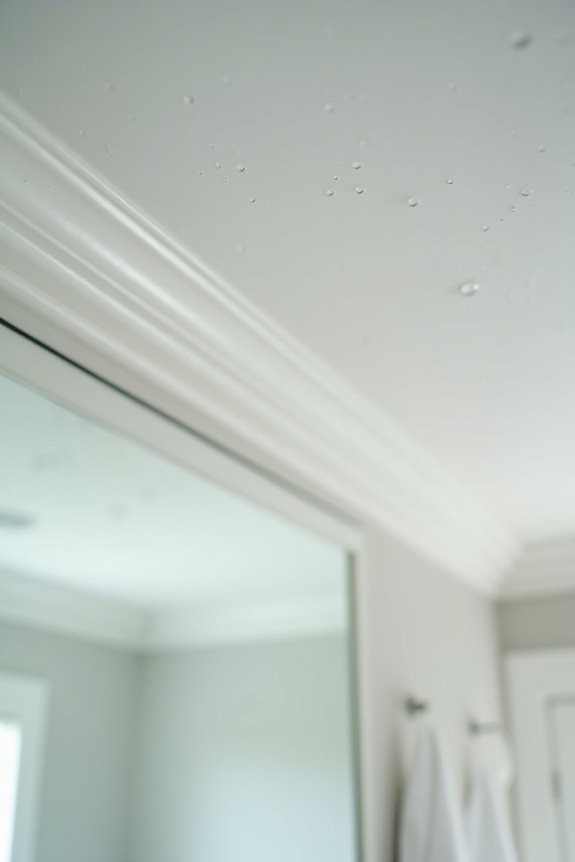
Why does your bathroom ceiling paint bubble and peel within a few years? Most ceiling paint lacks adequate moisture resistance for humid environments. Here’s what happens: steam from showers penetrates porous paint films, trapping water underneath. This moisture causes expansion and contraction cycles that weaken paint adhesion.
Standard latex interior paints aren’t formulated for bathrooms. They absorb moisture rather than repel it. Flat finishes prove especially vulnerable—they absorb water and develop mildew easily. Even products labeled “bathroom-safe” may lack true mold inhibitors or moisture-blocking agents.
The problem compounds over time. Trapped moisture weakens the paint’s bond to your ceiling. Eventually, bubbling and cracking appear. Without proper moisture resistance and mildew resistance, your ceiling paint deteriorates faster than expected.
3 Paint Properties Every Bathroom Ceiling Needs
Now that you understand why standard paint fails, selecting the right product matters tremendously. You’ll want three essential properties working together for lasting protection.
Selecting the right bathroom paint product matters tremendously—three essential properties working together ensure lasting protection.
Mildewcide Protection
Look for paints containing mildewcide additives. These prevent mold and mildew growth on your ceiling, which thrives in bathroom humidity.
Moisture Tolerance
Your paint must resist steam and moisture damage. Quality bathroom paints withstand high humidity without peeling or weakening over time.
Satin Finish Application
Choose a satin finish instead of matte or flat options. A satin finish resists moisture effectively and cleans easily when moisture builds up.
Primer-for-Moisture Strategy
Don’t rely on paint-and-primer-in-one products. Use a separate primer-for-moisture approach with dedicated topcoat application for superior bonding and protection against bathroom conditions.
Best Paint Types for Bathroom Ceilings: Satin, Semi-Gloss, and Mold-Resistant Formulas

Once you’ve identified the three essential properties your bathroom ceiling paint needs, you’re ready to select the right type. You’ll find three standout options: satin finish, semi-gloss, and mold-resistant formulas.
A satin finish provides slight gloss with excellent moisture-resistant qualities. It reflects light effectively while resisting humidity damage. Semi-gloss offers superior moisture resistance and cleans easily with a damp cloth.
For optimal protection: choose a mold-resistant formula specifically designed for bathrooms. These bathroom ceiling paint products contain built-in inhibitors preventing mildew growth on moisture-prone surfaces.
Water-based latex paints dry quickly and emit fewer harmful fumes. They’re ideal for steamy environments where ventilation may be limited.
Select bathroom-specific formulas ensuring proper adhesion and long-lasting performance.
How to Prep Your Bathroom Ceiling for Paint That Lasts
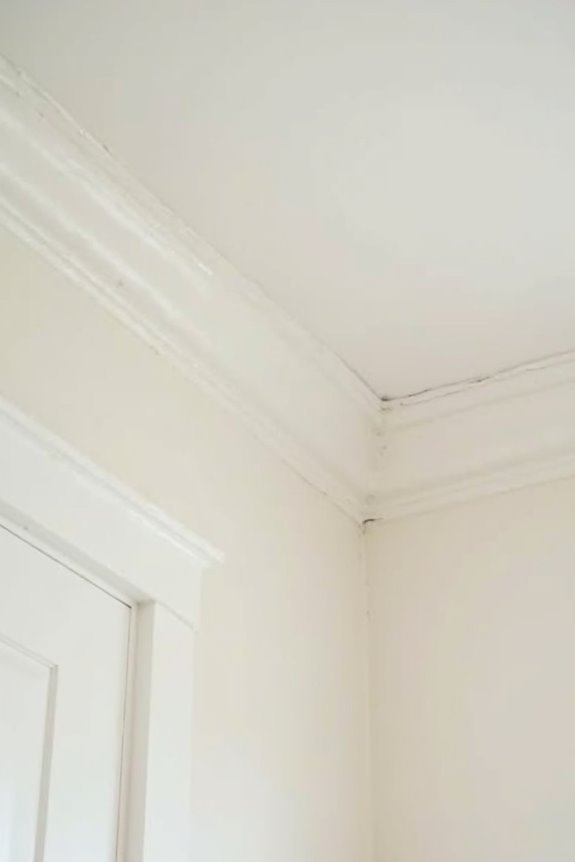
Selecting the right paint matters little if your ceiling isn’t properly prepared. You’ll want to clean thoroughly, remove damage, and prime correctly for lasting results.
Essential Prep Steps
| Step | Action | Purpose |
|---|---|---|
| Clean | Use sugar soap and warm water | Remove dirt and grease |
| Repair | Scrape and sand peeling areas | Create smooth, uniform surface |
| Prime | Apply moisture-resistant primer | Block stains and enhance adhesion |
Start by cleaning your ceiling with sugar soap. Wipe away all traces and let it dry completely. Next, scrape peeling paint and sand rough spots smooth. This creates the substrate your bathroom paint needs to bond properly.
Prime with a quality moisture-resistant primer featuring mold resistance. Ensure adequate ventilation throughout preparation and painting. Proper airflow helps moisture escape as your ceiling dries, preventing future damage and extending paint longevity.
Applying Paint to Your Bathroom Ceiling: Step-by-Step
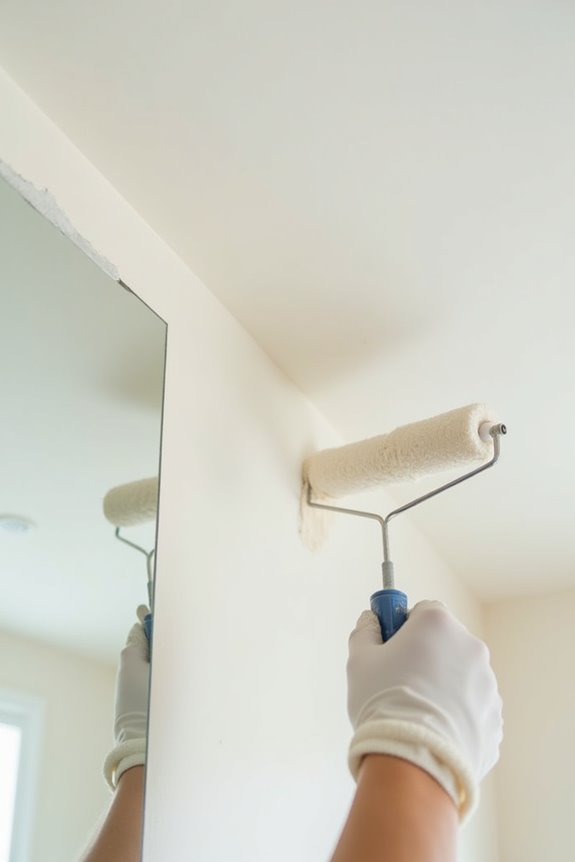
You’re ready to start painting once your ceiling’s prepped and primed. You’ll apply paint using three key techniques: preparing the surface one final time, rolling paint in thin, even layers, and allowing proper drying between coats. Each step builds on the last to create a finish that resists moisture and mildew for years.
Preparing The Ceiling Surface
The foundation of a successful bathroom ceiling paint job starts with proper surface prep. You’ll want to follow these essential steps:
- Clean thoroughly – Use sugar soap and warm water to remove dirt, grease, and peeling paint. Wipe completely to eliminate soap residues.
- Repair imperfections – Fix cracks and holes to create a smooth surface for painting.
- Prime strategically – Apply a quality mold-resistant primer to enhance adhesion and block stains, particularly over patched joints and damaged areas.
Ensure proper ventilation throughout preparation and painting. This reduces odor and accelerates drying time. You’re now ready for the two-coat rule: apply your first coat using W-shaped strokes with a roller. Let it dry completely before applying your second coat for uniform coverage.
Applying Paint With Rollers
Ready to transform that ceiling with paint? Use a high-quality roller with an extendable pole for thin, even coats. This approach minimizes splatter and creates a smooth finish.
Start by cutting in around edges with a brush. Then roll in W-shaped motions across your bathroom ceiling. This technique maintains consistent texture and prevents lap marks.
Apply two coats instead of one heavy coat. Multiple thin layers ensure uniform coverage and better moisture resistance. Wait for proper drying time between coats as the manufacturer recommends.
Choose a mold-resistant primer first, then add a bathroom-specific topcoat. Satin or semi-gloss finishes work well for washable, durable results. Work in well-ventilated conditions throughout the process. These steps protect your investment and create a professional-looking ceiling.
Drying And Second Coat Application
How long should you wait before applying that second coat? Follow the manufacturer’s recommended drying times closely. Rushing this step risks uneven coverage and poor adhesion.
Prepare your space properly before recoating:
- Run an exhaust fan or open windows to speed drying and reduce odor during the process.
- Inspect the first coat thoroughly—it must be completely dust-free before applying your second coat.
- Verify the primer or first coat has fully cured according to product instructions before proceeding.
For moisture-prone bathrooms, consider upgrading to specialized bathroom ceiling paint with moisture barriers. These formulations prevent mold and uneven appearance issues. If problems persist after your second coat, a mold-resistant topcoat provides extra protection. Patience during drying ensures professional-quality results that last.
Bathroom Ceiling Paint Mistakes: Why Your Paint Peels
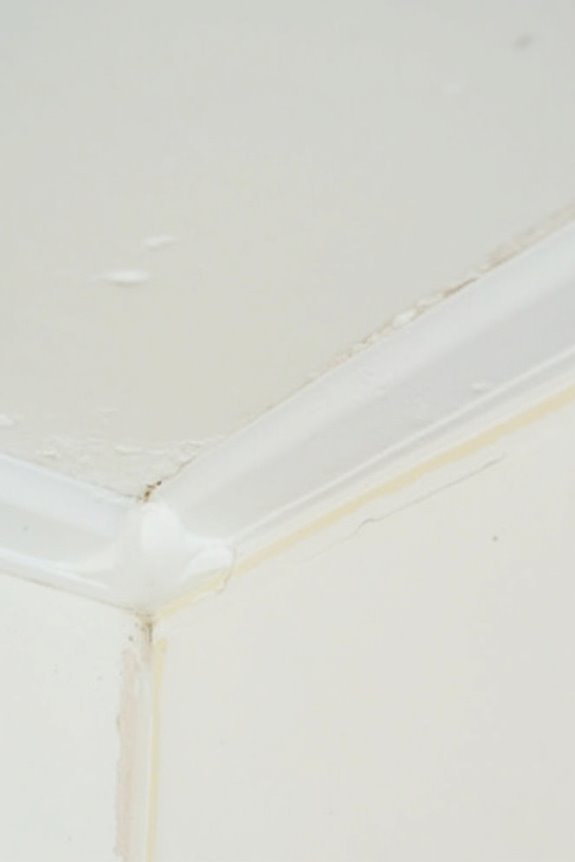
Because bathrooms generate constant steam and humidity, your ceiling paint faces unique challenges that standard interior paints simply can’t handle.
You’re likely making one of these critical mistakes:
| Mistake | Problem | Solution |
|---|---|---|
| Using flat paint | High porosity traps moisture | Choose satin or semi-gloss |
| Skipping primer | Moisture penetrates directly | Apply mold-resistant primer |
| Poor surface prep | Peeling accelerates quickly | Remove old paint completely |
| “Bathroom” rebranded paint | Lacks true moisture resistance | Select paint with mildew inhibitors |
| Painting damp surfaces | Paint won’t adhere properly | Wait 48 hours after cleaning |
Proper surface prep matters most. Remove all peeling paint, patch joints smoothly, and ensure surfaces are completely dry. Skip flat finishes—they’re too porous. Instead, use moisture-resistant ceiling paint with genuine mildew inhibitors and a quality mold-resistant primer underneath. These steps prevent premature failure and protect your investment long-term.
Bathroom Ceiling Paint and Ventilation: Timing Everything Right
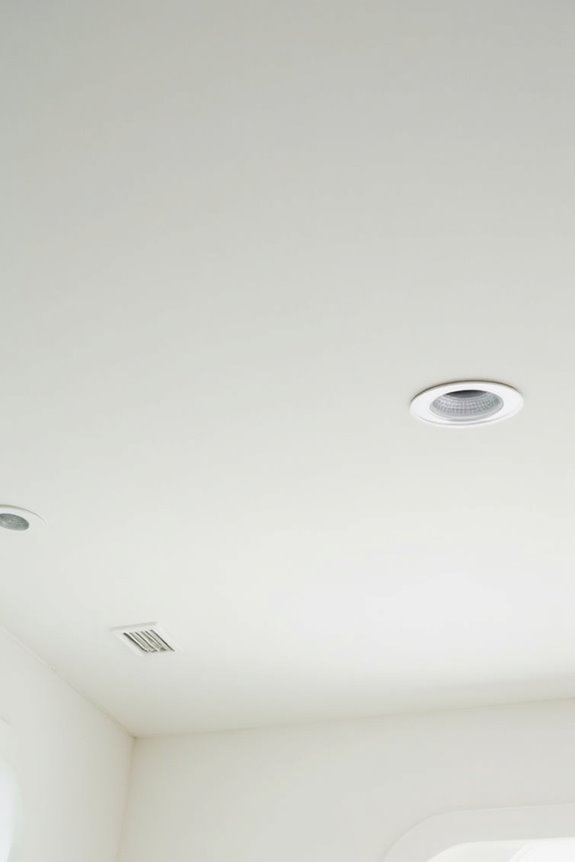
You’ve tackled surface prep and chosen the right paint—now ventilation becomes your next critical focus. Proper airflow directly impacts your paint’s moisture resistance and mold protection performance.
Ventilation Essentials for Success
- Run your exhaust fan continuously during application and for 24 hours afterward to manage humidity levels
- Open windows and doors to create cross-ventilation, improving drying times significantly
- Schedule painting when outdoor humidity’s lowest, typically early morning or during dry seasons
Strong ventilation prevents moisture from trapping under wet paint. You’ll notice faster drying and better adhesion when air circulates constantly. If your bathroom lacks adequate exhaust capacity, consider high-performance paints with built-in moisture barriers. Timing matters—paint during low-humidity periods for optimal results and lasting protection against mold growth.
Should You Paint It Yourself or Hire Someone?

You’ll spend $40–$80 on DIY supplies versus $200–$400 for professional work, but pros handle surface prep, mold-resistant primers, and proper ventilation planning you might overlook. Your bathroom’s moisture levels—steam exposure and exhaust fan performance—determine whether DIY suffices or hiring someone prevents costly mistakes. If you choose DIY, invest in quality mold-resistant primer and satin or semi-gloss finish, apply two thin coats, and ensure proper drying time between applications.
DIY vs. Professional Expertise
Should you tackle your bathroom ceiling yourself or call in a pro? The answer depends on your space and skill level.
When DIY Works:
- Small to medium bathrooms with good ventilation and no existing mold damage are ideal for self-painting with moisture-resistant, mold-inhibiting latex paint.
- Proper surface prep—including mold treatment, two-coat primer–topcoat layering, and careful masking—ensures professional-looking results and lasting protection.
- You’ll save $200–$400 in labor costs, though the project demands time and attention to detail.
When to Hire Professionals:
Complex scenarios like popcorn ceilings, extensive mold, or damaged joints require expert handling. Professionals create durable moisture barriers and consistent finishes that DIY efforts often can’t match. Your bathroom’s ventilation and moisture exposure ultimately determine which route works best for your situation.
Cost and Time Considerations
What’s the real price difference between painting your bathroom ceiling yourself and hiring a professional? DIY projects cost $40–$80 for moisture-resistant paint and primer. Professional installation runs $200–$400, depending on size and prep needs.
Your choice depends on time and skill level. DIY requires: cleaning, patching, applying primer and two coats, ensuring proper ventilation throughout. Plan 4–6 hours minimum.
Professionals handle everything, including mold/mildew resistance application and fixture removal. They control ventilation during drying, reducing odors and timing issues.
Consider hidden costs: both approaches require moisture-resistant formulations and two coats for durability. Mistakes cost more than hiring experts upfront. Budget accordingly based on your bathroom’s condition and your comfort level.
Common Paint Products and Brands for Bathroom Ceilings
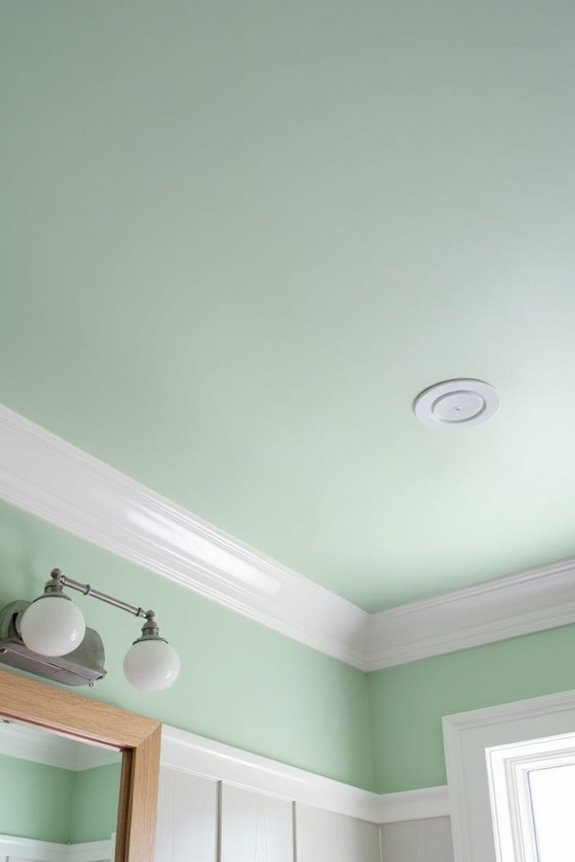
When it comes to bathroom ceiling paint, selecting the right product makes all the difference. You’ll find several reliable options designed specifically for moisture-heavy environments.
- Benjamin Moore Aura Bath & Spa: Offers superior mold resistance and moisture protection for long-lasting results.
- Zinsser Perma-White Mold & Mildew-Proof: Provides self-priming capability with built-in mildew resistance, simplifying your project.
- Sherwin-Williams Duration Home Interior Acrylic Latex: Delivers moisture- and mildew-resistant finishes at competitive pricing.
For optimal performance, you’ll want a bathroom ceiling paint with satin or semi-gloss finish sheen. These higher sheens resist moisture better than flat finishes and clean more easily. Look specifically for products labeled as bathroom or moisture-resistant. Consider primers with mold-killing properties to improve adhesion and durability. These investments protect your ceiling long-term.