
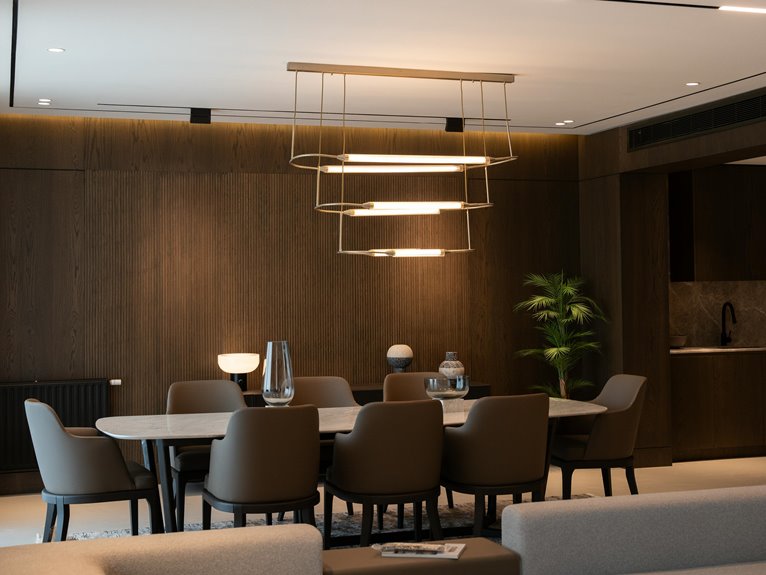
Chandelier Sizing Formula: Multiply your table width by 50–67% to find the ideal diameter. For a 60-inch table, choose a 30–40 inch fixture.
Hanging Height: Position it 30–36 inches above the table for standard 8–9 foot ceilings; raise it 3–6 inches for taller spaces.
Key Rule: Center over your table, not the room, for balanced light distribution. Avoid oversizing, which overwhelms the space, or undersizing, which reduces impact. These foundational principles establish proper scale throughout your dining room’s design.
Start With Your Table Width: the Half-To-Two-Thirds Rule
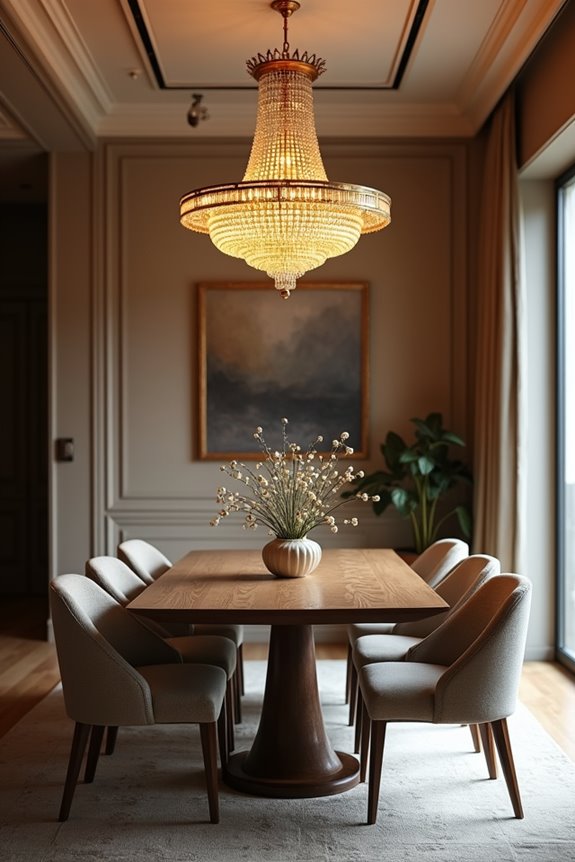
How do you pick a chandelier that actually fits your dining room? The answer lies in your table width. Use the half-to-two-thirds rule: your chandelier diameter should measure between 50–67% of your table width. This proven approach maintains proper room proportion and balanced dining room lighting.
Here’s the practical application: a 60-inch-wide table needs a chandelier roughly 30 to 40 inches in diameter. This sizing method prevents fixtures from overwhelming compact tables or appearing too small above larger surfaces.
The half-to-two-thirds rule works because it anchors your chandelier to your most important furniture piece. When your chandelier diameter aligns with this guideline, you create visual harmony. Your lighting becomes intentional, not accidental. This straightforward calculation removes guesswork from selecting the right fixture.
Calculate Chandelier Diameter If You Don’t Have a Table Yet
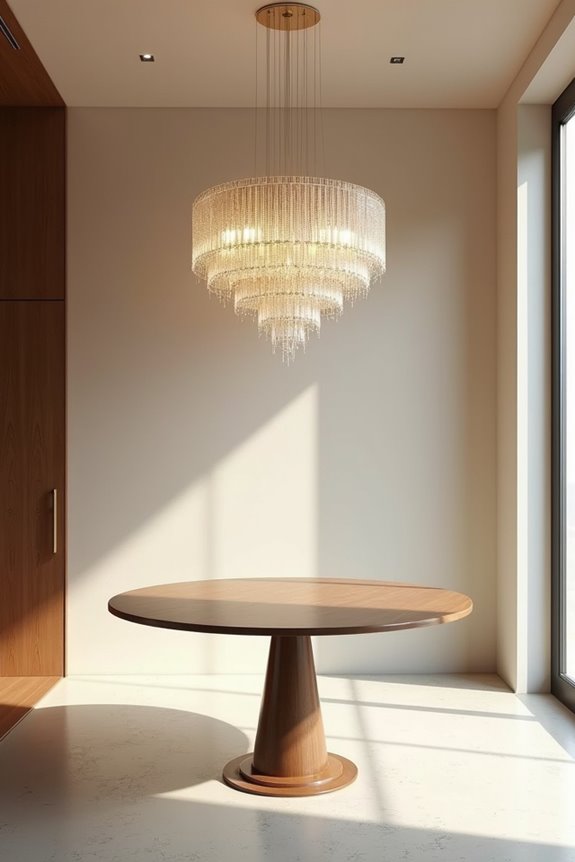
Calculate Chandelier Diameter If You Don’t Have a Dining Table Yet
When furnishing a room without a dining table, calculate your chandelier diameter using room dimensions instead.
The Formula
Add your room’s length and width in feet, then convert to inches. A 12-foot by 14-foot room totals 26 inches diameter.
Adjust for Your Space
Ceiling height affects how large a fixture appears. Taller ceilings can accommodate larger fixtures without feeling cramped. Consider your room’s shape too—narrow spaces need proportional adjustment.
Plan Ahead
Leave flexibility for future table size. Your eventual chandelier should measure half to three-quarters of your table’s width. This approach prevents costly replacements later.
Finalize Your Choice
Round up your calculation if you want a noticeable focal point. Verify the fixture won’t overwhelm adjacent walls or seating areas before purchasing.
Factor in Your Ceiling Height
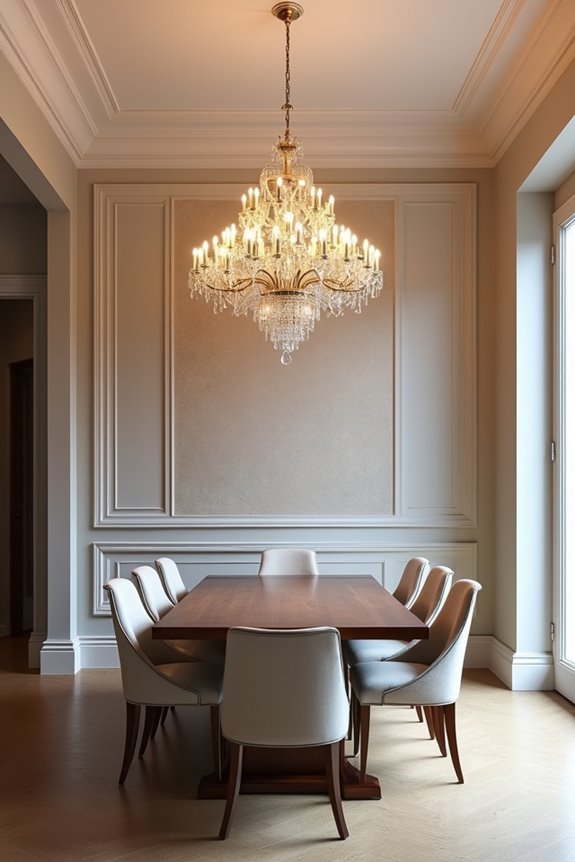
Once you’ve sized your chandelier to your room and table, your ceiling height becomes your next guide.
Your ceiling height directly determines how far down your chandelier hangs. Here’s the formula: multiply your ceiling height in feet by three inches. This creates the right proportionality and clearance for your space.
| Ceiling Height | Hanging Height | Table Clearance | Floor Clearance |
|---|---|---|---|
| 8 feet | 24 inches | 30–36 inches | 7+ feet |
| 10 feet | 30 inches | 33–39 inches | 7+ feet |
| 12 feet | 36 inches | 36–42 inches | 7+ feet |
| 14+ feet | 42+ inches | 39–45 inches | 7+ feet |
Taller ceilings allow slightly higher hangs to fill vertical space effectively. Lower ceilings require a lower drop to avoid crowding your dining room. Always maintain minimum floor clearance of seven feet in non-table areas for safety.
Choose a Chandelier Shape for Your Dining Room
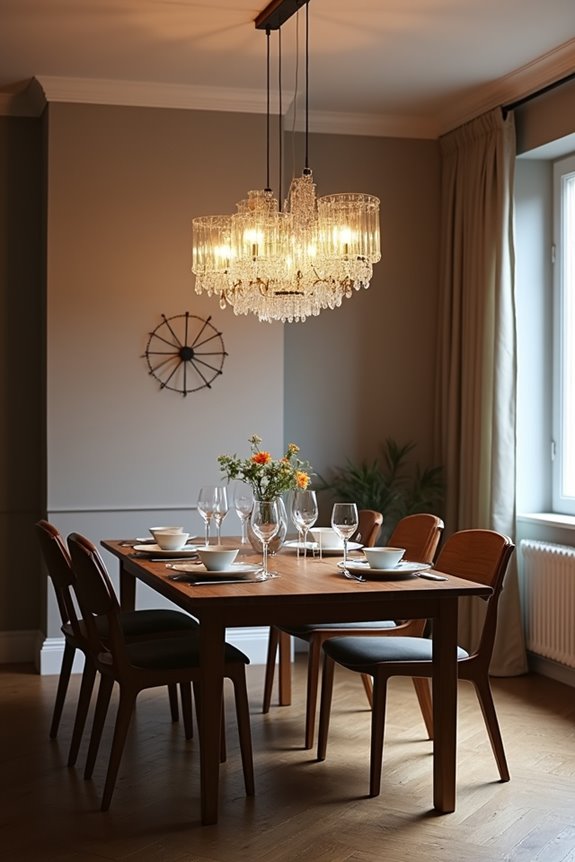
Beyond size, your chandelier’s shape matters just as much. Your fixture’s form should complement your dining table width and overall room dimensions. Consider these key shapes: cylindrical chandeliers work well for rectangular tables, while drum-shaped fixtures suit square tables. Tiered designs add visual interest above larger dining tables. Your chandelier size directly influences which shape feels balanced. For instance: a narrow table might accommodate two chandeliers instead of one oversized fixture. Hanging height remains important—position the bottom 30–32 inches above your tabletop regardless of shape. This spacing prevents visual obstruction while maintaining proper proportions. Round chandeliers complement circular tables effectively. Rectangular fixtures echo long table shapes. Match your fixture’s silhouette to your table’s geometry for cohesive design.
Hang Your Chandelier at the Right Height Above the Table
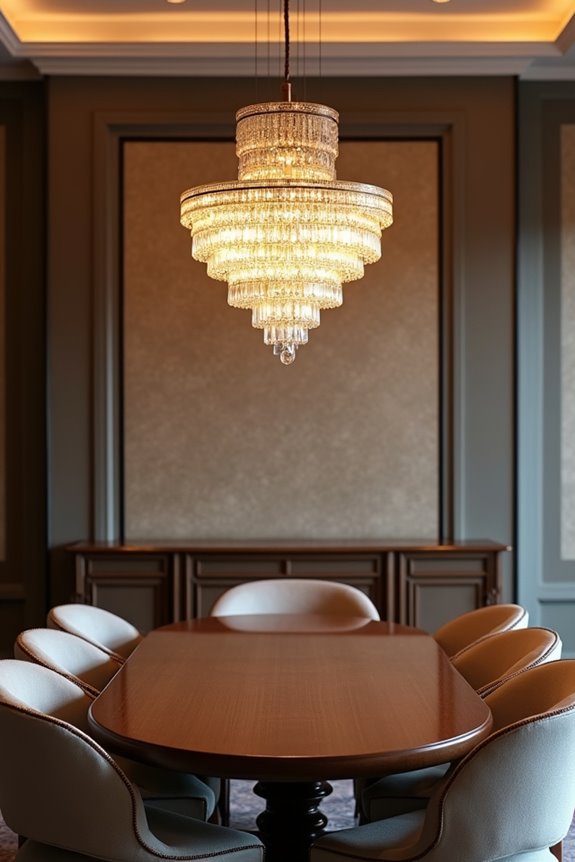
You’ll want to hang your chandelier 30–32 inches above your dining table as a standard starting point. If your ceilings are taller, raise it by 3–6 inches to keep the proportions balanced with your vertical space. Always center the chandelier directly over the table itself, not the room, so it creates the right visual focus point.
Standard Height Guidelines
Standard Height Guidelines
How high should your chandelier hang? The answer depends on your specific dining space. Position your chandelier between 30–36 inches above your dining table. This range maintains proper clearance while balancing proportions.
| Ceiling Height | Recommended Hanging Height | Adjustment | Reasoning |
|---|---|---|---|
| 8–9 feet | 30–36 inches above table | Standard | Avoids crowding lower ceilings |
| 9–10 feet | 32–36 inches above table | Slight raise | Fills vertical space effectively |
| 10+ feet | 36–42 inches above table | Higher placement | Creates proportional presence |
| With centerpiece | Measure from centerpiece top | Add 3–6 inches | Prevents obstruction |
Center the chandelier over the table, not the room. Adjust hanging height based on ceiling height and table dimensions. Account for any centerpiece when calculating dining table clearance distances.
Ceiling Height Adjustments
The distance between your chandelier and dining table depends on your room’s vertical dimensions. Standard clearance sits at 30–36 inches above the table. However, taller ceilings require adjustments.
For higher ceilings, raise your chandelier’s bottom by 3–6 inches. This strategy fills vertical space without creating visual gaps. Designers recommend this approach to maintain balanced proportions throughout your room.
Low ceilings demand different solutions. Choose a shorter chandelier drop or flush-mount fixture instead. This preserves comfortable headroom and prevents crowding.
Wider or longer tables also affect placement. Increase clearance proportionally to match your dining surface dimensions. These adjustments keep your chandelier complementary to your space while maintaining safety and visual harmony.
Confirm the Fixture Provides Adequate Light
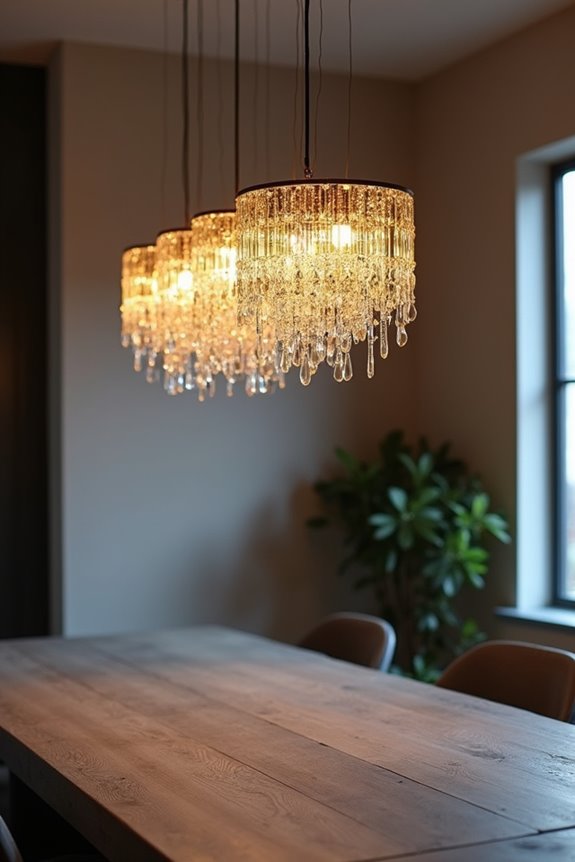
Once you’ve settled on the right size, confirming adequate light becomes your next priority. Your chandelier’s diameter and hanging height directly affect how well it illuminates your dining space.
Calculate your room’s lighting needs by considering its total dimensions. A chandelier centered over your table should distribute light evenly across the surface where you’ll eat and gather.
Check the fixture’s wattage and bulb count. Most dining chandeliers require 40–60 watts total for appropriate brightness. Confirm your chosen diameter provides sufficient coverage without creating dark corners.
Position your fixture at the recommended 30–32 inches above the table. This height maximizes light distribution while maintaining visual balance with your room dimensions and ceiling scale.
Test your setup before finalizing installation to verify comfortable, functional lighting throughout your dining area.
Select a Style That Matches Your Décor
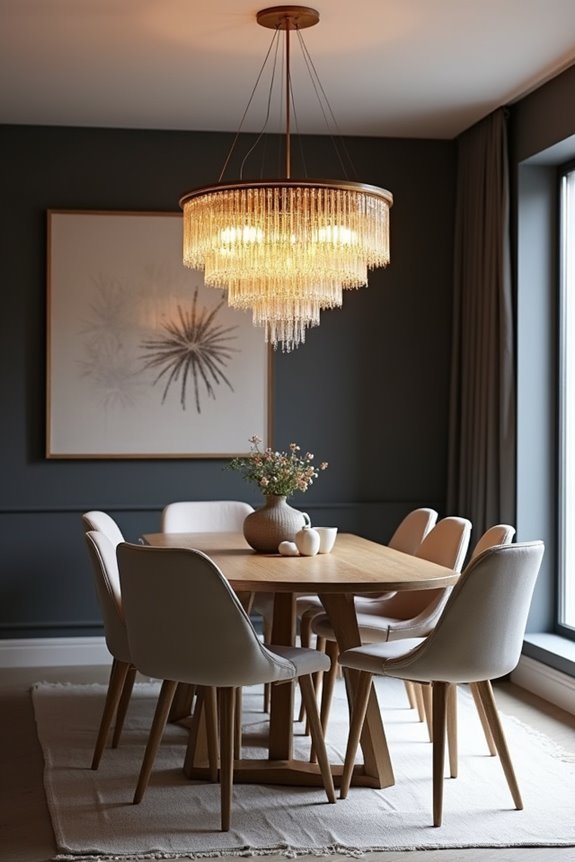
Match Your Aesthetic
Consider your décor style first: modern, traditional, transitional, or eclectic. Your chandelier should harmonize with wall colors, furniture finishes, and overall room dimensions.
Balance Visual Weight
The diameter and design must create space balance without overwhelming your table width. A sleek, minimalist chandelier suits contemporary kitchens. An ornate crystal fixture complements classic dining rooms. Designer Kelly Wearstler emphasizes that proportional styling maintains cohesive interiors.
Coordinate with Existing Elements
Review your lighting fixtures, cabinet hardware, and architectural details. Choose metals—brass, chrome, or bronze—matching your existing finishes. This consistency strengthens your room’s unified appearance and creates an inviting gathering space for your household.
Avoid Common Sizing Mistakes
You’ll want to steer clear of two common mistakes: oversizing your chandelier creates visual imbalance and overwhelms the space, while undersizing diminishes its impact. A chandelier that’s too large crowds your dining area and makes the room feel cramped; one that’s too small gets lost above your table. Use the sizing rules—room dimensions or table width—to land in that ideal range where your fixture enhances rather than dominates or disappears.
Oversizing Creates Visual Imbalance
Oversizing Creates Visual Imbalance
When a chandelier is too large, it overwhelms your dining space and disrupts the room’s visual harmony. An oversized fixture dominates your table and ceiling height, drawing attention away from other design elements you’ve carefully chosen.
Finding the Right Scale
Your chandelier’s diameter should equal about half to two-thirds of your table width. This proportion maintains proper scale and room balance. In smaller rooms under 100 square feet, select a chandelier measuring 20 inches or less for comfortable movement clearance.
Tall Ceilings Need Different Approaches
When ceilings are tall, increase the chandelier’s height or choose an elongated shape. This prevents a top-heavy appearance while preserving balanced vertical proportions throughout your dining area.
Undersizing Diminishes Statement Impact
How does a chandelier that’s too small affect your dining room? You’ll notice it fails to serve as your focal point. An undersized fixture loses visual presence and weakens your room proportions.
Common Sizing Mistakes to Avoid
When selecting fixtures for your dining table, follow this guideline: choose a chandelier measuring one-half to three-quarters of your table width. A smaller fixture appears proportionally weak and diminished.
Room Dimensions Matter
For rooms without tables, add your length and width in feet to determine diameter. This calculation prevents underwhelming results in larger spaces.
Ceiling Height Considerations
High ceilings demand properly scaled fixtures. A too-small chandelier appears insignificant and fails to fill vertical space, reducing perceived grandeur and balance throughout your dining area.