Start by evaluating your room’s lighting, traffic flow, and existing style. Add vertical interest with a tall plant or floor lamp (5–7 feet). Layer secondary pieces like console tables or bar carts beneath your main design element. Use compact work surfaces and pedestal tables for practical zones. Install floating shelves or slim cabinets to maximize storage without cluttering the floor. Incorporate layered lighting combining ambient and accent sources. Finish with textured elements like woven baskets and soft textiles for consistency. Each strategic choice builds a functional corner that complements your living room’s overall design and flow.
Start With Your Space
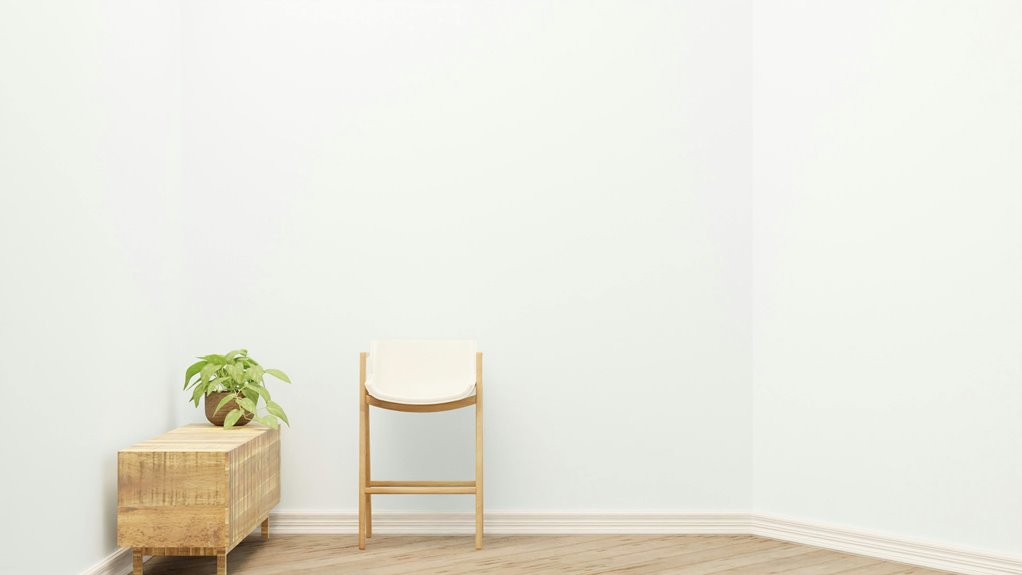
Before you fill that empty corner, what’s actually there? Assess your room’s lighting, traffic flow, and existing style. These factors shape your entire design.
Measure your corner carefully. You need to know its exact size and proportions. This prevents you from choosing furniture that crowds your space or looks too small.
Evaluate your current color palettes and furniture silhouettes. Your corner should match these elements for consistency. Consider whether you need visual weight through bold decor or a lighter approach with open shelving.
Think about conversation flow. Does your corner connect to your main seating area naturally? A comfortable reading nook works well here.
Finally, identify your storage and lighting needs. These practical considerations determine whether you’ll use your corner daily or leave it empty.
Bring Life With Greenery
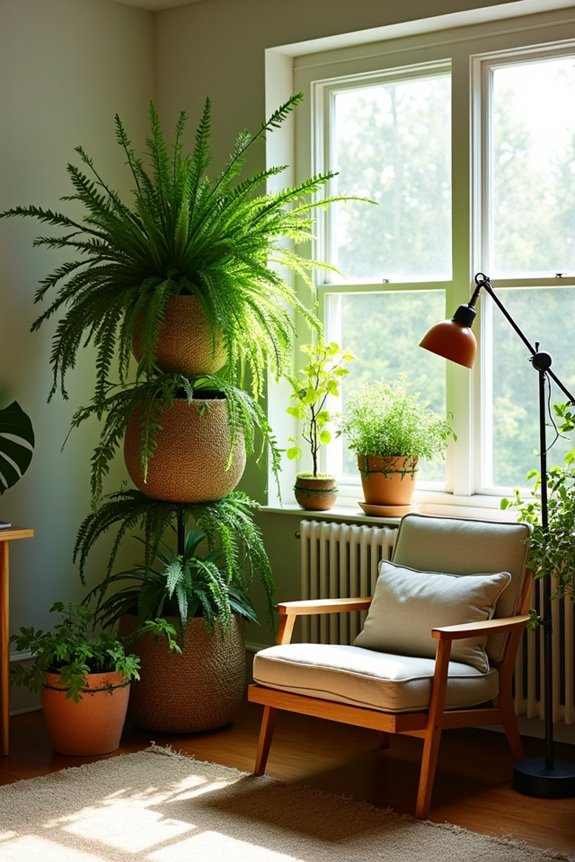
You can fill an empty corner with a 7-foot faux fiddle leaf fig tree, which fits naturally in a large woven basket that accommodates its burlap-wrapped base. This vertical element works well in low-light living rooms with minimal upkeep required. Alternatively, a faux olive tree offers similar height and presence with a lighter green tone that works with various décor styles.
Faux Fiddle Leaf Fig
A faux fiddle leaf fig serves as an excellent corner filler for your living room decor. Choose a 7-foot version and place it in a large woven basket to conceal the burlap base.
You can adjust the setup using a tall planter to modify height and create proper visual fill. Consider adding a pedestal display underneath for added vertical presence.
Faux greenery works well when natural light is limited in your space. This option also suits pet-friendly homes where real plants may pose concerns.
If you prefer a lighter aesthetic, explore a faux olive tree as an alternative. Both options eliminate maintenance while keeping your corner visually appealing and creating that gathered-together feeling you’re seeking.
Greenery Styling & Baskets
What makes greenery effective in corner spaces? Strategic placement uses empty corners as focal points. Tall plants create visual interest and height naturally.
Selecting Your Plants
A faux fiddle leaf fig reaches 7 feet, filling corner areas completely. Alternatively, a faux olive tree offers lighter, airier aesthetics. Both options work well in plant baskets or decorative baskets with burlap wrapping.
Elevation Techniques
Positioning greenery on a pedestal plant stand increases visual impact. This method draws the eye upward. Large woven baskets serve double duty: they provide planting solutions and enhance corner decor simultaneously.
Low-Maintenance Options
Choose faux tall plants for spaces with pets or low light. These greenery styling solutions require zero maintenance while maintaining year-round appeal throughout your living room.
Design a Reading Nook
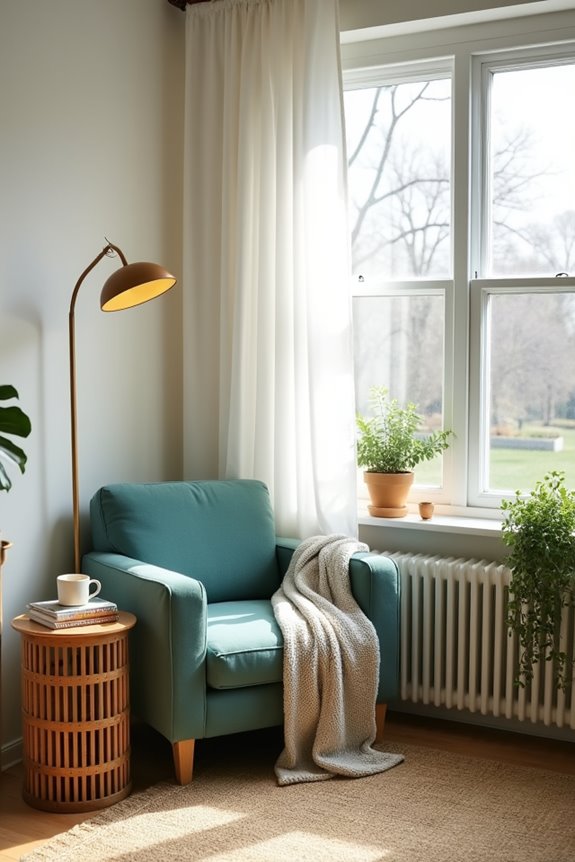
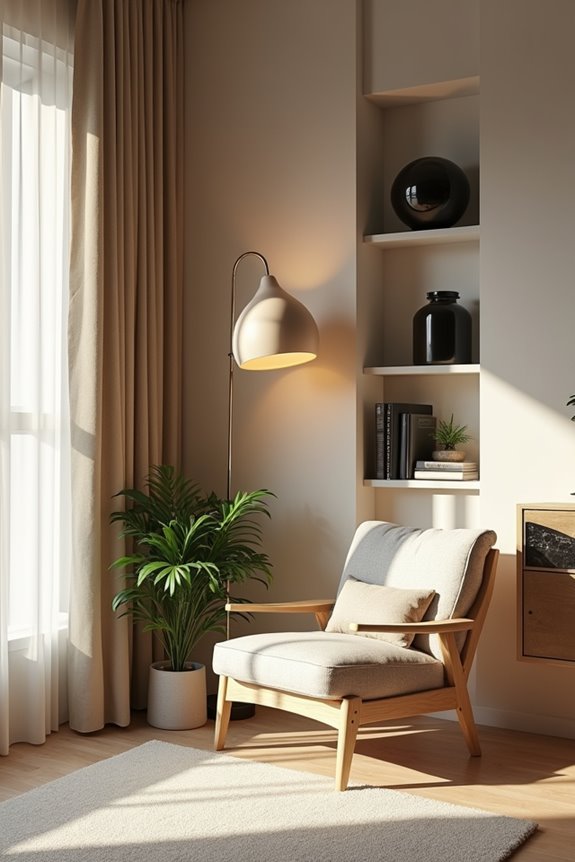
Start with a comfortable wingback chair paired with a side table within arm’s reach. Add a floor lamp or wall sconce for focused reading light. Arrange nearby storage like floating shelves and soft accessories—cushions, throws, and an ottoman—to complete your reading space in that empty corner.
Comfortable Seating Selection
Why not use that empty corner as a functional reading space? Strategic seating placement creates the foundation for your reading nook. Choose an upholstered wingback or small reading chair that fits your corner dimensions comfortably.
Position seating inward toward a rug to establish intimacy and encourage relaxation. Add a side table within arm’s reach for water, tea, or your current book. This thoughtful placement reduces strain and keeps essentials accessible.
Layer comfort with cushions and a throw blanket for extended reading sessions. Include a floor lamp nearby for targeted, adjustable lighting that reduces eye strain.
Consider a storage ottoman as dual-purpose seating and hidden storage. These strategic choices create an inviting retreat in your living room corner.
Lighting and Side Tables
How will you create a functional reading nook? The right lighting and side table provide comfort and practicality together.
Layered Lighting Strategy
Combine a floor lamp with a wall sconce for flexible illumination. This pairing provides both task lighting for reading and ambient lighting for relaxation. A tripod-style floor lamp offers warm, focused light without crowding your space. Position the wall sconce at eye level to reduce glare on pages.
Side Table Selection
A round corner table serves as your companion piece. This shape fits snugly into corners while offering soft edges that complement various décor styles. Use it to hold your beverage, book, or lamp switch within arm’s reach.
Together, these elements support your reading nook as a functional retreat.
Creating Intimate Corner Space
Creating Intimate Corner Space
What makes an empty corner work as your personal retreat? Strategic furniture placement and thoughtful design choices.
Selecting Your Foundation
An upholstered wingback chair serves as your corner seating anchor. Add a small side table nearby for tea and books. This pairing creates your reading nook’s core.
Layering Comfort Elements
Textiles define intimate corner space. Position cushions on your chair for support. Drape a throw blanket for warmth. These additions invite you to settle in.
Enhancing the Atmosphere
Warm ambient lighting matters. A floor lamp positioned beside your wingback illuminates pages without glare. This lighting layer extends your reading time into evenings.
Completing the Design
A compact storage solution keeps essentials organized. Floating shelves or small pedestals hold books and accessories. Position seating facing your focal point—fireplace or window. This arrangement balances functionality with comfort.
Go Vertical With Storage
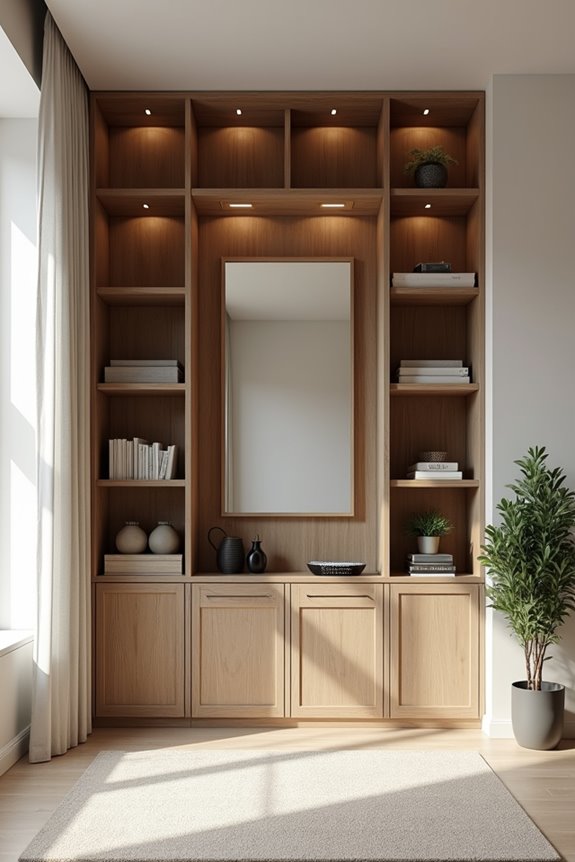
When you’ve got an awkward corner that’s eating up floor space, vertical storage is your answer. Stacking shelves or cabinets up the wall keeps your floor open and functional.
Choosing the Right Solution
Corner bookcases and tall cabinets come in varying depths. Slim-profile storage works best in tight 36-inch-wide nooks without overwhelming your room. Floating shelves on corner walls provide display space while maintaining a light feel.
Maximizing Functionality
A tall cabinet combines closed storage below with open display above. This balance handles both everyday items and decorative pieces. Wall-mounted organizers and peg rails positioned nearby keep frequently used items accessible.
These solutions put wasted corners to productive use with organized spaces.
Add Lighting as a Focal Point
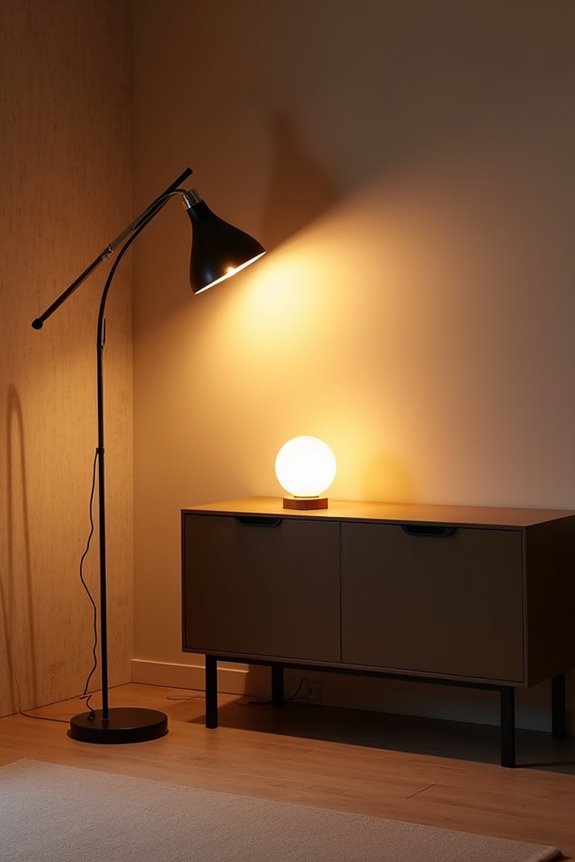
While vertical storage solves the clutter problem, you’ll want to address the visual emptiness that often remains. A strategically placed floor lamp creates an intentional design in your living room corner.
Choosing Your Lamp
Large-base floor lamps work well in bare corners. Select an oversized or sculptural lamp in wood, bronze, or metal finishes. These styles complement mid-century and rustic aesthetics while establishing lighting balance.
Maximizing Functionality
Your floor lamp serves dual purposes: it provides ambient lighting and anchors a reading nook or small desk area. Pair your lamp with a coordinating shade for personalized corner lighting. Tall designs (5–7 feet) balance nearby furniture effectively.
Strategic Placement
Position your lamp near fireplaces or TV walls. This creates cohesive design without adding clutter. Proper lighting accents enhance your entire living room corner aesthetic.
Choose Function: Tables and Carts
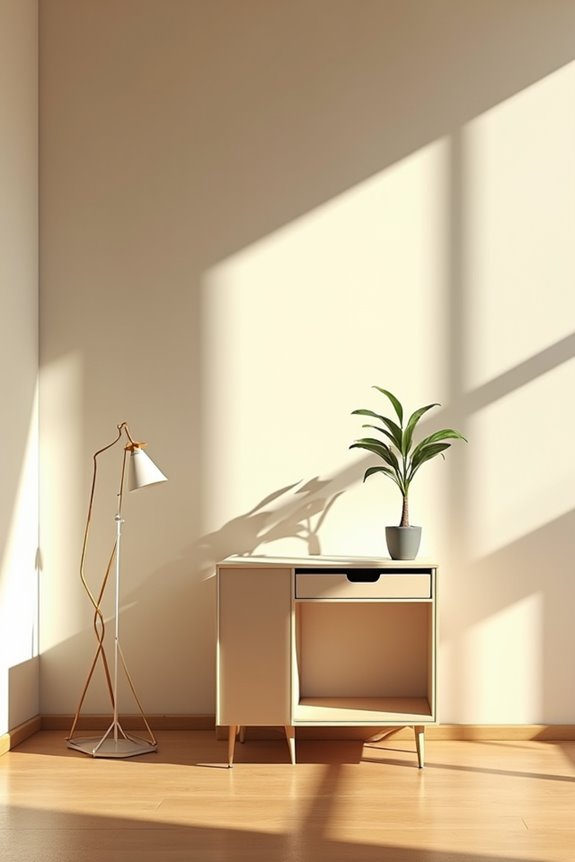
How do you use an empty corner effectively? You select furniture that serves your lifestyle while fitting your room’s layout. The right pieces create purpose without overwhelming tight areas.
Selecting purposeful furniture that fits your lifestyle and room layout transforms empty corners into intentional spaces without visual clutter.
Consider these functional options:
- Round corner tables with soft edges that anchor decorative items or small lamps
- Bar carts offering storage and display for alcohol, mixers, and glassware
- Pedestal tables adding vertical interest while displaying plants or artwork
- Floating shelves and slim corner cabinets maximizing extra storage in small spaces
A compact work surface converts your corner into a functional zone. Pedestal tables remain especially practical for tight layouts. Bar carts provide flexible styling with rattan variants available. These pieces give your corner purpose while maintaining visual lightness throughout your living room.
Finish With Layered Accents
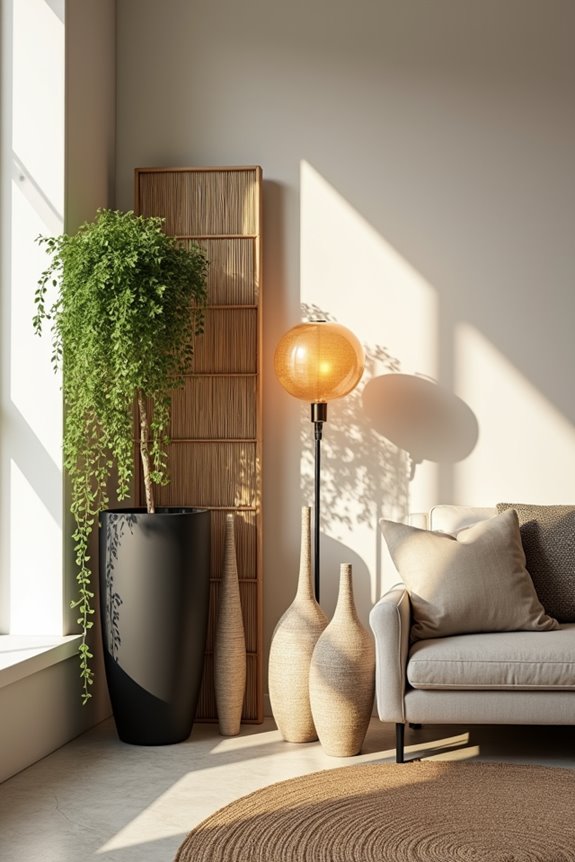
You’ve picked functional furniture—now it’s time to style your corner with intention. Layered accents build basic spaces into purposeful zones that feel complete.
Start with a dominant vertical focal point: a tall plant or floor lamp draws the eye upward. Layer in secondary pieces like a round table or console table beneath it. This height variation creates visual interest and balance.
Add lighting layers for functionality and mood. Combine ambient light from a lamp with accent lighting through wall art or a gallery wall. These elements work together strategically.
Include storage solutions like slim shelves above your corner desk. Repeat textures through woven baskets and soft textiles to build unity. Choose scalable pieces that adapt as your room evolves, keeping your corner dynamic and inviting.