
You might not realize your bathroom vanity’s height affects your daily comfort and long-term accessibility. Most homeowners choose between standard (30-34 inches) and comfort heights (34-36 inches), but several variables—countertops, sink type, and flooring—actually determine your final measurement. Getting this decision right now prevents costly renovations later. Here’s what you need to know about selecting the perfect height for your space.
What Counts as Standard Bathroom Vanity Height?
How tall should your bathroom vanity really be? Most modern vanities measure 30 to 34 inches from floor to countertop. Many manufacturers now settle around 34.5 inches as a comfortable standard height.
Most modern bathroom vanities measure 30 to 34 inches, with 34.5 inches emerging as the comfortable industry standard.
Understanding Standard Height
Today’s baseline ranges from 30 to 34 inches. This range balances accessibility for children and practicality for adults in multi-user bathrooms. Older homes often featured shorter vanities at 30 to 32 inches, designed as seated grooming stations.
Accounting for Additional Factors
Your final height depends on countertop thickness and sink style. A 34-inch cabinet plus 1.25-inch countertop equals 35.25 inches total. Vessel sinks can lower cabinet height requirements.
ADA Accessibility Considerations
For ADA accessibility, the maximum accessible vanity countertop height is 34 inches. This standard influences height choices in accessible layouts throughout your home.
Comfort Height vs. Standard Height: Which Fits Your Needs?
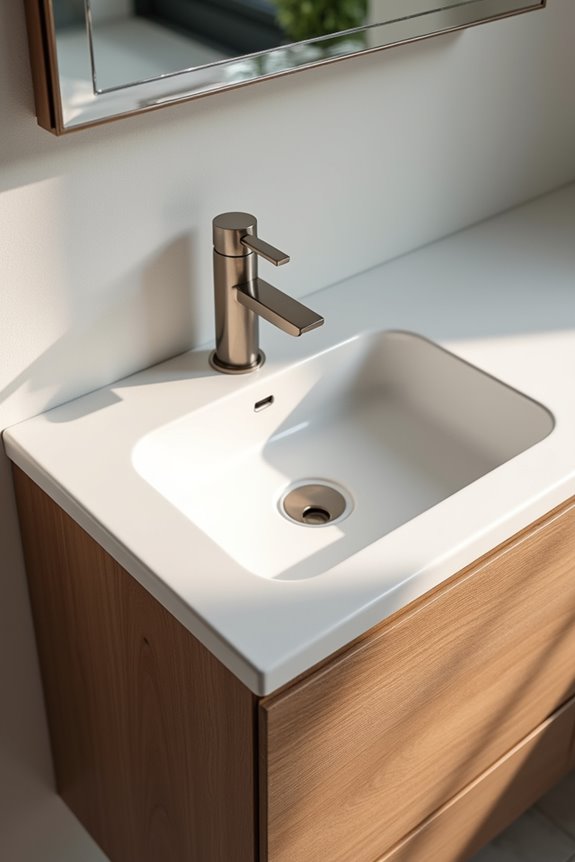
You’ll find that comfort height vanities (34–36 inches) reduce back strain and bending, benefiting most adults during daily routines. Standard height options (30–34 inches) work better if you’re shorter or prefer traditional bathroom designs. Your choice depends on your height, daily habits, and whether you share the bathroom with family members of varying sizes.
Ergonomic Benefits and Posture
Why does vanity height matter for your back and shoulders? When you use a vanity that’s too low, you’ll bend forward repeatedly during daily grooming. This strains your lower back and neck over time.
Comfort height vanities—typically 34 to 36 inches—align with your natural standing posture. You’ll experience improved ergonomic positioning that reduces unnecessary bending. Your shoulders stay relaxed instead of hunched forward.
Standard heights work fine for average-height users but may cause discomfort if you’re taller. At 6 feet or beyond, a 36-inch comfort height vanity supports better posture and ease of use.
The solution: test heights beforehand using cardboard mockups. Position them at your intended vanity location. Notice how your body feels during typical grooming tasks. This practical approach ensures you’ll choose a height supporting your long-term comfort and spinal health.
User Height and Lifestyle Fit
Choosing the right vanity height depends on who’ll use it most. Your household’s needs shape whether you’ll prefer comfort height or standard height options.
Consider these factors:
- Family composition: Standard height (30–32 inches) works best if you’ve got children or shorter household members who need accessible reach.
- Primary user height: Taller adults benefit from comfort height (34–36 inches), which reduces back strain during daily routines.
- Vessel sink considerations: If you’re installing vessel sinks, you’ll need a shorter base cabinet (around 30 inches) to maintain proper rim height.
- Future accessibility: Comfort height supports aging in place, accommodating diverse users throughout your home’s lifespan.
Matching vanity height to your lifestyle ensures everyone feels comfortable. Your choice directly impacts daily usability and long-term satisfaction.
Key Variables That Change Your Final Height (Countertops, Flooring, Sink Style)
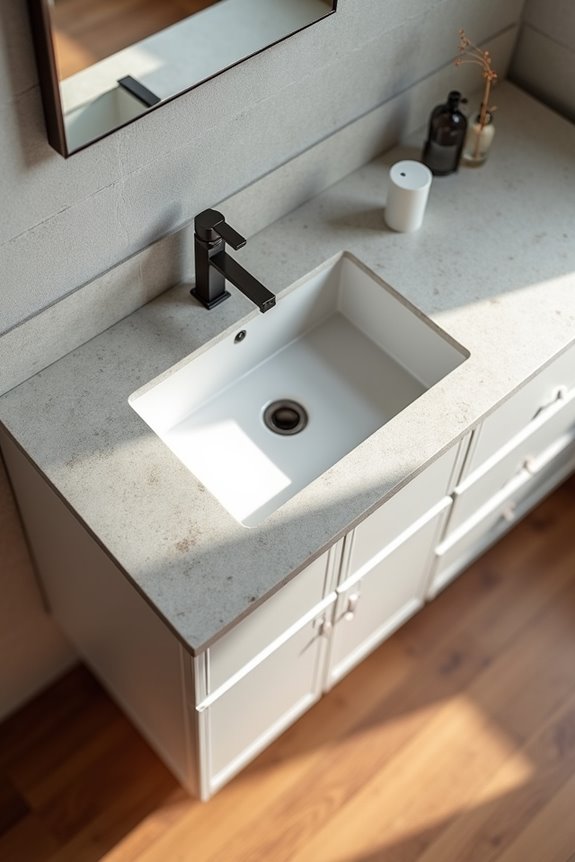
How do three separate components—cabinet, countertop, and sink—work together to determine your vanity’s final height?
Your cabinet height forms the foundation. Countertop thickness adds critical inches. Sink style dramatically shifts your total measurement. A 34″ cabinet with 1.25″ stone countertop reaches 35.25″ total. Adding a vessel sink? You’ll gain 5–6 additional inches above the surface.
| Component | Thickness | Height Impact |
|---|---|---|
| Cabinet Base | Standard 30–36″ | Foundation measurement |
| Stone Countertop | 1.25″ | Raises total height |
| Vessel Sink | N/A | Adds 5–6″ above countertop |
Flooring thickness matters too. Install your flooring first, then mount your vanity. This ensures accurate final measurements. Underlayment variations affect your overall height calculation. Consider these variables together, not separately, for proper planning.
Making Your Vanity ADA-Accessible
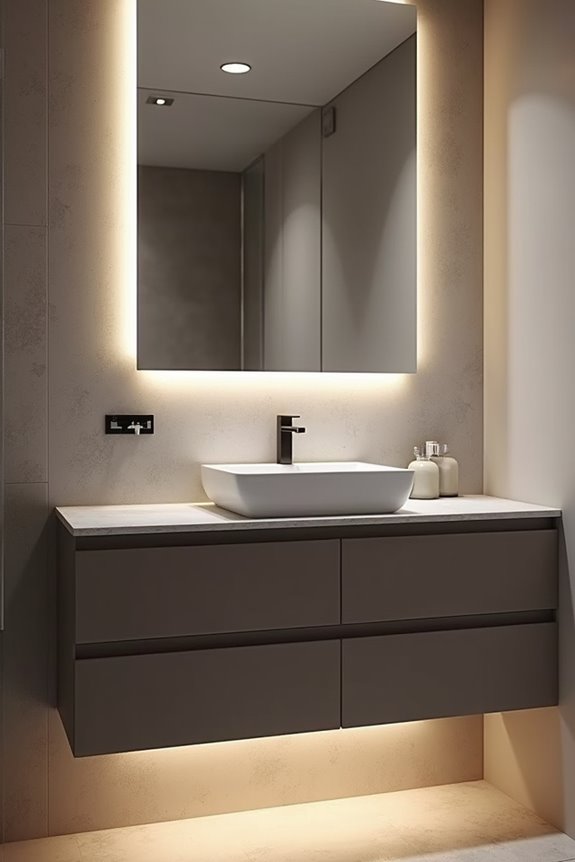
When you’re designing a bathroom for wheelchair users, the vanity height becomes a critical accessibility detail. You’ll need to follow ADA standards to create an inclusive space that works for everyone.
Here’s what you must include:
- Keep your vanity at 34 inches maximum height, accounting for countertop thickness in your final measurement
- Provide 27 inches of knee clearance beneath the counter for seated access
- Ensure 30 by 48 inches of clear floor space directly in front of the vanity
- Insulate exposed plumbing pipes to prevent burns and injuries
These measurements work together. Your cabinet height plus countertop thickness equals your final vanity height. You’ll also need to maintain proper sink depth so wheelchair users can approach comfortably. Meeting ADA requirements isn’t complicated—it’s about thoughtful planning and precise measurements from the start.
Choosing the Right Height for Your Primary Users
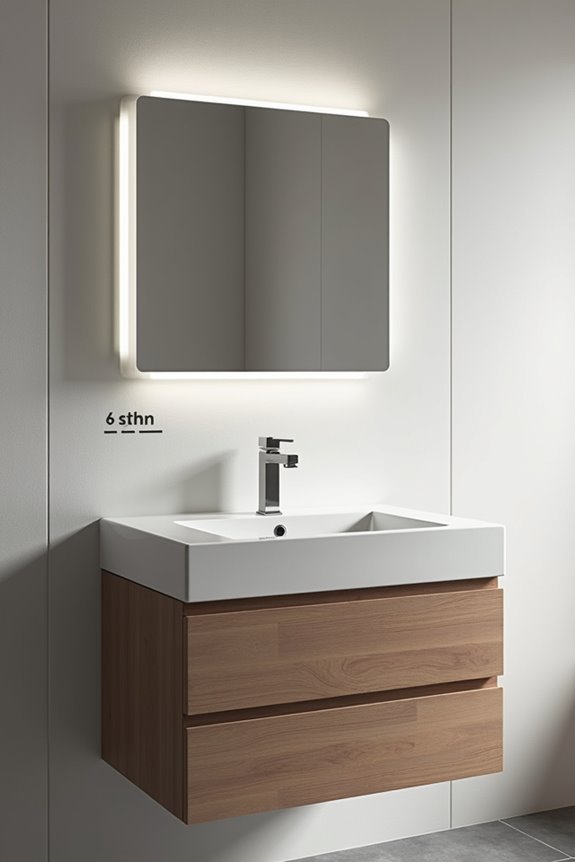
What works best for your bathroom depends on who uses it most.
For Tall Adults
Tall adults benefit from 36-inch comfort-height vanities, reducing back strain and aligning with kitchen countertops for visual consistency.
If you’re 6 feet or taller, comfort-height vanities at 36 inches reduce back strain. You’ll appreciate the ergonomic benefits during daily routines. This height aligns with kitchen countertops, creating visual consistency throughout your home.
For Standard Users
Most adults find 31.5-inch cabinets with countertops work well. This yields approximately 32.25-33 inches total. It’s comfortable for average-height users without excess bending.
For Mixed Households
Families with children and adults face real challenges. Consider dual-height vanities or adjustable options. Children benefit from lower standards around 30-32 inches. Adults prefer comfort-height options at 34-36 inches.
Accessibility Matters
Remember: vanity height significantly impacts accessibility. ADA-compliant designs max out at 34 inches, supporting all users effectively.
Measuring Your Space and Planning Installation
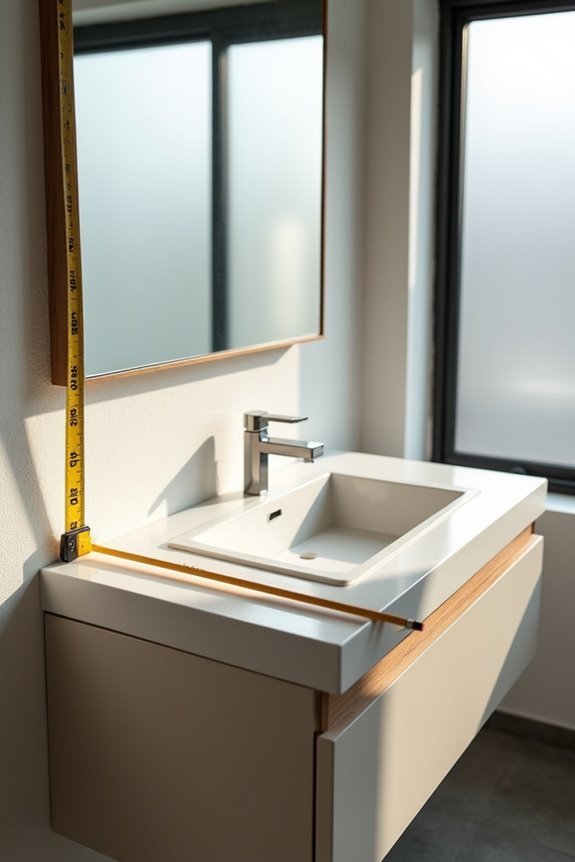
Once you’ve selected the right height for your household, measuring your space accurately becomes the foundation for a successful installation. You’ll need to account for several critical factors before your vanity arrives.
- Measure your flooring thickness and note when it’ll be installed—flooring goes down before mounting the vanity to prevent height errors.
- Use a laser level to mark where your vanity will sit, ensuring it’s perfectly level across the entire unit.
- Locate studs in your wall and plan to secure the vanity directly to them for stability.
- Account for sink type and countertop thickness early: a vessel sink may require adjusting your cabinet height to maintain comfortable rim height.
These steps ensure proper vanity height and installation planning.
Custom Vanity Heights for Tight Layouts and Unusual Plumbing
Your bathroom’s existing plumbing might not align with standard vanity heights—and that’s where custom solutions become essential. You can adapt your vanity height to work around angled walls, non-standard drains, and tight spaces without compromising function or comfort.
| Layout Challenge | Custom Solution |
|---|---|
| Angled walls | Floating vanities at adjusted heights |
| Tight spaces | Lowered base cabinets (30 inches) |
| Split-level needs | Child and adult sections combined |
| Ceiling constraints | Wall-mounted vanities with flexible positioning |
| Non-standard drains | Countertop elevation around pipe locations |
Consider shorter base cabinets paired with taller tops or vessel sinks. This maintains comfortable rim height while accommodating unusual plumbing layouts. You’ll need precise pipe measurements and installer coordination to ensure your custom vanity height meets ADA standards while solving your specific spatial challenges.
Vanity Heights That Grow With Your Family (Kids and Aging in Place)
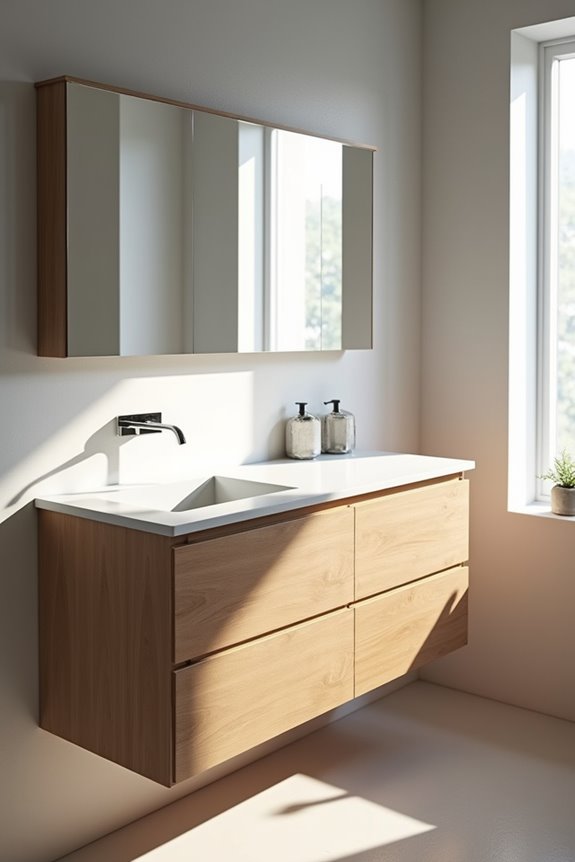
How do you design a bathroom that works for everyone—from toddlers to aging parents? The answer lies in strategic vanity heights planning:
- Install lower standard vanities (30–32 inches) for children and powder rooms where kids’ll use the space regularly.
- Choose comfort-height vanities (34–36 inches) to serve taller adults and support aging-in-place accessibility needs.
- Consider adjustable/dual-height vanities that accommodate both children and adults within one bathroom without renovations.
- Add pull-out step drawers so kids reach sinks independently while maintaining safety and usability.
For aging-in-place needs, aim for ADA-compliant countertops (maximum 34 inches) with 27″ knee clearance and 9″ toe space. Vessel sinks paired with 30-inch cabinets keep rim heights comfortable. This approach ensures your bathroom adapts as your family grows.
Common Installation Mistakes to Avoid
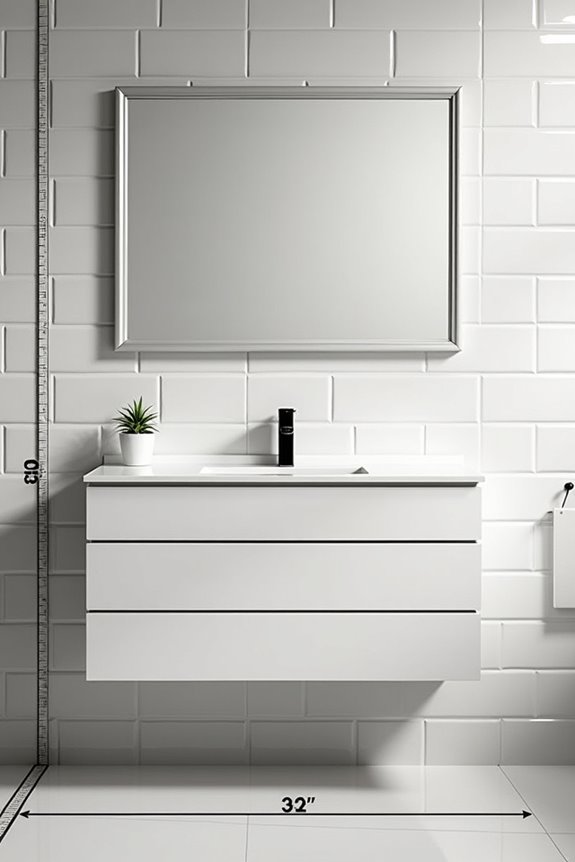
Even when you’ve selected the right vanity height for your family’s needs, installation errors can undo all that planning.
Even the perfect vanity height can be compromised by installation mistakes that undermine your careful planning.
Overlooking Countertop Thickness
You’ll shift your final height beyond the intended range if you don’t account for countertop thickness. A 34″ cabinet plus 1.25″ countertop equals 35.25″ final height—not your planned 34″.
Skipping Flooring Installation
Install flooring before mounting your vanity. Otherwise, you’ll face misaligned sink height and fixture inconsistencies later.
Securing Floating Vanities Properly
You must use proper studs and secure hardware for floating installations. Inadequate support causes instability and height shifts over time.
Respecting ADA Clearances
Don’t ignore ADA requirements: 27″ knee space and 30″ wide toe clearance. Correct nominal height doesn’t guarantee usable configurations.
Verifying Sink Type
Confirm whether you’re installing vessel, undermount, or drop-in sinks. Each affects total sink height and ergonomics differently.
Vanity Height Decision Checklist
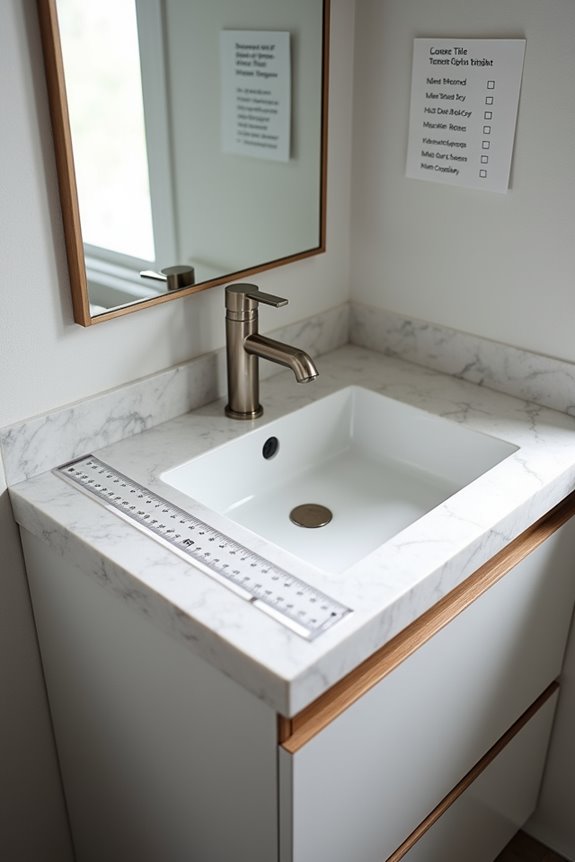
Before you buy and install a vanity, you’ll want to make several key decisions.
- Measure your household users: Standard vanity height ranges from 30 to 32 inches. Comfort-height vanities reach 34 to 36 inches. Consider who’ll use the bathroom most—taller people benefit from higher surfaces.
- Account for countertop thickness: Your final vanity height equals cabinet height plus countertop material. A 34-inch cabinet with 1.25-inch countertop totals 35.25 inches.
- Evaluate sink type: Vessel sinks add 5–6 inches to overall height. You may need a shorter 30-inch base cabinet to maintain comfortable rim height.
- Check ADA compliance needs: Maximum ADA-compliant height is 34 inches with 27-inch knee clearance minimum. These guidelines benefit everyone seeking accessible design.