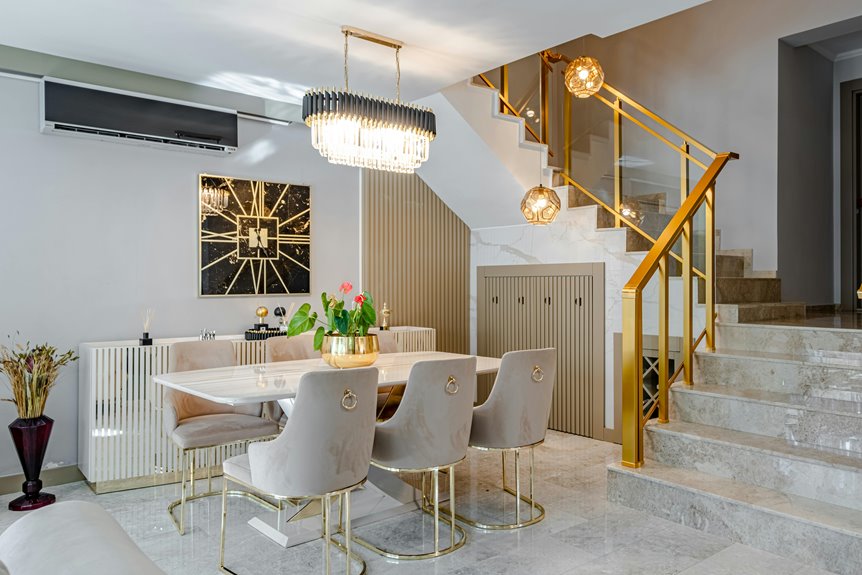
A formal dining room is your dedicated space for elegant gatherings, anchored by key pieces like a grand chandelier and an extendable table. You’ll organize the layout with symmetry, add upholstered high-back chairs, and refine details through polished finishes and coordinated colors.
Include storage like china cabinets to display dinnerware. Layer your lighting, use rich textiles, and incorporate personal touches through artwork and fabric choices. This purposeful design makes meals into meaningful events away from screens. Discover specific steps to create yours.
What Sets a Formal Dining Room Apart?
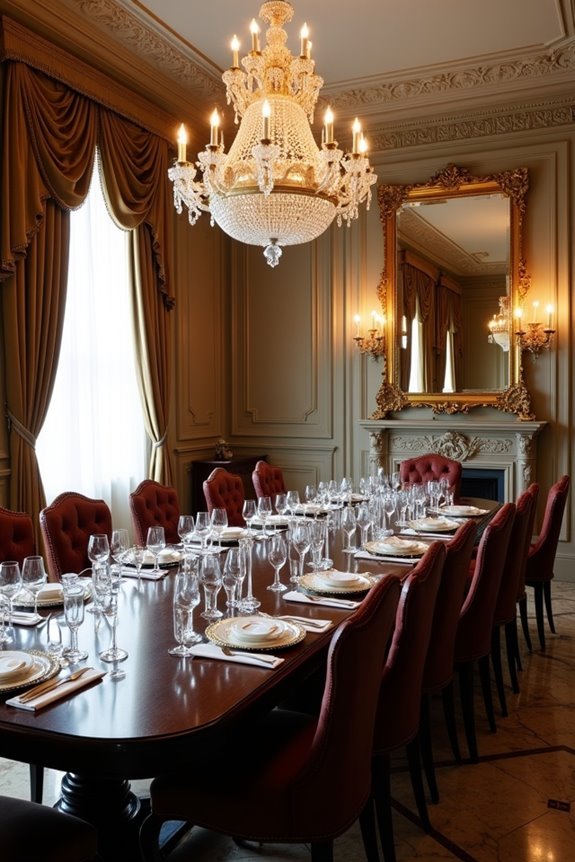
A formal dining room isn’t just any eating space—it’s a dedicated room designed for special occasions and meaningful gatherings. You’ll notice several key features that distinguish it from casual dining areas.
A focal point anchors the room, often a grand chandelier or impressive table. Symmetry organizes the layout, creating balanced visual appeal. Traditional elements include upholstered chairs with high backs and an extendable dining table.
The room emphasizes refinement through polished finishes, coordinated color schemes, and crown molding. Tall windows with luxurious draperies frame the space, while high ceilings enhance grandeur.
You create an environment that encourages slower dining and meaningful conversation. Storage pieces like china cabinets display your finest items. These deliberate design choices turn ordinary meals into memorable events worthy of your best occasions.
Why Are Formal Dining Rooms Making a Comeback?
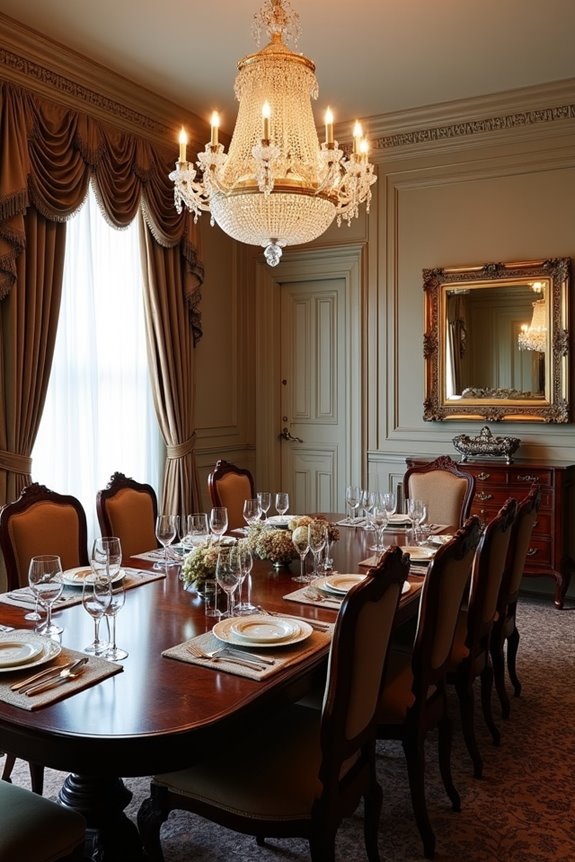
You’re reclaiming formal dining rooms because you want purposeful spaces designed specifically for connection and meaningful gatherings. Post-pandemic life has shifted your priorities toward screen-free time and hosting holidays, business dinners, and special events in dedicated rooms that express your personal style. This revival taps into tradition: you’re recognizing that structured spaces for occasion-based entertaining strengthen family bonds and create lasting memories.
Purpose-Driven Space Design
Why have formal dining rooms suddenly become desirable again? You’re reclaiming spaces with clear intention and function. Rather than multifunctional areas that blur purposes, you’re investing in dedicated dining areas designed specifically for connection and hosting.
Your formal dining room serves distinct occasions: holiday gatherings, business dinners, and VIP events. This purposeful approach changes how you use your home.
| Occasion | Ambiance Elements | Key Features |
|---|---|---|
| Holiday Gatherings | Warm lighting, centerpieces | Elegant dining table, linens |
| Business Dinners | Sophisticated décor, music | Formal place settings |
| Special Events | Curated details, flowers | Structured seating arrangement |
Purpose-driven space design means you’re choosing structure over flexibility. Your formal dining room becomes a dedicated sanctuary for meaningful moments away from screens, fostering genuine connection through intentional hosting experiences.
Post-Pandemic Lifestyle Shifts
When the pandemic ended, homeowners didn’t simply return to old habits—they fundamentally rethought how they’d spend time at home. You now prioritize meaningful, screen-free moments with loved ones. A formal dining room supports this shift by creating dedicated space for connection.
Your post-pandemic lifestyle demands intentional hosting experiences. Consider these priorities:
- Intimate gatherings that strengthen relationships and foster belonging
- Business dinners and VIP-style events requiring professional settings
- Holiday celebrations with structured, purposeful environments
You’re choosing dining spaces that encourage conversation and slower pacing. Modern formal dining rooms accommodate your flexible needs through extendable tables and adaptable layouts. This approach blends tradition with personal style, allowing you to host varying group sizes comfortably. Your formal dining room becomes the gathering place where you build community and create lasting memories together.
Hosting and Tradition Revival
Formal dining rooms are staging a remarkable comeback in American homes. You’re reclaiming spaces dedicated to meaningful connection and celebration. Post-pandemic life has shifted your priorities: you’re hosting intimate gatherings that require thoughtful design.
Your hosting traditions matter more now. Special occasions—holiday dinners, milestone celebrations, business events—deserve dedicated dining spaces that reflect their importance. A formal dining room design establishes structure and occasion. It signals respect for guests and investment in relationships.
You’re valuing tradition and legacy through purposeful spaces. Rather than open, undefined rooms, you’re choosing dining room design that fosters genuine interaction away from screens. This comeback reflects your desire for occasions that feel meaningful and memorable.
Essential Furniture for a Formal Dining Room
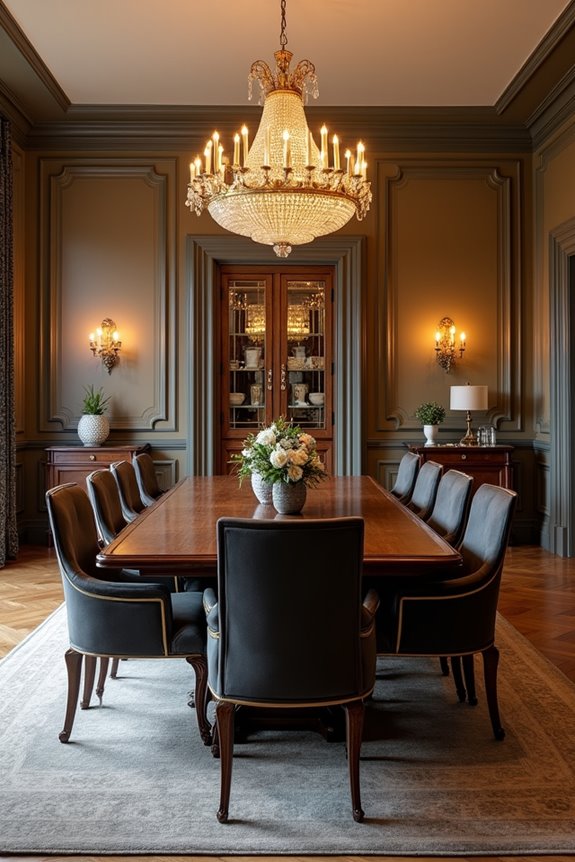
You’ll build your formal dining room around three key furniture categories: a sturdy dining table that anchors the space, upholstered seating that combines comfort with style, and storage pieces that showcase your dinnerware. Your table choice—whether a rich mahogany with an extendable leaf or a classic oak design—sets the tone for the entire room. Supporting these basics with a sideboard, hutch, or bar cart lets you balance functionality with the display surfaces that define formal dining spaces.
The Dining Table Foundation
How does a single piece of furniture shape an entire room’s purpose and flow? Your dining table anchors the formal dining room, determining seating capacity and traffic patterns.
A quality dining table requires:
- Solid wood furniture from mahogany or oak that withstands years of gatherings
- Extendable features that accommodate intimate dinners and larger group meals
- Thoughtful table shape—rectangular, square, round, or oval—that balances your room’s proportions
Choose your table shape carefully. Rectangular tables suit longer rooms and seat more guests. Round tables encourage conversation and fit square spaces better.
Pair your solid wood furniture with upholstered dining chairs featuring high backs. This combination delivers comfort during extended meals while maintaining elegance.
Consider practical additions like lazy Susans for serving dishes. Buffets and china cabinets nearby provide storage and display space for your dinnerware collection.
Seating and Upholstery Choices
What makes a dining table an inviting gathering space? Your chair selection. High-back chairs provide elegance and support during lengthy meals. Choose upholstery in fine fabrics like linen or velvet for durability and visual appeal.
Tufted detailing adds sophistication to your seating arrangement. This quilted pattern catches light and creates depth. Pair these chairs with rich wood tables—mahogany or oak work well—to establish cohesion.
Fabric textures matter. Mix smooth velvets with subtle patterns to prevent monotony. Consider neutral tones: cream, gray, or navy coordinates with most décor styles.
Seating symmetry anchors your room’s design. Position chairs evenly around your table, creating balanced proportions. This arrangement guides traffic flow naturally and makes guests feel welcome. Designer Kelly Wearstler emphasizes: balanced seating arrangements establish formal dining rooms that are clearly designed with purpose.
Storage and Display Pieces
Organization and elegance work together in formal dining rooms. You’ll want furniture that serves dual purposes: storing essentials and showcasing treasures.
Consider these three key storage solutions:
- A china cabinet displays your finest dinnerware while protecting it from everyday wear
- A buffet sideboard holds serving pieces and creates a functional center point for gatherings
- Wall-mounted shelves maximize vertical space for glassware and collectibles
A built-in storage unit organizes the room and arranges crystal, china, and decorative accents in one location. Mobile carts on wheels provide practical solutions during formal gatherings, holding appetizers and servingware.
Your storage pieces should coordinate with your table and chairs. This creates a deliberate, planned look. Display surfaces balance practicality with aesthetics, helping you feel confident hosting memorable dinners.
How Do You Choose the Right Dining Table and Seating?
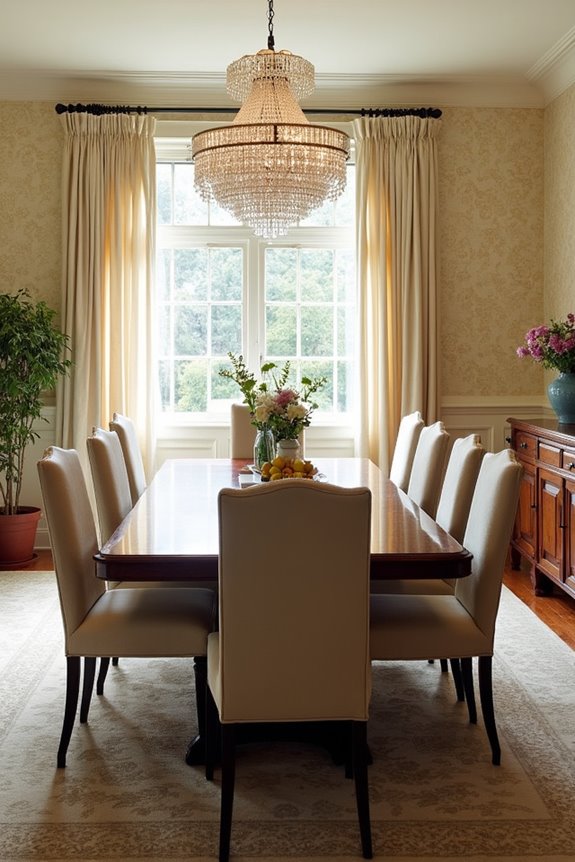
Selecting the right dining table and chairs shapes your entire formal dining experience. Your dining table size must match your room layout and seating capacity needs. Consider extendable tables for flexibility—they accommodate larger gatherings without permanently consuming space.
Choose your table shape strategically: rectangular or square designs suit larger groups, while round or oval shapes encourage intimate conversations. Aim to seat 8–12 guests comfortably in your formal dining room using benches or additional chairs as backup options.
Select chairs combining formality with comfort. Prioritize upholstered backs and durable, easy-to-clean finishes that withstand regular use. This approach keeps your seating aligned with both aesthetics and practicality, creating an inviting space where guests feel welcome.
Lighting, Mirrors, and Wall Art: Creating Visual Impact and Ambiance
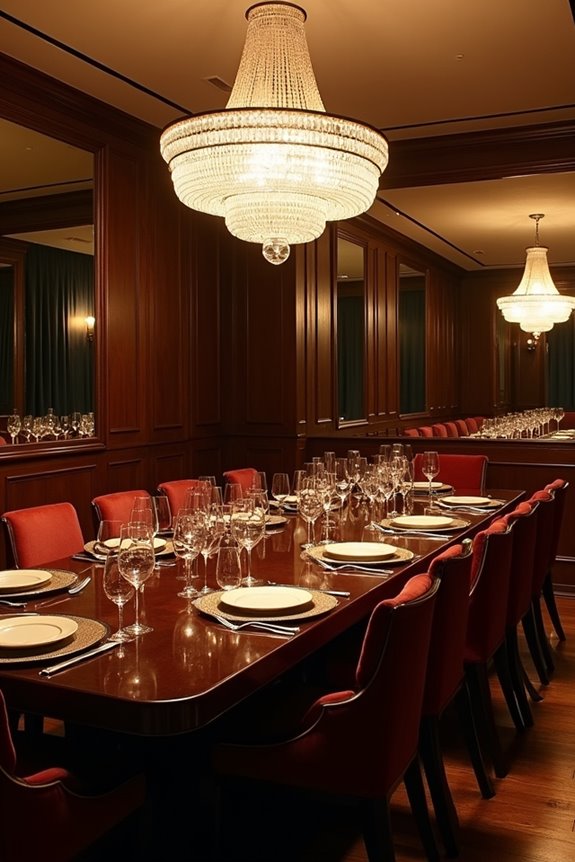
How you light your formal dining room shapes everything—from the mood guests feel to the way food appears on their plates. You’ll create visual impact through three essential elements:
- Statement lighting fixtures like chandeliers serve as focal points
- Mirrors reflect light and expand perceived space through symmetry
- Wall art anchors the room’s elegant aesthetic
Layer your lighting with ambient, task, and accent options for conversation-friendly illumination. Position large framed mirrors opposite windows to amplify natural light. Align wall art with your lighting scheme to maintain balanced design. Pair wall coverings with fixtures that highlight luxurious textures. This strategic approach creates a dining space where ambiance and functionality work together seamlessly, resulting in an inviting, sophisticated gathering place.
Drapery and Textiles: Framing the Room and Controlling Light
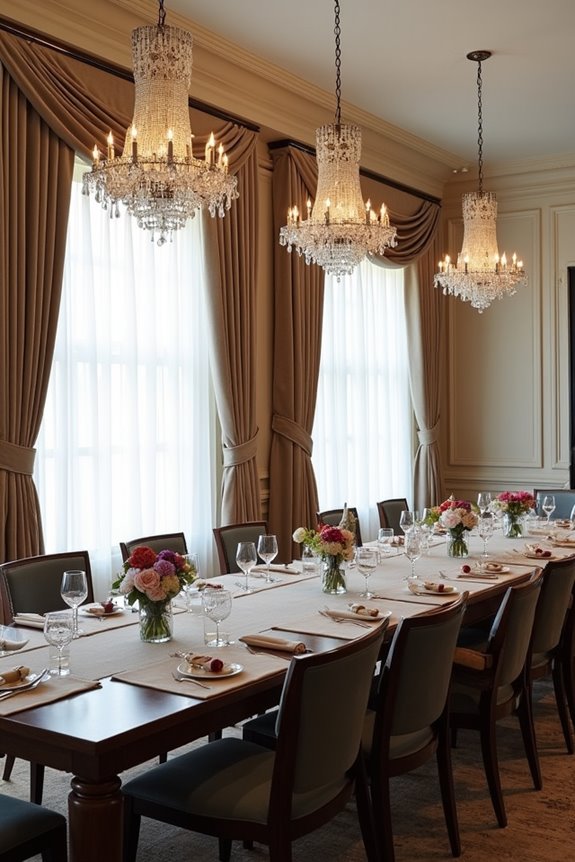
Why settle for bare windows when drapery adds elegance and function to your formal dining room? Layered window treatments accomplish multiple goals: they filter daylight, reduce glare during meals, and establish privacy. Rich textiles like velvet or silk curtains enhance your space’s sophistication while controlling light effectively.
Your drapery choices directly impact the room’s perceived formality and scale. Tall curtains and full panels create grandeur, while hardware style adds polish. Coordinate your fabric colors and textures with existing furniture and lighting throughout the space.
Strategic window treatments balance ambiance by managing natural light while maintaining the refined atmosphere your formal dining room deserves.
Smart Storage: Functional Pieces That Elevate Your Design
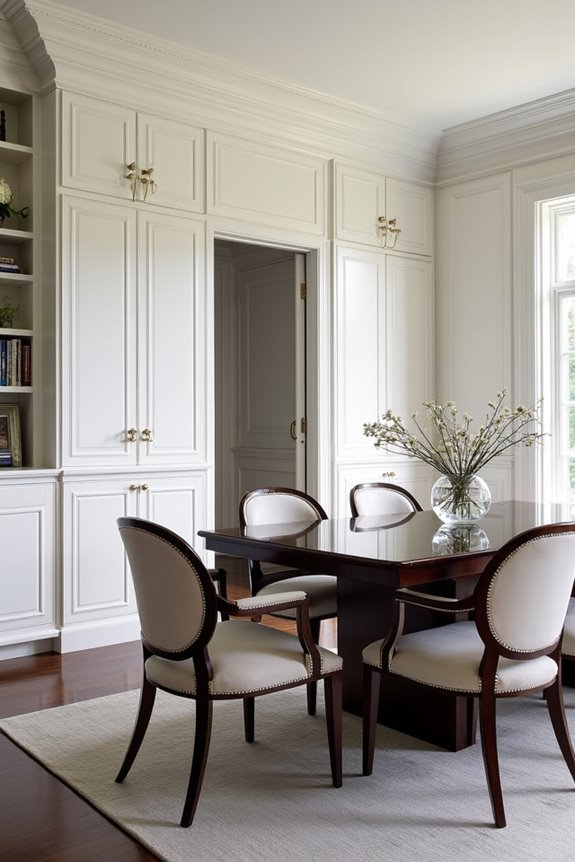
You’ll create a more functional dining room by choosing storage furniture that performs as well as it looks. Buffets, sideboards, and display cabinets keep your dinnerware organized while showcasing china and crystals—combining function with style. Mobile carts and integrated cabinetry offer flexible options: position dishes near the kitchen, serve from a wheeled bar cart, or display items on wall-mounted shelves that maintain your room’s polished appearance.
Storage Furniture Essentials
A formal dining room’s elegance comes from smart storage solutions that blend function with style. Thoughtful furniture choices create an organized, welcoming environment.
Essential storage pieces you should consider:
- Buffets and sideboards display your finest china while keeping dinnerware organized and accessible
- Built-in shelving or wall-mounted storage showcases glassware and ceramics without consuming floor space
- Wine cabinets or wine refrigerators keep bottles properly stored and ready for entertaining
Mobile carts offer flexibility, adapting to your dining layout. Bakers racks provide open shelving for everyday dishes and barware. These furniture pieces create a unified design that prioritizes both organization and display. Your guests appreciate rooms where everything has its place and purpose.
Display and Organization
Display and Organization
Smart storage keeps your formal dining room organized and elegant. You’ll want strategically placed pieces that combine function with style.
Essential Display Solutions
A buffet or sideboard provides dual benefits: dinnerware storage and china display space. Wall-mounted shelves organize stemware while preserving floor space—ideal for showcasing glassware collections. A bar cart on wheels offers mobile flexibility for drinks and entertaining.
Serving Station Setup
Position a serving cart with extra shelves near your dining table. This keeps appetizers and desserts accessible without cluttering your main table. Consider a kitchen island or built-in cabinetry as a staging area for dishes.
These pieces create designated zones. You’ll maintain an organized appearance while keeping everything you need within reach during entertaining.
Mobility and Space-Saving
How can you maximize your formal dining room without sacrificing style or function?
Smart storage solutions create multipurpose rooms with organized, elegant layouts. Consider these functional pieces:
- Extendable dining tables that expand for gatherings, then shrink for everyday use
- Mobile sideboards on wheels that reposition easily for flexible layouts
- Wall-mounted cabinets that display china while freeing precious floor space
Space-saving seating like benches with hidden storage keeps dinnerware and linens organized discreetly. This approach prevents clutter while maintaining your room’s formal aesthetic.
Flexible furniture pieces offer adaptable display and storage without permanent placement constraints. Mobile serving carts complement your design while staying easy to move. Compact layouts focused on scale and flow prevent wasted space from the start.
Strategic mobility in design enables comfortable movement around your table while preserving the sophisticated atmosphere you’re creating.
Making Formal Dining Work in Tight Spaces
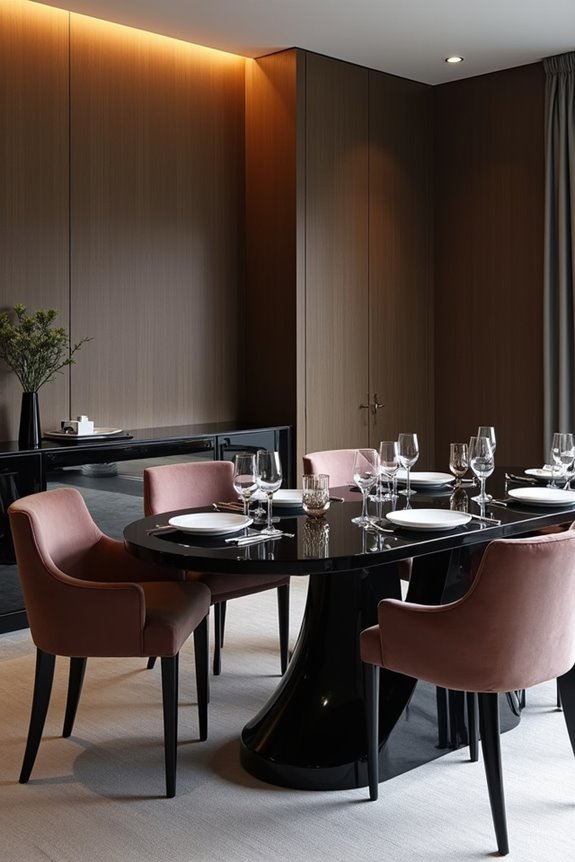
Can you really pull off formal dining when you’re working with limited square footage? Absolutely. You’ll need a strategic approach that prioritizes smart choices over square footage.
Start with a compact dining table that extends when guests arrive. This extendable option saves space daily while accommodating gatherings. Maintain streamlined furniture layouts that preserve clear circulation—aim for 36 inches around your table minimum.
| Design Element | Strategy | Benefit |
|---|---|---|
| Wall Colors | Light, neutral tones | Visually expand room |
| Storage | Built-in shelves | Eliminate clutter |
| Lighting | Low-profile chandelier | Maintain elegance |
| Rug | Smaller, impactful | Ground dining zone |
| Table | Compact, extendable | Flexible functionality |
Layer in built-in storage and wall-mounted shelves for dinnerware. These solutions keep your space organized without crowding. You’re creating a formal dining experience that fits your actual home.
Infusing Personal Style Into Formal Elegance
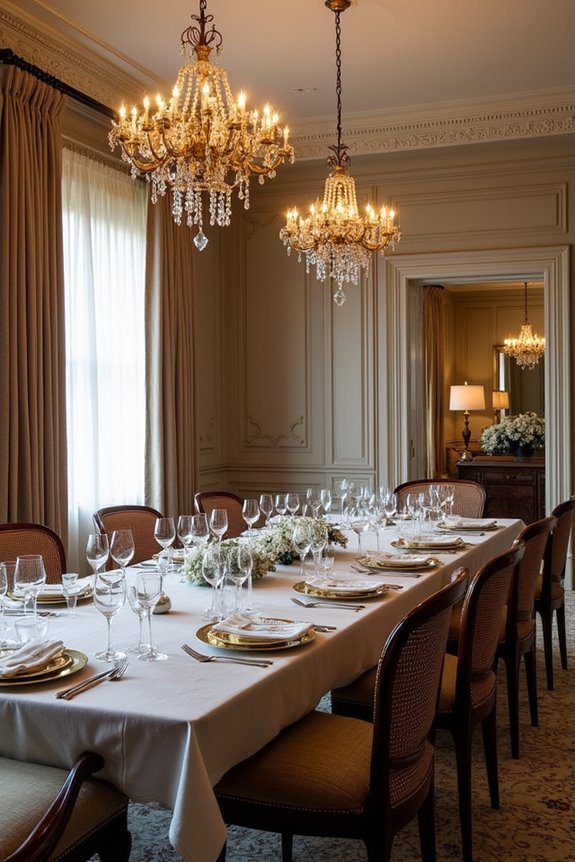
What makes a formal dining room truly yours? You blend tradition with your authentic taste through intentional choices.
Create a formal dining room that reflects your personality with these meaningful touches:
- Select luxurious upholstery textiles in velvet or leather that match your preferences
- Display cherished heirlooms in china cabinets to establish connection with your space
- Introduce bold color schemes through artwork and accessories that bring you joy
Designer tips emphasize balance: pair grand chandeliers with modern elements like Mid-Century Modern furniture. This approach creates formal elegance without stiffness. Use a balanced layout that invites conversation while maintaining sophistication.
Your personal style shouldn’t compromise formality. Instead, layer statement pieces strategically. Frame family photos. Choose fabrics in colors you love. These deliberate decisions turn your formal dining room into a welcoming gathering space that feels like your own.
Start Designing Your Formal Dining Room
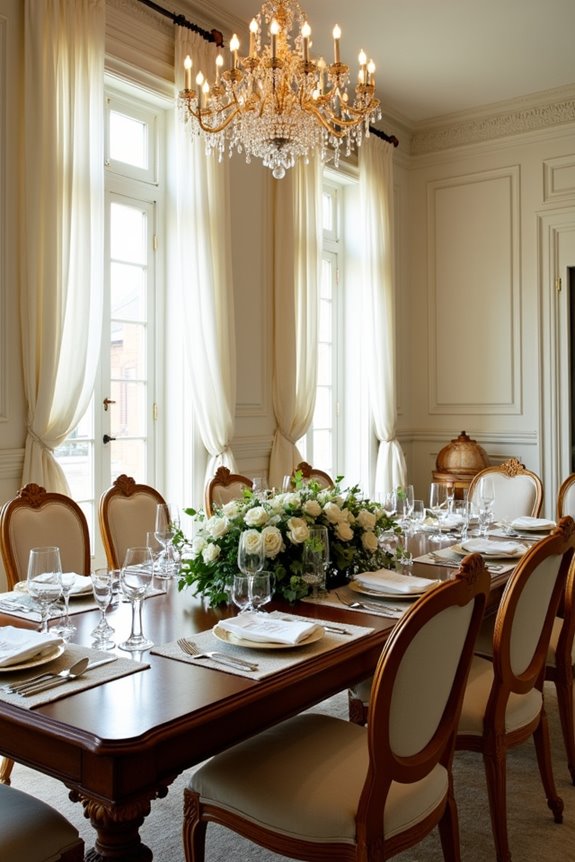
Now that you’ve infused personal style into your formal space, you’re ready to build its foundation. Begin by selecting a dedicated dining space that flows naturally within your home’s layout.
Selecting a dedicated dining space that flows naturally within your home’s layout establishes the perfect foundation for your formal room.
Next, determine your seating needs. Choose an extendable dining table that accommodates your household size while maintaining comfortable movement around the room.
Install focal lighting through a grand chandelier or statement fixture. This element anchors your formal dining room design immediately.
Establish a cohesive palette by selecting complementary wood tones, upholstery colors, and textiles. Consistency creates the elegance you’re seeking.
Finally, incorporate dining room storage solutions. A buffet or china cabinet displays dinnerware while keeping essentials organized and accessible.
These foundational steps create your dedicated dining space’s structure.