You can strategically place floor lamps to improve your living room’s lighting. Position lamps opposite windows to balance natural daylight. Place them beside seating for comfortable task lighting around eye level. Brighten dark corners with tall torchiere-style lamps angled toward room center. Position lamps 12–18 inches behind sofas to eliminate harsh shadows. Finally, measure your space and aim for 20–30 lumens per square foot for ambient light. Each placement strategy addresses specific lighting challenges and creates welcoming layers throughout your room.
Balance Floor Lamps With Natural Daylight
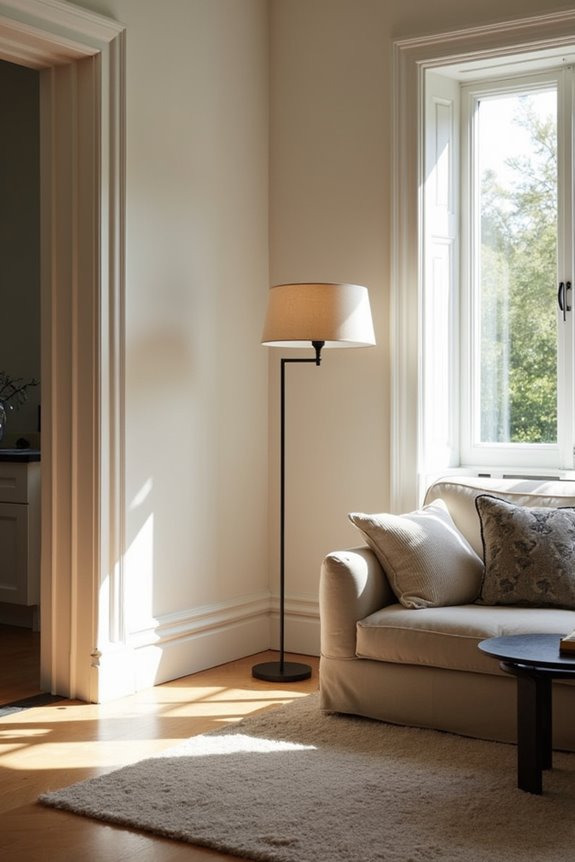
How can you make your floor lamps work better with sunlight? Your floor lamp placement matters most when you consider existing natural daylight. Position lamps opposite windows to bounce light across your space without screen glare. This daylight balance creates layered lighting throughout the day.
Observe your room’s brightness at different times. In bright rooms, use ambient lighting that enhances color without overpowering sunlight. Near your reading nook, add task lighting for evening hours.
Create a lighting plan that adapts: combine an uplight with a lower reading lamp near seating. Adjust your shade direction to target daylight-dimmed corners. Taller lamps balance tall windows effectively. This approach maintains consistent room brightness as daylight fades, reducing artificial light dependency while keeping illuminated pathways visible.
Position Lamps Beside Seating
Where should you place a floor lamp for reading comfort? Position your floor lamp beside seating to create effective task lighting for reading and working. Place the lamp slightly behind your chair or sofa so light reaches your page without glare on screens.
Select adjustable arm or swiveling head lamps next to seating. These designs let you direct light exactly where you need it. Aim for lamp height that places the shade around eye level when seated. This positioning prevents eyestrain and provides comfortable light diffusion.
Pair your lamp with dimmable or warm 2700K–3000K bulbs delivering 400–800 lumens for reading. This approach balances task lighting with ambient glow throughout your living room lighting scheme, creating an inviting environment for focused activities and relaxation.
Brighten Dark Corners With Floor Lamps
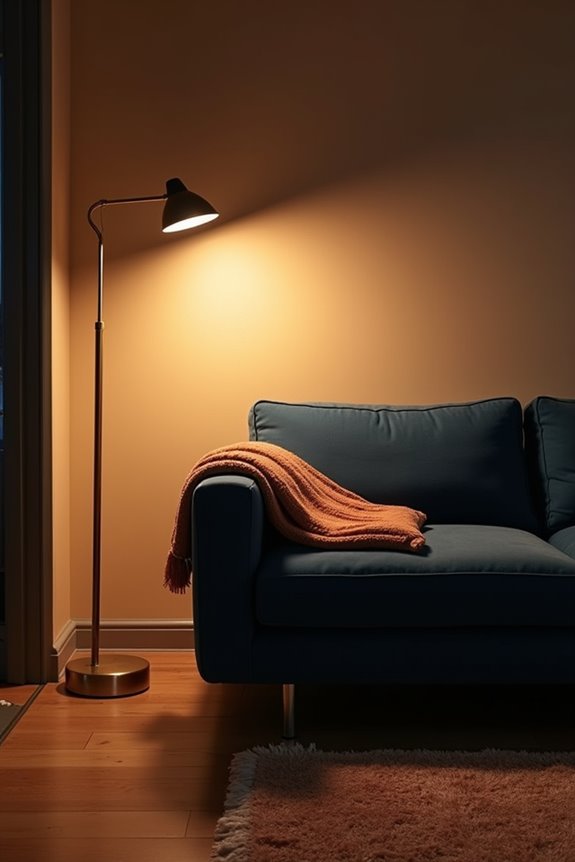
Brighten Dark Corners With Floor Lamps
Dark corners in your living room don’t have to stay dim and shadowy. A strategically placed floor lamp addresses these problem areas by providing adequate illumination.
Strategic Corner Placement
Position a tall Akari-style lamp in dark corners for maximum ambient lighting coverage. Angle it slightly toward the room’s center to spread directional light evenly across walls and artwork. This corner placement eliminates shadows while making your space appear larger.
Optimal Bulb Selection
Choose a warm 2700K bulb with 400-800 lumens output. This warm bulb creates a comfortable glow without overwhelming your room. The specific wattage provides appropriate illumination levels.
Layered Lighting Approach
Combine your corner floor lamp with ceiling ambient lighting and task lamps. This layered lighting strategy provides flexible mood control and balanced illumination throughout your living room. Angle your lamp away from seating to prevent glare on glass surfaces.
Place Lamps Behind Furniture to Balance Sightlines
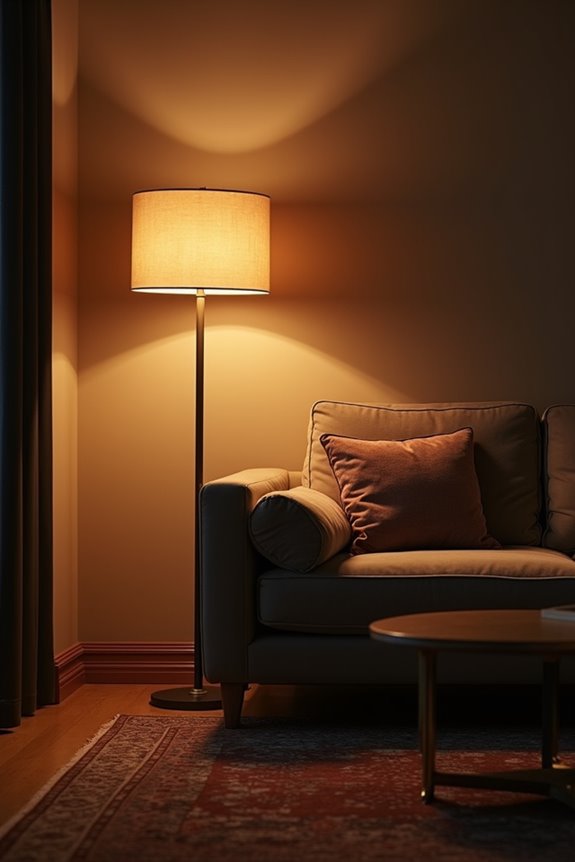
You can reposition a floor lamp behind your sofa to improve lighting in your seating area. This backlighting technique creates balanced ambient lighting while protecting your sightlines from glare and obstruction.
Strategic Lamp Placement Benefits:
- Position the lamp 12–18 inches from the sofa’s back to bounce light off walls effectively
- Choose tall, slender torchiere styles that lift light above eye level for glare reduction
- Angle the lamp slightly toward your room or artwork to diffuse light evenly
Floor lamp placement behind your sofa eliminates harsh shadows in your seating area. A sturdy base prevents tipping from foot traffic or reclining legs. Pair your backlighting with dimmer lighting to adjust brightness for different activities. This wall bounce lighting technique provides even illumination throughout your space while maintaining clear sightlines to your TV and artwork.
Measure and Adjust for Your Room Layout
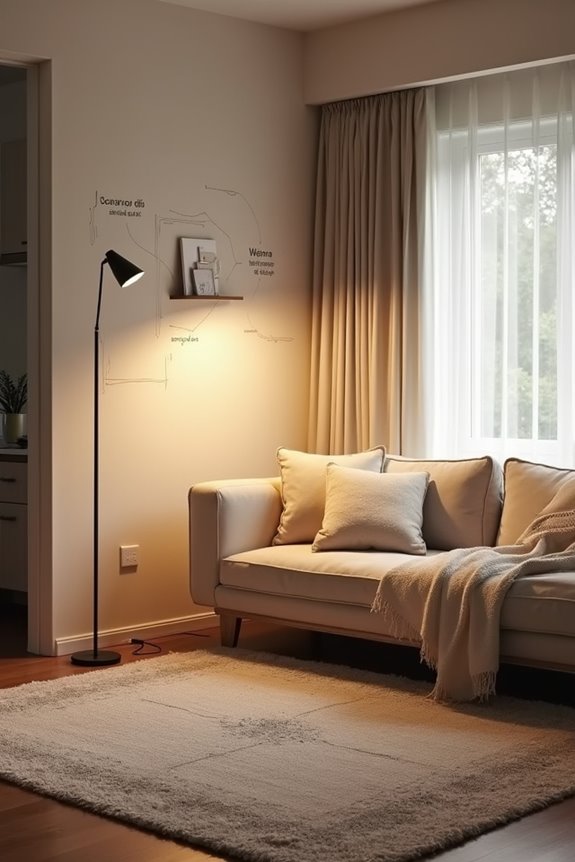
How’s your room’s lighting working right now? Start by measuring your space’s length, width, and height to calculate square footage. This number guides your lighting decisions and lamp placement strategy.
Next, determine your ambient lighting needs: aim for 20–30 lumens per square foot for general illumination. Task lighting requires 50–75 lumens per square foot in focused areas. Map your room layout carefully, marking traffic pathways and seating areas where you’ll actually use the lamp.
Observe natural daylight patterns throughout the day. Notice which corners stay dark and where shadows form. This assessment reveals gaps in your layered lighting scheme.
Finally, identify existing light sources and plan lamp placement to fill those dark zones. Strategic positioning creates balanced, functional illumination across your entire living space.